How a Portable Power Station Stores Energy and What It Can Run
When a winter storm takes down the power grid, the first things most people want are light, a charged phone, and a way to keep the internet router running. A portable power station is a large rechargeable battery with outlets built in, and it is a quieter, simpler alternative to a gas generator for many short outages. Knowing how it stores and delivers energy makes it much easier to decide what size and type of unit a household needs.
A Battery with Outlets
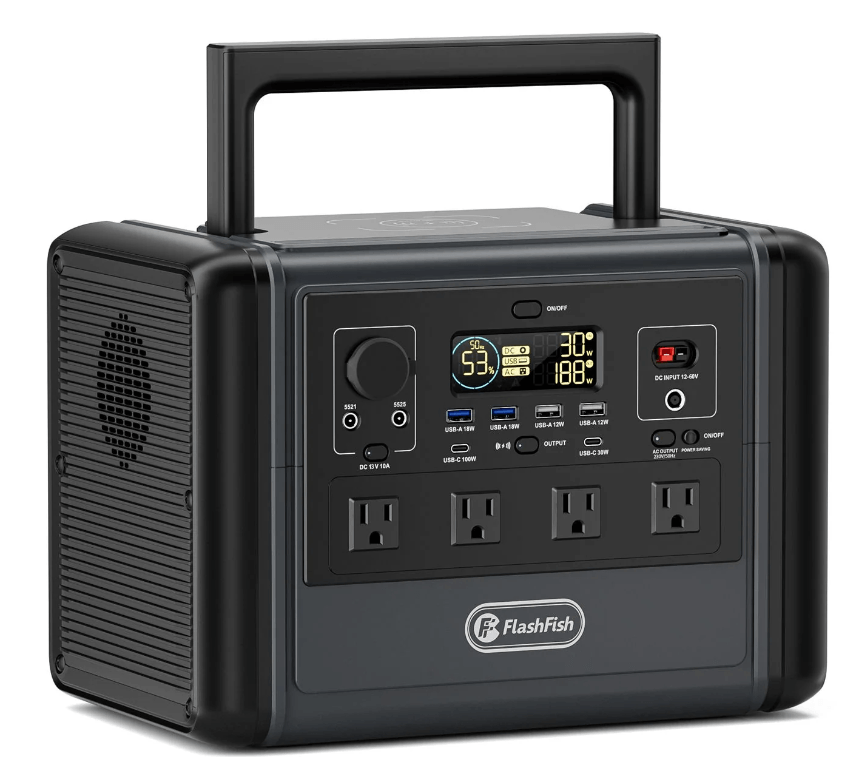
A portable power station contains a battery pack, an inverter, and a set of outlets. The battery stores energy as direct current, the same kind of electricity that flows from a phone battery. The inverter converts that into alternating current, the type found in household wall outlets, so ordinary appliances can plug straight in. Some outlets also supply direct current for charging small devices. There is no fuel to buy, no exhaust, and little noise, which means it can be used indoors with no carbon monoxide risk.
Watts and Watt-Hours
Two numbers matter. Watts measure how much power a device uses at a moment, and watt-hours measure how much energy the battery holds. A simple way to think about it is a fuel tank and a fuel gauge: watt-hours are the size of the tank, and watts are how fast a device drains it. Dividing the watt-hours by the watts a device uses gives a rough runtime. A lamp that uses ten watts can run for many hours, while a space heater that uses a thousand watts will empty a modest battery in about an hour.
What Lithium Iron Phosphate Means
Many newer units use a lithium iron phosphate battery, often written as LiFePO4. This chemistry tends to last through more charge cycles than older lithium types, and it handles heat and stress well. A cycle is one full discharge and recharge, and a lifepo4 power station that lasts thousands of cycles can serve for many years of occasional use. Even so, no battery lasts forever, and the manual explains care to extend its life.
What to Run and What to Avoid
A power station is ideal for devices that use modest power: phones, laptops, lights, a router, a television, and a small fan. A refrigerator may run for hours, depending on its size and the battery capacity. Heating appliances such as space heaters, hair dryers, and electric kettles draw so much power that they drain a battery quickly or exceed its output limit. A list of essential devices and their wattage turns guesswork into a plan. A power station should not be relied upon as the only source for medical equipment without advice from a healthcare provider.
Power Station or Generator?
The two tools suit different outages. A gas or propane generator runs as long as it has fuel and can carry heavy loads such as a furnace blower or a well pump, but it needs fuel, outdoor placement, and care. A battery unit is silent, safe indoors, and ready at once, but it holds a fixed amount of energy and runs out. Many households use both: the battery for light, communication, and short outages, and a generator for the longer events. For a modest need, a battery unit is simpler to keep and use.
Output Limits and What Happens When It Runs Low
Every unit has a maximum output, and a device that asks for more will shut the outlet off to protect the machine. Some appliances need a brief surge to start, which is why a motor-driven tool may trip an outlet even when its running power looks fine. When the battery runs low, the unit warns and then stops, so it is wise to switch off the least important devices first. Keeping a spare battery bank for phones adds a second layer of backup.
Connecting Devices Safely
A power station is simple to use, but a few precautions still apply. Plug devices directly into the outlets rather than chaining power strips, keep the unit and cords dry, and keep the vents clear so heat can escape. Do not open the case, and stop using the unit if it swells, smells odd, or becomes unusually hot. Extension cords should be rated for the load and kept untangled. Treat the outlets with the same respect as a wall outlet, because the voltage is the same.
Charging Options
A unit can be recharged from a wall outlet, a car outlet, or solar panels. Wall charging is fastest and is the simplest way to keep it full before a storm. Solar charging extends the runtime during a long outage, although winter days are short and clouds cut the output. Many people call a power station with panels a solar generator, though the unit itself produces no electricity until it is connected to a source.
Winter and Cold Weather
Lithium batteries do not like to charge when they are below freezing, and many units limit or stop charging in the cold to protect themselves. Keep the power station indoors, where the temperature is stable, and avoid leaving it in a cold car or garage. It will deliver power at low temperatures better than it will accept it, but cold still reduces capacity.
Matching Capacity to the Household
A short checklist helps sort out a purchase:
- List the devices that must stay on
- Add their running watts together
- Estimate how many hours each is needed
- Compare the total with the battery capacity
A small unit suits phones and lights, while a larger one can carry a router, a television, and a refrigerator for part of a night. Leaving a margin of capacity is wise, since real runtime is shorter than the arithmetic suggests because the inverter itself uses some energy.
Care and Storage
Store the unit in a cool, dry place, and charge it every few months so the battery does not drift to empty. Keep the vents clear while it is running, and avoid covering it with blankets. A short test each season, plugging in a lamp and running it for a few minutes, shows that the unit is ready before it is needed. Keeping the manual and a short device list with the unit saves time when a setting needs checking in the dark.
A Plan Before the Storm
The households that cope well with outages decide beforehand what matters, charge their equipment, and know how long it will run. A portable power station will not power a whole house, but for the essentials it offers quiet, simple, safe power that is ready at the press of a button.