What an AI Video Editor Must Not Change in a Listing Video
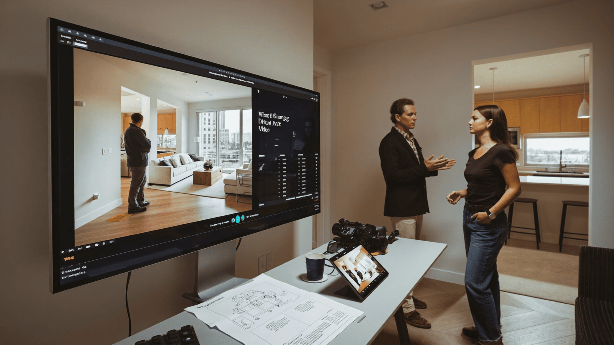
A written listing is a document somebody chose every word in. A video tour is a recording of whatever was in the room.
That difference matters more than most landlords and agents realize, because Fair Housing obligations attach to what a listing communicates, and a video communicates a great deal that nobody deliberately decided to say.
Who appears on screen. What the narration implies about who would suit the apartment. What is visible out of the window. The adjective somebody used about the street without thinking about it.
None of that is written down anywhere, and all of it is published.
An AI Video Editor with advanced editing features from Higgsfield makes creating listing videos easier, even for people unfamiliar with the process. However, understanding the relevant rules is essential. This is general information, not legal advice, so anyone unsure should consult legal counsel or their local commission.
Why Does Video Create More Exposure Than Text?
Because it carries information the writer never chose to include.
Written copy goes through somebody's judgment word by word. A video records a room, a street, a building and whoever happened to be standing there, and all of it is published together.
Where the exposure sits:
- Who appears on camera, across a body of listing videos
- Narration, which is spoken rather than drafted and less careful
- What is visible outside, including specific institutions
- Tone, which conveys an impression about who belongs
- An AI Video Editor cut that emphasizes some things and not others
Written listings have been scrutinized for decades and the common problems are well understood. Video is newer, produced faster, and reviewed by fewer people.
The practical response is a checklist applied before publishing, which takes two minutes and is the whole fix.
What Language Causes Problems?
Anything describing the person rather than the property, which is the single clearest test available.
Federal law protects race, color, religion, sex, national origin, familial status and disability. Massachusetts protects additional categories including sexual orientation, gender identity, age, marital status, veteran status and source of income.
Phrases to keep out of narration entirely:
- Perfect for young professionals, which touches age and familial status
- Ideal for a single person or couple, which touches familial and marital status
- Quiet building, where it implies children are unwelcome
- Walking distance to a named religious institution
- Safe neighborhood, which has long been treated as coded
- No vouchers or anything similar, which in Massachusetts is unlawful
Describe the apartment. Square footage, rooms, light, floors, appliances, transit. Those describe a property and none of them describe a tenant.
An AI Video Editor caption pass is a useful moment to catch this, because reading narration as text makes a phrase that passed unnoticed in speech obvious.
Does Who Appears On Camera Matter?
It does, assessed across everything you publish rather than in any single video.
A body of listing videos consistently featuring one demographic communicates something about who the housing is for, whether or not anybody intended it.
- Avoid featuring models or actors in listing video at all
- An empty unit, filmed well, is the standard and the safest
- Agents appearing in their own videos is normal and expected
- Never produce people with an AI Video Editor and place them in a unit
- Review the whole body of work occasionally, not just each piece
The produced-people point is worth stating plainly. Populating a listing video with generated residents is both a misrepresentation of the property and a decision about who is depicted as living there, which is exactly the territory Fair Housing covers.
Film the apartment. Nobody expects residents in a listing video and nobody is disappointed by their absence.
What Must Never Be Altered About the Unit?
Anything a prospective tenant would be deciding on.
- Never change the apparent size of a room, including lens choice that distorts
- Never remove damage, stains, wear or anything needing repair
- Never brighten a dark apartment beyond correcting the camera
- Never alter a view or what is visible from a window
- Never use an AI Video Editor to remove fixtures, noise sources or obstructions
The brightness point catches well-intentioned people. A basement unit with small windows is a basement unit with small windows, and a corrected video that shows a bright airy space is describing a different apartment.
Correct exposure so the video shows what the eye would see standing there. That is the standard, and it is both honest and defensible.
A tenant who viewed a misleading video and signed a lease has a complaint, and the video is the evidence.
How Should Virtual Staging Be Handled?
Disclosed, every time, in a way that cannot be missed.
Virtually staged images and video are common and acceptable where they are labeled. Unlabeled, they misrepresent the condition of the property.
- Label every staged frame on the frame itself
- State it in the listing description as well
- Show an unstaged version alongside where possible
- Never stage away a defect, which is a different thing entirely
- Check what your MLS or platform requires, since many mandate disclosure
The distinction worth holding is between showing how a space could be furnished and changing what the space is. Adding a sofa to an empty room is staging. Removing a radiator, enlarging a window or hiding a damp patch is not.
An AI Video Editor makes both equally easy, which is exactly why the line needs to be deliberate rather than situational.
Should Listing Video Be Captioned?
Yes, and this is both an accessibility question and a practical one.
A video tour without captions is unavailable to deaf and hard-of-hearing prospective tenants, which in a context governed by disability protections is worth taking seriously.
- Caption every video with narration, reviewed rather than automatic
- Describe anything visual that the narration does not cover
- Keep text legible on an AI Video Editor background
- Provide the key details in the written listing as well
- Avoid relying on audio for anything essential
Automatic captions mishandle street names, building names and numbers, which in a listing is most of the useful content.
Reviewing them takes a few minutes and makes the listing usable by people who currently cannot use it.
What Should a Good Tour Actually Show?
The apartment, in order, without cutting away from anything.
- The entrance and approach, since how you reach it matters
- Every room, including the ones nobody wants to show
- The bathroom and kitchen, properly, which are the deciding rooms
- Storage and closets, opened
- The view from the main windows, honestly
- Anything a tenant would ask about, including heating and laundry
The complete walkthrough is both the honest version and the one that generates fewer wasted viewings. A tour that skips the small bedroom produces people who arrive and leave.
An AI Video Editor correction pass for exposure and stabilization is appropriate. Cutting around a problem is not, and it costs you time rather than saving it.
Film it in one continuous walk if you can. It communicates the layout in a way edited clips do not.
What Does Massachusetts Add?
Several things, and the source of income protection is the one most frequently got wrong.
Refusing to rent based on a tenant's source of income, including housing vouchers, is unlawful in Massachusetts. That applies to advertising as well as to decisions.
- Never state or imply that vouchers are not accepted
- Never include AI Video Editor narration steering voucher holders away
- Lead paint obligations apply to units built before 1978
- Refusing families with children on lead paint grounds is discrimination, not an exemption
- Accessibility obligations apply to the property and to any AI Video Editor output advertising it
The lead paint point causes genuine confusion. The obligation is to delead where required, not to avoid renting to families with young children, and treating it as a reason to exclude them is itself a violation.
Their landlord resources cover the local obligations in more depth, and anybody listing in Massachusetts should read them before producing advertising of any kind.
Does This Apply to Social Content Too?
Entirely, and social is where the careless version usually appears.
A short vertical clip of an apartment posted to a feed is advertising for housing, and the same obligations apply regardless of format or how casual it felt.
- Captions on social listing content carry the same risk as narration
- Hashtags describing a target tenant are the same problem in fewer words
- Comments and replies are communication about the listing too
- Music choice is not regulated and tone still matters
- An AI Video Editor cut for social is still a housing advertisement
The hashtag point is the one that catches people. Tagging a listing for a specific demographic is doing in a word what the narration was carefully avoiding.
Keep the written listing language and the social language identical. If something would not appear in the listing, it should not appear in the caption.
Does the Student Rental Cycle Change Anything?
It compresses everything, which is where corners get cut.
Greater Boston runs on a September first lease cycle driven by the universities, and the listing work for it concentrates into a few frantic months. That is precisely when checklists get skipped.
What the compression does:
- Videos get filmed in occupied units, with the current tenants' belongings visible
- Narration gets looser because there are forty more to do
- Units get listed before they are turned, so condition is misleading
- An AI Video Editor pass gets rushed or skipped entirely
- Social captions get written at speed, which is where the language problems appear
The occupied unit problem is the one with its own obligations. Filming inside a unit somebody currently lives in requires their agreement, their belongings should not be identifiable, and anything personal visible on a wall or a desk should not be published.
Ask the current tenant, in writing, and give them notice. Most agree and some reasonably do not.
Film the turned unit where you can. It shows the condition the next tenant is actually getting, which is both more accurate and considerably easier to produce.
How Should a Library Be Managed?
With the raw footage kept, because a complaint arrives long after the listing is gone.
- Keep the original footage, not only the published AI Video Editor cut
- Record the date filmed in Higgsfield, which establishes condition at that time
- Keep the published version exactly as published
- Store the Higgsfield project alongside both
- Note who filmed it and who approved it
The condition record is the useful part beyond compliance. A video of a unit on the day it was listed settles disputes about what was present and what was damaged, in the same way a move-in inspection does.
Keep the Higgsfield record for longer than the tenancy. The question arrives at the end, not the beginning.
What Would One Listing Take?
Twenty minutes, filming included.
- Walk the unit once before filming to see what is there
- Film continuously, covering every room and every closet
- Narrate the property, never the tenant
- Correct exposure and stabilize in an AI Video Editor, changing nothing else
- Caption the Higgsfield export, reviewed
- Read the captions back as a Fair Housing check
- File the Higgsfield project with the date and the raw footage
The caption read-back is the step that catches most problems. A phrase that slipped past in speech is obvious in text.
Twenty minutes per listing, and the checklist becomes a habit after about five.
FAQ's
Why is video riskier than written copy?
It publishes things nobody chose to include. Who is on screen, what the narration implies and what is visible outside are all communicated without being drafted.
Can an AI Video Editor brighten a dark apartment?
Only to show what the eye would see standing there. Beyond that it describes a different apartment, and the video becomes the evidence.
Does virtual staging need disclosure?
Yes, on the frame and in the description, and many platforms require it. Adding furniture is staging. Removing a defect is not.
Can vouchers be excluded in Massachusetts?
No. The source of income is protected, and that applies to advertising as well as to decisions.
Do listing videos need captions?
They should have them. A tour without captions is unavailable to deaf prospective tenants, and automatic captions mangle street names and numbers.
Is there a free way to try the editing side?
Higgsfield operates a free tier as part of an AI creative suite, which covers correcting a listing's footage before committing.
Conclusion
Listing video is now easy enough that it is being produced by people who have never thought about what a housing advertisement is allowed to communicate.
An AI Video Editor handles exposure, stabilization and captions, which is the whole legitimate job, and Higgsfield runs it in a browser for whoever is doing the filming.
Describe the property, never the tenant. Show every room including the one you would rather skip. Read your captions back before publishing. That is most of it, and it takes two minutes.