General Liability for Contractors: What Landlords Need to Know Before a Drain Backup Repair
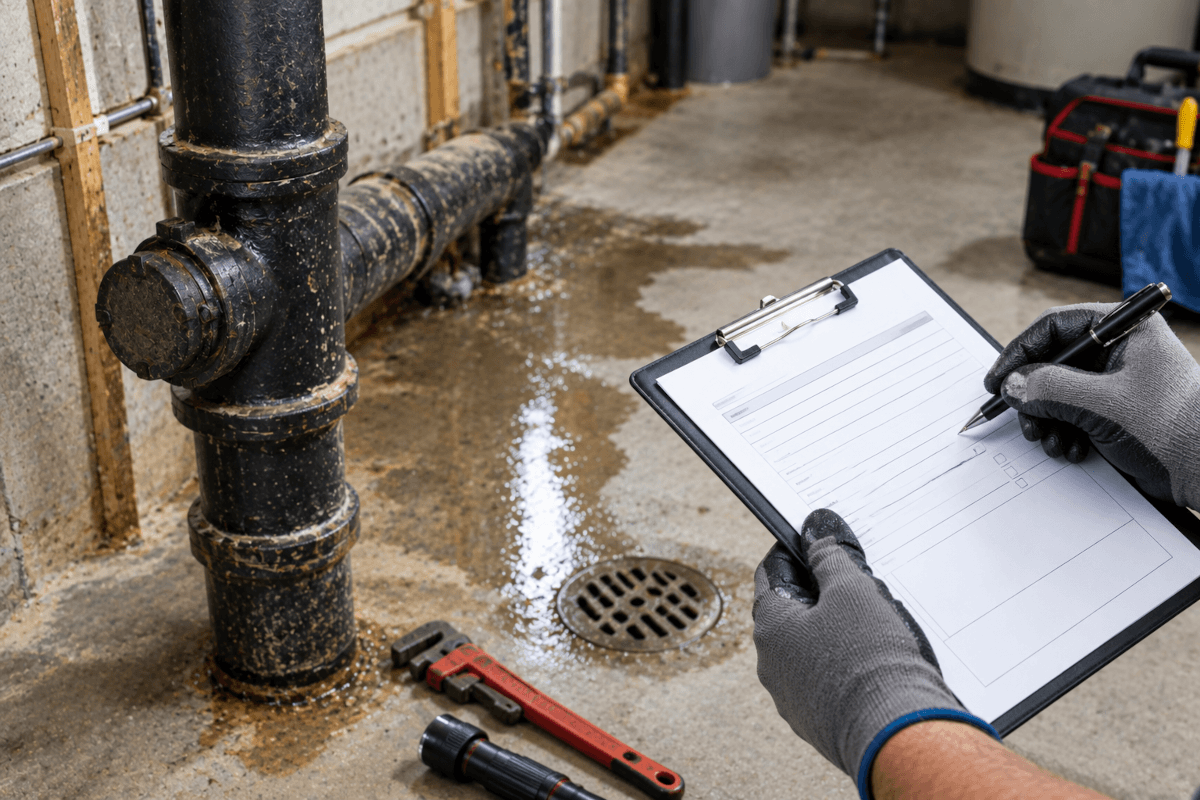
A drain backup in a multi-unit building rarely stays contained to one pipe.
By the time a landlord notices the problem, it has often already reached a hallway, a tenant's unit, or the unit below.
Calling a plumber quickly is the right instinct. Calling one without first confirming they carry general liability for contractors is where landlords can end up absorbing costs that were never theirs to cover.
Why Multi-Unit Buildings Are Especially Exposed to Drain Backups
Shared plumbing lines in multi-unit buildings mean a single blockage can affect several units at once, multiplying both the damage and the number of parties involved in a repair.
A single-family home has one set of drain lines serving one household. A multi-unit building routes multiple units through shared stacks and lateral lines.
This shared infrastructure is exactly what makes backups in apartment buildings harder to contain, a risk covered in bostonapartments.com's own piece on why multi-unit apartment buildings are more vulnerable to hidden drain backups.
Health authorities have separately documented the contamination risks when sewage-carrying water backs up into occupied spaces during periods of heavy rain or system overload. This scenario hits multi-unit buildings on shared or aging lines especially hard, according to the CDC's safety guidance on floodwater contamination after an emergency.
A few reasons the exposure is higher:
- One blocked stack can back up into multiple units simultaneously
- Older buildings often have cast iron lines that are more prone to root intrusion and scale buildup
- A backup on a lower floor can be caused by a clog several units above it
- Tenants in affected units may not report symptoms (slow drains, gurgling) until the backup has already occurred
What Happens When a Backup Repair Goes Wrong
A drain backup repair that isn't handled correctly can turn a plumbing problem into a property damage and liability problem within hours.
Not every backup repair goes smoothly. A few ways it can escalate:
- A snake or auger used incorrectly punctures an aging pipe, turning a clog into a leak
- Water extraction is delayed, allowing damage to spread into flooring, drywall, or a tenant's belongings
- A repair is treated as a one-time fix when the underlying blockage returns within weeks
- Sewage-contaminated water reaches a unit, creating a health and remediation issue on top of the plumbing issue
This last point is not a minor technicality. Public health guidance specifically addresses exposure risk for workers handling raw sewage during repair or cleanup work.
Raw sewage contact is treated as a genuine occupational health hazard for whoever is doing the repair, per the CDC's guidance on protecting workers handling human waste.
The Coverage That Actually Responds
General liability insurance is what covers the cost of a plumbing contractor's mistake when a repair damages a tenant's unit or belongings beyond the scope of the original job.
This is the coverage landlords should confirm before a contractor ever touches a shared drain line.
A contractor who correctly carries general liability for contractors has a policy in place specifically to respond when their work causes damage that goes beyond the pipe they were hired to fix. It's meant to prevent the landlord from having to absorb the repair cost themselves.
A few important distinctions worth keeping straight:
- General liability for contractors is different from general contractor insurance packages that bundle in other coverages
- It's also separate from professional liability insurance, which addresses design or advice errors rather than physical damage from the work itself
Most general liability policies are structured around two limits working together:
- A per-occurrence limit, which caps what the insurer pays for a single incident
- An aggregate limit, which caps total payouts across all claims during the policy period
A landlord reviewing a certificate of insurance should check both figures, not just the headline number. A contractor who has already filed other claims that year may have less aggregate coverage remaining than the per-occurrence limit suggests.
The certificate of insurance itself should also name the policy period and confirm the coverage is currently active, not expired or pending renewal, before work begins on a shared line.
Insurance reference guide IRMI classifies this specific exposure as a completed operations (C/O) risk, meaning damage that shows up after a repair is finished, not just during the work itself. A backup that resurfaces two weeks after a supposedly finished repair falls squarely into this category.
Without that coverage, the landlord's own property insurance may end up paying for damage the plumbing contractor actually caused. That can affect future premiums even though the landlord did nothing wrong.
Licensed contractor insurance agents who shop coverage across multiple carriers routinely walk clients through these limits and exclusions before a policy is bound. That's why a landlord questioning a certificate of insurance can typically get a same-day answer directly from the contractor's agent rather than waiting on a claims department to sort it out after the fact.
Landlords often assume "insurance" is a single policy. In practice, a contractor working on a shared drain line may carry several distinct coverages, each responding to a different kind of loss:
| Coverage Type | What It Covers | Typical Trigger | Common Limits Structure |
|---|---|---|---|
| General Liability for Contractors | Third-party property damage or bodily injury caused by the contractor's work, including completed-operations exposure | Damage discovered during or after the job is finished | Per-occurrence limit paired with an aggregate limit |
| Professional Liability Insurance | Errors in professional advice, design, or judgment rather than physical damage from the work itself | A design flaw or missed specification leads to a loss | Per-claim limit, often with a separate deductible |
| Commercial Auto Insurance | Damage or injury involving a vehicle owned or used for business, including a contractor's service vehicle | An accident occurs while traveling to or from a job site | Combined single limit covering the vehicle |
| Commercial Property Insurance | Damage to the contractor's own tools, equipment, or business property | Theft, fire, or storm damage to owned equipment | Scheduled or blanket coverage based on equipment value |
| Contractor License Bond | A financial guarantee to the state or licensing board that the contractor will follow licensing laws | A contractor violates licensing regulations or fails to complete work as agreed | Bond amount set by the state's licensing requirements |
Who Pays When the Damage Spreads to a Tenant's Unit
When a drain backup repair damages a tenant's unit, responsibility typically falls on whichever party's negligence caused the spread, which is why documentation matters as much as the repair itself.
This is rarely a simple answer, and it depends on the specifics of what happened.
According to the Insurance Information Institute, water damage claims are among the most common and costliest property insurance claims homeowners and property owners face. That's part of why insurers scrutinize the cause of a backup closely before paying out.
The Insurance Information Institute has also published guidance specifically on sewer backups as a distinct claim category, separate from general water damage, in its piece on protecting your house from sewer backups.
It's also worth separating what each party's insurance actually covers. A tenant's own belongings are typically protected only by their own renters insurance, not by anything the landlord or the repair contractor carries, per the Insurance Information Institute's renters insurance guidance.
A backup that leads to standing water for more than 24 to 48 hours also raises the risk of mold. This is an issue bostonapartments.com addresses separately in Mold in Rental Properties: Is It Tenant or Landlord Responsibility?, since a poorly handled backup repair can create a second liability question on top of the first.
Public health authorities publish cleanup guidance for exactly this scenario, recommending prompt drying and, in many cases, professional remediation once water damage has been present for more than a day or two, per the CDC's overview of mold health risks and its separate Mold Clean Up Guidelines and Recommendations.
What to Ask a Plumbing Contractor Before Hiring Them for a Backup Repair
Verifying a plumbing contractor's insurance before a backup repair begins takes a few minutes and can prevent a much longer dispute later.
Questions worth asking before work starts:
- Do you carry general liability insurance, and can I see a current certificate of insurance?
- What are your policy's coverage limits for property damage?
- Has your policy ever excluded sewage or backup-related claims specifically?
- Who handles water extraction and drying if the repair causes a leak?
Trade organizations have started building specific training around this kind of work.
The National Apartment Association's Certificate for Apartment Maintenance Technicians program exists precisely because apartment-scale plumbing systems require different handling than a single-family home's. A contractor familiar with that distinction is generally a safer bet for shared-line work.
Documenting the Damage Before Repairs Begin
Photographing and recording the condition of a unit before repair work starts gives a landlord a clear baseline if a liability question comes up later.
This step is easy to skip when a backup needs urgent attention, but it protects everyone involved.
It also matters because landlord repair obligations are shaped by each state's implied warranty of habitability. A documented timeline helps show a landlord met their repair obligations promptly rather than delaying.
A short list of what to capture:
- Photos or video of the affected area before any cleanup begins
- The time the backup was first reported by a tenant
- Which units or common areas were affected
- Any communication with the contractor about the scope of the repair
How General Liability Claims Are Typically Resolved
A general liability claim tied to a backup repair typically moves faster when the contractor's insurer has clear documentation of what happened and when.
Claims that drag on tend to be the ones where the timeline and damage are disputed.
A well-documented claim generally includes:
- The pre-repair photos
- The contractor's own account of the work performed
- A clear record of when the damage was first noticed
That combination is usually enough for a contractor's general liability insurer to evaluate the claim without extended back and forth.
Licensed contractor insurance agents who work with multiple carriers day to day can also flag likely coverage gaps before a claim is even filed, since they see how different insurers treat completed-operations exposure and sewage-related losses. A landlord or contractor unsure whether a specific backup scenario is covered is generally better served asking the agent directly than assuming based on the policy's headline limits.
What a Typical Backup-Repair Claim Timeline Looks Like
A general liability claim tied to a drain backup repair tends to follow a similar sequence, even though every case has its own specifics.
- Day of the backup: The tenant reports the problem, the landlord photographs the affected area before cleanup begins, and the responding contractor confirms their general liability coverage is active before starting work.
- Within 24–72 hours: If the repair causes damage beyond the original scope, a punctured pipe, delayed water extraction, a recurring blockage, the contractor notifies their general liability insurer and opens a claim, submitting the certificate of insurance, photos of the damage, and a description of the work performed.
- Roughly weeks one and two: A claims adjuster reviews the documentation, may inspect the property directly, and determines whether the loss falls within the per-occurrence limit and the policy's completed-operations provisions.
- Weeks two through four: Once the cause and scope are confirmed, the insurer issues payment or reimburses repair costs, and the claim closes.
Contractor general liability insurance policies covering this kind of work commonly carry limits in the range of $1,000,000 per occurrence paired with a $2,000,000 aggregate, though the exact figures vary by carrier and by the contractor's own claims history.
A contractor who has already filed other claims that policy year may have meaningfully less of that aggregate remaining than the per-occurrence figure alone would suggest. Another reason the certificate of insurance is worth checking closely rather than taking the headline number at face value.
FAQ
Is a landlord responsible for damage caused by a plumbing contractor's mistake?
Not usually, if the contractor carries general liability insurance. That policy is designed to cover damage the contractor's own work caused, separate from the landlord's own property policy.
Should a landlord get proof of insurance before every plumbing repair, or just larger jobs?
Every job involving shared plumbing lines carries some risk of the repair reaching more than one unit. Verifying coverage before any drain or sewer line work is the safer default.
What should a landlord do immediately after a drain backup is reported?
Document the affected area with photos before cleanup begins, note the time it was reported, and confirm the responding contractor's insurance before repair work starts.
Conclusion
A drain backup rarely stays a simple plumbing job once shared lines and multiple units are involved, and confirming a contractor's general liability coverage before the repair starts, along with documenting the damage as it's found, are the two steps that keep a backup repair from turning into a longer liability dispute.