Why Identical AC Units Cost Different Amounts to Maintain
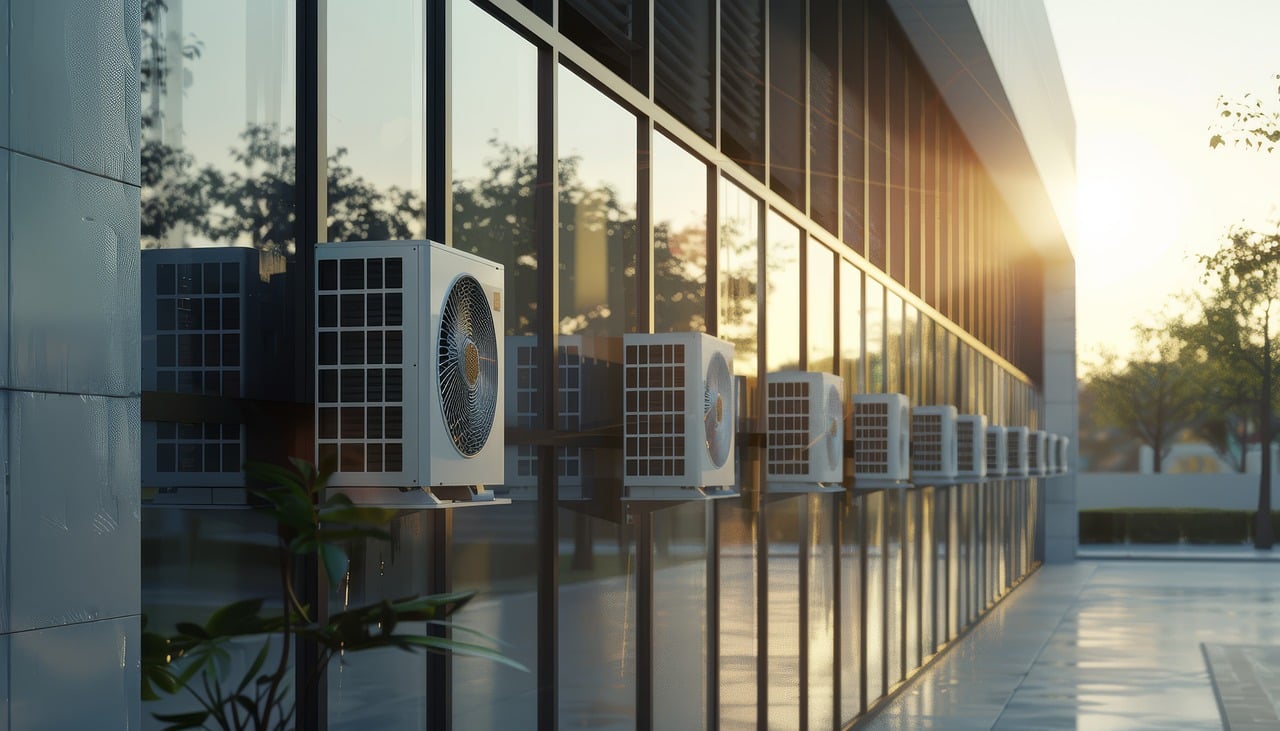
Two landlords buy the same split system. Same brand, same tonnage, same installer, bought the same month. Three years later one has spent roughly twice as much keeping it running as the other.
Neither of them was overcharged. The units were identical; almost nothing else was.
Maintenance pricing confuses property owners because the equipment is the most visible variable and the least important one. What actually drives the bill is how hard the unit works, what it breathes, how it was installed, and how long it takes a technician to reach the parts that need attention. Understanding those four things is the difference between reading a quote and arguing with one.
Runtime hours are the biggest multiplier
A compressor does not age in calendar years. It ages in hours.
An apartment in a northern climate might run cooling for four months, and only hard for six or seven weeks of that. A unit in a southern state runs most of the year. A unit in a genuinely hot climate runs almost continuously. Same machine, three completely different service lives.
This is why "service it once a year" is such poor advice. Once a year is sensible for a unit that works four months. For a unit running ten months it is roughly half the attention the machine needs, and the gap shows up first in the condenser coil, then in the compressor current draw, then in the electricity bill, usually in that order.
If you own units in more than one climate, stop comparing their service bills to each other. Compare each one to its own runtime.
What the unit breathes changes the interval
The second multiplier is air quality, and it is almost always underestimated.
A filter in a quiet residential street loads slowly and evenly. A filter two blocks from an arterial road loads with brake dust and diesel particulate. A filter in a building near construction loads with cement dust, which is abrasive and does not brush off a coil the way household dust does.
Coastal properties add salt, which attacks aluminium fins and copper joints and turns a cosmetic problem into a replacement. Properties in dusty, arid regions deal with fine particulate that penetrates deeper into the coil than anything a temperate climate produces.
The practical consequence: two units on the same street can need different intervals if one draws air from a courtyard and the other from a road frontage. Your technician should be telling you this. If they quote a flat annual price without asking where the condenser sits, they are quoting an average, and averages are how you end up paying for someone else coil.
Unit type decides how much labour is involved
Not all systems cost the same to open.
A standard wall-mounted split is quick. Filters come out from the front, the indoor coil is accessible, the outdoor unit usually sits where someone can stand next to it. A cassette unit recessed into a ceiling is a different job, because the technician works overhead, often from a ladder, sometimes with a drop pan that has to come down before anything can be cleaned properly.
Ducted systems are more involved again, because the ductwork itself is part of the system hygiene and most quotes do not include it. Owners are frequently surprised to learn that their annual service covered the unit and not the duct run feeding it. That is not a scam; it is a scope question that was never asked.
Before you compare two quotes, confirm they cover the same physical components. A cheaper quote that stops at the indoor unit is not cheaper. It is smaller.
Access is a real line item, even when it is invisible
This is the variable nobody budgets for.
A condenser on a ground-floor pad takes minutes to reach. The same condenser on a roof with no permanent ladder access takes a second technician, equipment, and sometimes a building permission. A unit in a plant room behind a locked service corridor requires coordination with whoever holds the key.
None of this appears on the equipment spec, and all of it appears on the invoice. If you are buying a property with rooftop or balcony-mounted units, walk the access route before you model the running costs. The walk takes ten minutes and tells you more about the next decade of maintenance spend than the unit model number will.
What a fair quote actually looks like
A quote worth accepting tells you three things: what is being cleaned, what is being measured, and what happens if something is found.
Cleaning should name the components: filters, indoor coil, outdoor coil, drain pan, drain line. "Full service" is not a scope.
Measuring is what separates a service from a wipe-down. Refrigerant pressures, temperature differential across the coil, compressor current draw. These are the numbers that tell you whether the system is degrading, and a technician who records them gives you a baseline to compare against next visit. One who does not is selling you a clean filter.
The third part is the one people forget to ask about. If the technician finds a failing capacitor during a routine service, is that a separate call-out or is it handled there and then? The answer changes the real cost of the contract considerably.
At the extreme end of the climate range
The variables above compound rather than add, and the clearest way to see that is to look at a market where all of them run hot at once.
In the Gulf, cooling runs close to year-round, the ambient air carries fine desert dust, coastal humidity and salt affect anything within a few kilometres of the water, and a large share of the housing stock uses ducted or cassette systems rather than simple wall splits. Every multiplier in this article is pulling in the same direction simultaneously, and service schedules there reflect it: intervals that would look excessive in a temperate climate are routine maintenance in that one.
It makes a useful reference point. Looking at how AC maintenance costs in Dubai are structured shows what pricing looks like when runtime, dust load and system type are all at the demanding end, and it clarifies which parts of your own quote are driven by the machine and which are driven by the conditions it lives in.
Questions worth asking before you sign
Four questions, and they take two minutes.
- How many cooling hours does this unit run in a typical year? If the contractor cannot estimate it, they are pricing from a template.
- Where does the condenser draw air from, and what is in that air? This sets the real interval, not the calendar.
- Does the quoted service include the duct run, or stop at the unit? It is the most common scope gap in the industry.
- What readings will I receive after the visit? A service with no numbers attached cannot be compared to the one before it.
The useful conclusion
Two identical units can reasonably cost very different amounts to maintain, and when they do, it usually is not the contractor margin that explains it.
It is worth knowing which variables apply to your property before you treat a higher quote as a problem, or a lower one as a saving. The cheapest service is not the one with the smallest number on it. It is the one that stops you buying a compressor five years early.