Why Refrigerant Levels, Coils, and Filters Deserve Expert Eyes
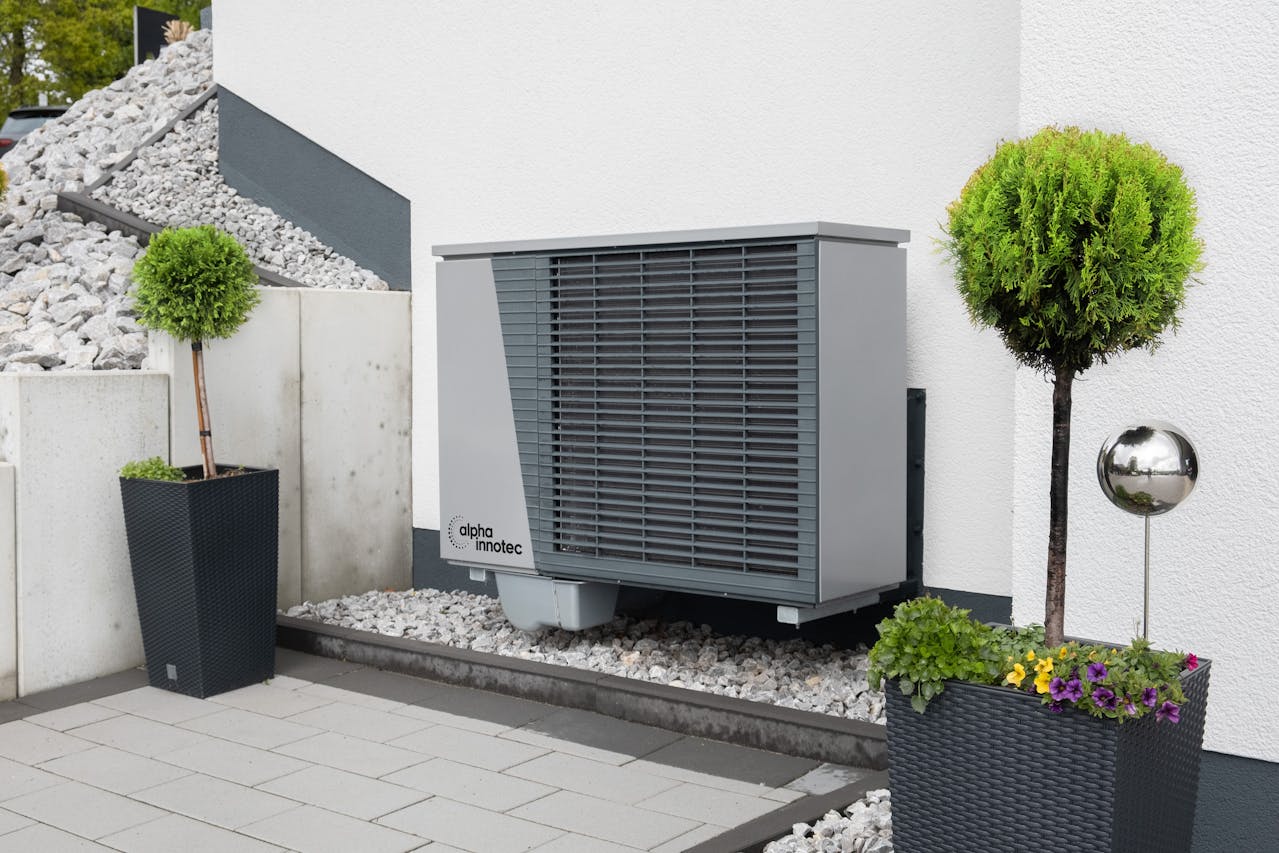
The quality of a heat pump installation is determined by the installer.
Sounds like a drama but it's true. You can spend thousands of dollars on the most efficient model and still end up with ridiculously high bills, poor airflow and a system that gives up many years too soon. Why? Because three little things are commonly overlooked:
- Refrigerant levels
- Coils
- Filters
Get these three things wrong and your shiny new system will run like a 10-year-old clunker. Get them right and you'll squeeze every last drop of performance out of it.
Here's why each one needs an expert eye on it...
What you'll uncover:
- The Real Cost Of A Bad Heat Pump Installation
- Refrigerant Levels -- The Silent Efficiency Killer
- Coils -- Where Heat Transfer Lives Or Dies
- Filters -- The Most Ignored Part Of Your System
- Why DIY And "Cheap" Installs Cost You More
The Real Cost Of A Bad Heat Pump Installation
The average homeowner views a heat pump installation as a "set it and forget it" scenario.
It's not.
The numbers are pretty ridiculous. In a study commissioned by the National Institute of Standards and Technology, poor installation was shown to increase a home's energy use for space heating and cooling by an average of 30 percent. Three-zero. That much more on every electricity bill -- indefinitely.
That's why having a professional team comes into play. When it's time for this to be done correctly, professional AC maintenance by Farrell is the type of service that recognizes refrigerant charge issues, coil fouling, filter issues, and all that before they sabotage your heat pump installation. Diagnostics is where it all comes into play.
So let's break each one down.
Refrigerant Levels -- The Silent Efficiency Killer
Refrigerant is the lifeblood of your heat pump.
It's the stuff that actually moves the heat -- in or out of your home. Too much or too little and the whole system falls apart.
Here's the kicker:
A heat pump is a closed loop system. It should never need a "top up". If your refrigerant is low, you have a leak somewhere -- and that's a real problem.
When refrigerant levels are off, you'll see:
- Higher energy bills -- the compressor runs longer to do less
- Weaker heating and cooling -- you'll never quite hit the temperature you want
- Frozen coils -- ice forms where it shouldn't
- Burnt-out compressors -- the most expensive part of the system
Proper charging of a heat pump can't be guessed. It requires gauges, scales and someone who understands what the numbers mean. Most new systems use A2L refrigerants, which have specific safety and handling requirements -- yet another reason not to DIY.
Note: The use of refrigerant work is also heavily regulated in most jurisdictions. The law will require certified technicians for this work as well. Don't even think of letting some unlicensed handyman near your system.
Coils -- Where Heat Transfer Lives Or Dies
Your heat pump has two coils that do all the actual work:
- The evaporator coil (indoor)
- The condenser coil (outdoor)
Both need to be clean. Both need to be inspected. And both are usually ignored until something goes wrong.
Here's the part that surprises most people...
An industry study cited by trade sources found dirty filters and fouled coils are responsible for up to a 15% to 30% loss in AC cooling efficiency. A thin film of dust on the coil insulates it from heat transfer much like a blanket.
What does that look like in real life?
- Your system runs longer
- It cycles on and off more often
- Your power bill creeps up every month
- The compressor wears out faster
The outdoor condenser is even more vulnerable. Grass clippings, leaves, dust, pollen and cottonwood seeds all can clog the fins. Indoors, the evaporator coil collects fine dust that no homeowner ever sees -- because you'd have to tear the unit apart to see it.
A pro will:
- Clean both coils properly with the right chemicals (water alone won't cut it)
- Check the fins aren't bent or crushed
- Spot early signs of corrosion
- Make sure airflow paths are clear
This is the kind of job that pays for itself the first year with lower power bills.
Filters -- The Most Ignored Part Of Your System
Filters are the easy one.
Or so people think.
Filters are actually neglected more than any other component of the heat pump -- and the price is steep. ENERGY STAR reports that a dirty filter impedes airflow, causes the system to work harder, wastes energy and shortens system life.
A clogged filter does three nasty things:
- Restricts airflow -- your blower motor strains and burns out faster
- Lets dust through onto the coils -- building up that fouling problem we just discussed
- Reduces indoor air quality -- which is the whole point of having one in the first place
Most people change filters every 6 months. That's not enough.
They should be inspected monthly in the peak heating and cooling seasons, and replaced every 60-90 days. Change them more frequently if you have pets, allergies, or construction nearby.
But there's a deeper issue most homeowners miss...
Systems require different types of filters. A high-MERV filter on an incompatible system will restrict airflow. A low-MERV filter allows too much dust onto the coils. A professional can help match the filter to the system.
Why DIY And "Cheap" Installs Cost You More
Trying to save a few hundred bucks on installation feels smart at the time.
It almost never is.
A bad heat pump installation creates a chain reaction:
- Wrong sizing -- short cycling and wasted energy
- Bad refrigerant charge -- compressor strain
- Dirty coils from day one -- premature wear
- Wrong filter setup -- airflow chaos
You'll pay for it later. Either on energy bills, repair calls or an entire system replacement years before you should need one. Industry research shows poorly maintained systems use as much as 30% more power -- not including all the repair costs.
The math just doesn't work in favour of cheap installs.
Tying It All Together
The three key elements of a heat pump installation that actually work are refrigerant, coils, and filters.
To recap:
- Refrigerant must be charged precisely -- only certified pros should touch it
- Coils must be cleaned regularly to maintain heat transfer
- Filters must be matched to your system and changed often
If you miss any one of these your heat pump install will be underperforming from day 1. If you have it done right you will get the efficiency you paid for, lower bills, and a system that will last 15-20 years instead of 8-10.
That's worth getting an expert in for.