A Newcomer's Safety Checklist for Buying or Renting in a Bike-Heavy Oregon Neighborhood
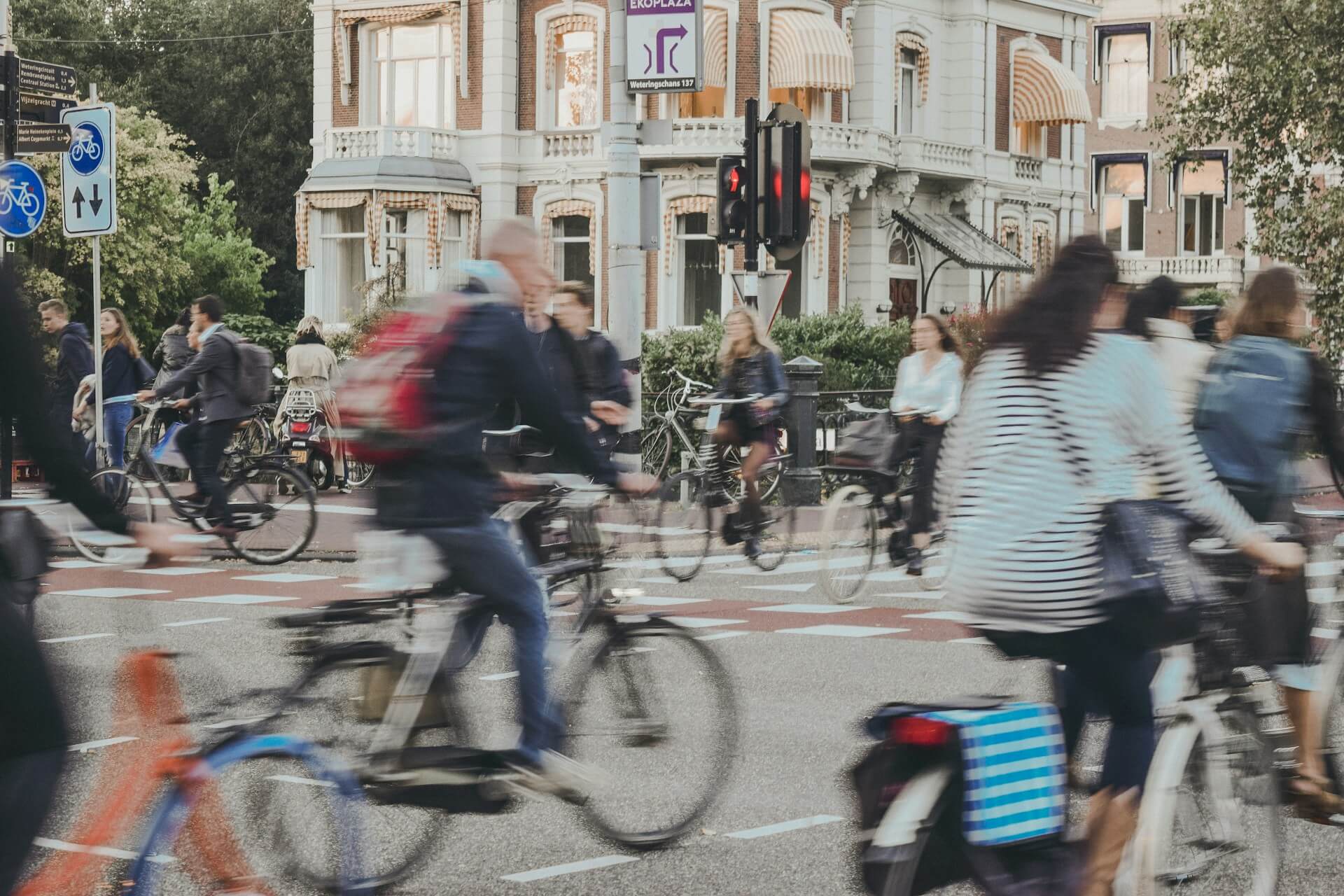
Say you're relocating from Boston to Bend, Oregon, and the second house on your list sits two blocks from a shared-use path that cuts straight through downtown. The listing agent mentions that the street sees a steady flow of commuters biking to work instead of driving. That sounds like a selling point, and often it is, but it's also a piece of daily infrastructure you're about to live inside of, and it comes with legal and practical realities that never show up on a listing sheet.
Before you fall for the path views, it helps to understand what you're actually buying into, starting with the rules that govern the street itself.
Know the Rules Before You Fall for the Path Views
In Oregon, a bicycle is legally treated as a vehicle, and once a cyclist is on a public road, they hold the rights and duties of drivers. That single fact reshapes how traffic moves through a bike-heavy neighborhood: who has the right-of-way at an unmarked intersection, how a driver is expected to behave when passing, and how much friction you should realistically expect between cars, cyclists, and pedestrians on your own street once you move in.
Out-of-state buyers and renters tend to run through the same short list when they evaluate a neighborhood: school ratings, commute time, grocery access, maybe a walk score pulled from an app. Bike infrastructure rarely makes that list, even in a city where it should. If a meaningful share of your new neighbors commute by bicycle, that changes traffic patterns at the exact hours you'll be pulling out of your own driveway. It changes where kids cross the street on their way to school. It changes how a moving truck, a delivery driver, or a landscaping crew navigates the block on the day you move in, and how much clearance they leave when they do.
Why Bike Infrastructure Belongs on Your House-Hunting Checklist
Bike infrastructure also changes the cost calculus. Homes and rentals near well-built bike infrastructure in Bend and Portland routinely command a premium, the same way homes near reliable transit lines do in Boston. That premium is only worth paying if the infrastructure is real, not just a line on a city planning map that hasn't been funded yet. Before you sign anything, it's worth running the same kind of due diligence you'd apply to any other neighborhood feature. The questions worth asking before renting don't stop at square footage and school zones, and a bike-heavy street deserves the same scrutiny as a busy arterial road would.
What "Bike-Friendly" Actually Looks Like, Street by Street
Real estate listings and city marketing copy use the phrase "bike-friendly" loosely, and it covers a wide range of actual conditions on the ground. A painted lane with no physical separation from traffic is not the same thing as a protected lane with a curb or a row of parked cars acting as a buffer. A shared-use path set well back from the road is not the same thing as a "sharrow," a painted arrow that simply tells cyclists and drivers to share one travel lane with no separation at all. Each of these produces a different level of risk and a different daily experience for everyone on that street, whether they're on a bike or behind the wheel.
Some Oregon cities have built enough of the real thing to earn outside recognition for it. Bend, for instance, has received a formal bicycle-friendly community rating for its network of buffered and protected lanes, its neighborhood greenways, and its trail connections through the city. That kind of third-party designation is a reasonable starting signal when you're comparing cities from a distance. It describes the city as a whole, though, not the specific block you're touring next week, and a citywide award doesn't guarantee that the street in front of your new front door has anything more than a faded painted stripe.
A Newcomer's Checklist Before You Buy or Rent
Once a property makes your shortlist, walk or drive the actual block, not just the general neighborhood, at a normal commuting hour if you can manage it. A few questions are worth answering before you make an offer or sign a lease:
- Whether the bike lane on your street is painted, buffered, or physically protected, and how that protection changes or disappears near intersections
- How far the nearest crosswalk or signal sits from the property, and whether kids or commuters routinely cross mid-block instead of using it
- Whether on-street parking sits directly next to the bike lane, which raises the risk of a car door opening into a cyclist's path
- How well the street is lit after dark, especially along any stretch that sees evening commuter traffic
- Whether the city has funded, scheduled improvements planned for that specific corridor, as opposed to a proposal still sitting in a long-range plan
- How the intersection nearest your driveway handles left turns across the bike lane, since that maneuver accounts for a large share of serious collisions
None of these questions require special expertise. They require walking the block yourself, ideally at both a morning and an evening commute time, before you commit to an offer.
Confirm the Infrastructure Data Before You Sign Anything
Listing agents and city tourism sites have an obvious incentive to describe a neighborhood in its best light, so it's worth verifying their claims independently. Oregon's transportation department maintains statewide crash and infrastructure data covering exactly this kind of question, from where protected lanes actually exist on the ground to which corridors show a documented pattern of car-bike collisions. That's a more reliable source than a listing description, and it costs nothing to search before you make an offer.
It's also worth checking whether the specific street has any documented crash history of its own, not just the neighborhood in general. A single severe intersection can drag down the real-world safety of an otherwise well-designed corridor, and that kind of granular detail rarely surfaces during a weekend walkthrough with an agent.
Don't Let Bike Safety Crowd Out the Rest of the Checklist
Bike infrastructure deserves its own line item, but it isn't a replacement for the rest of your due diligence. The same scrutiny that applies to entry locks, hallway lighting, and building security in any rental still applies here; a neighborhood with excellent bike lanes can still have a building with a broken buzzer system, unlit stairwells, or windows that don't lock properly. Run through the standard security checklist for the unit itself in addition to evaluating the surrounding street, since the two assessments answer different questions and neither one substitutes for the other.
Moving out of state means evaluating a place you can't fully know from photos and listing copy. Bike infrastructure is a genuine factor in day-to-day life in a city like Bend, but it's also one that's easy to take on faith because it sounds like an amenity rather than a safety question. A short walk of the actual block, a look at the state's own crash data, and a clear-eyed read on what "bike-friendly" really means on that specific street will tell you more than any listing description ever will, and it's a lot cheaper to do the homework now than to learn the hard way after you've already signed.