A Renter's Playbook for Plumbing Emergencies in an Apartment
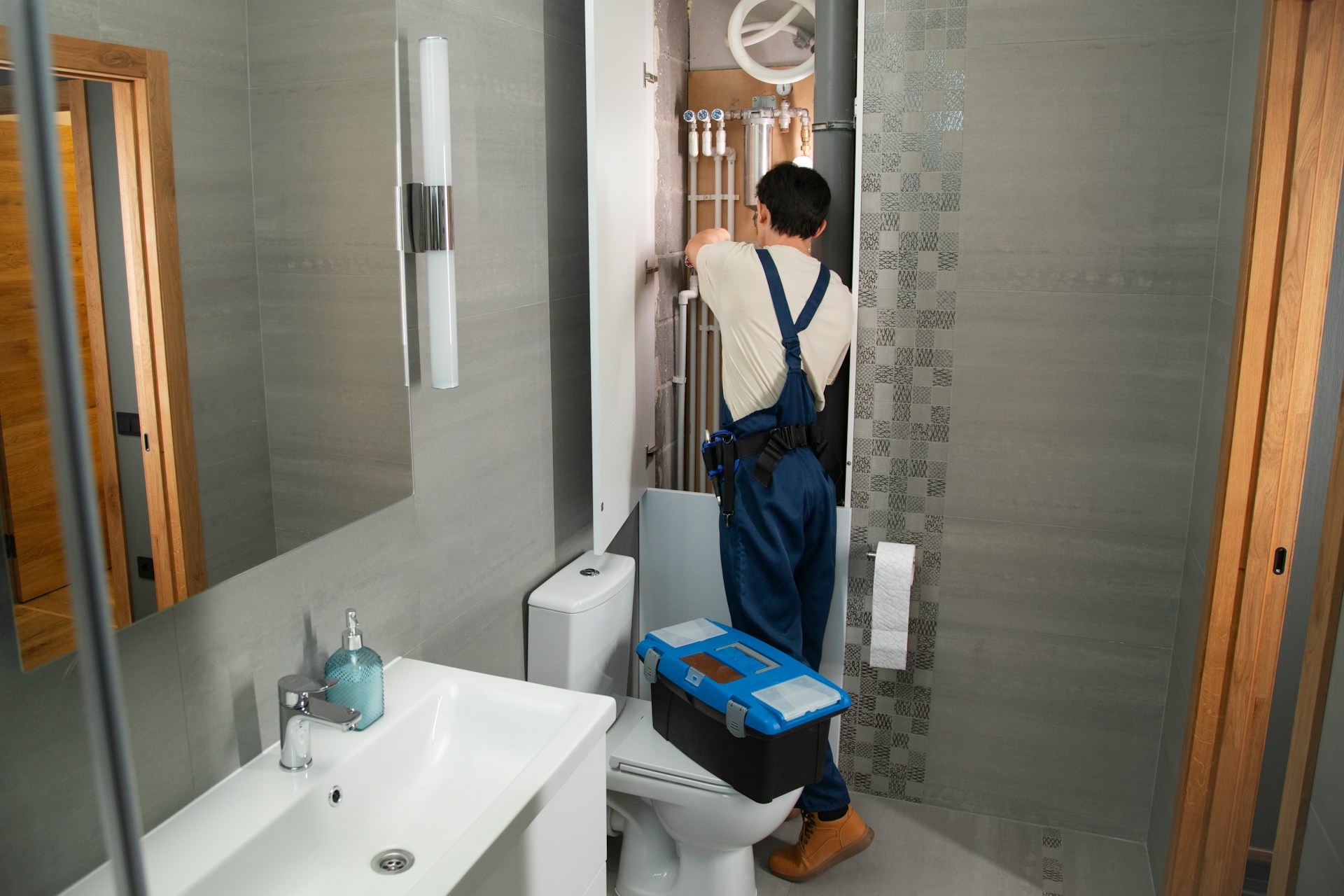
Two in the morning, and the sound coming from under your bathroom sink isn't a drip. It's a hiss. By the time you find the flashlight, the cabinet floor has an inch of water in it and it's creeping toward the hallway carpet.
Most renters freeze at this exact moment. Not because they're careless, but because nobody ever told them the order of operations. Your lease probably mentions plumbing somewhere around page nine in language written by a lawyer for another lawyer. So here's the short version: kill the water, protect your stuff, document everything, then call for help. That sequence matters more than speed alone, because a fast wrong move can cost you a deposit.
If the leak is beyond what a shutoff valve can control, you'll want emergency plumber raleigh homeowners and renters can call when water is actively damaging a unit. The same logic applies whether you're in a Boston triple-decker or a garden apartment outside Raleigh: contain first, then dispatch a licensed pro.
First, find the shutoff valve. All of them.
Before anything else, you need to know where your water dies. In most apartments there's a main valve for the whole unit, usually near the water heater, under the kitchen sink, or in a utility closet near the entry. Fixtures have their own smaller valves, the oval handles tucked behind the toilet and under each sink.
Here's my honest opinion: walk your apartment tonight and photograph every valve you can find. Label them in your phone's photo album. When a pipe lets go at 2 a.m., you will not remember which closet hides the main, and scrolling through labeled photos takes ten seconds instead of ten panic-filled minutes.
Turn valves clockwise to close them. If a handle won't budge, don't muscle it with a wrench and strip the stem. Call the building's emergency line and let them handle it. Stripped valves are a repair you don't want attributed to you.
What counts as a real emergency and what can wait until morning
Not every plumbing problem deserves a middle-of-the-night call, and knowing the difference protects your relationship with your landlord and your wallet. Run your situation against this quick table.
| Situation | Emergency? | What to do |
|---|---|---|
| Water spraying or pooling from a pipe or fixture | Yes | Shut the main valve, call the emergency line, move valuables |
| Toilet overflowing and won't stop running | Yes | Lift the tank float or close the fixture valve, then call |
| No hot water | Usually no | Report it in the morning unless it's below freezing outside |
| Slow drain in one sink | No | Submit a maintenance request and stop pouring grease down it |
| Sewage backing up into the tub or floor drain | Yes | Stop using water entirely, call the building, keep everyone out |
Sewage backup is the one people underestimate. Stop running water anywhere in the unit, because every flush pushes more of it back up. That's a building-level problem, not a your-sink problem, and the landlord needs to hear about it immediately.
The containment checklist you can actually run in five minutes
Once the water is off, your job shifts from stopping the leak to limiting the damage. Work through these in order and you'll be fine.
- Kill the power to wet areas. If water is near outlets, a light fixture, or an appliance, flip that breaker off before you touch anything.
- Pull furniture and rugs back. Water wicks into fabric fast, and a soaked rug under a couch is a mold problem waiting to happen.
- Grab towels and a bucket. Catch what's still draining. Pipes hold residual water even after the valve closes.
- Photograph and film everything. Wide shots of the room, close-ups of the damage, a shot of the valve you closed. Time stamps help later.
- Move up, not down. Anything valuable on the floor goes on a table or bed, never into the next room where water may be spreading under the wall.
One more thing worth knowing: water damage doesn't stop when the surface dries. According to the Environmental Protection Agency, mold can begin growing on damp building materials within a couple of days, which is why wet drywall and soaked carpet padding need to be addressed, not just toweled off. That's often the landlord's job, but flagging it in writing the same night gets it on record.
Who pays? A plain answer for renters
This is the question everyone asks and almost nobody gets a clean answer to. The general rule in most leases: the landlord covers repairs to the building's plumbing and fixtures, and the tenant covers damage caused by their own negligence. A pipe that fails on its own is on the landlord. A toilet you tried to flush a phone charger down is on you.
Federal housing rules and local housing codes set basic habitability standards, and the Department of Housing and Urban Development outlines the broad expectations around safe, functioning housing. Where you live changes the details, but the principle holds: report it in writing, keep the response, and don't authorize repairs yourself without the landlord's approval unless the lease says you can.
My stance, and I'll say it plainly: never pay an emergency plumber out of pocket before you've called your landlord's emergency line, even at 3 a.m. Most leases have a number for exactly this. If the landlord can't be reached and water is destroying the unit, document your attempts, call a pro, and keep every receipt. That paper trail is your leverage.
Prevention is boring and it works
You can't prevent a pipe from failing inside a wall. You can prevent most of the calls that start with "the sink is full of standing water."
Know what not to put down the drain. Grease, coffee grounds, wipes labeled flushable, and hair are the four that cause the most tenant-side backups. Run the faucet for a few extra seconds after you use the garbage disposal, and replace your toilet flapper if it's running constantly, because that trickle is often the first sign of a valve on its way out. If your building has a water heater in the unit, glance at it monthly for rust, moisture underneath, or a puddle forming at the base.
And if you're in an older building, pay attention to slow drains in more than one fixture. Multiple slow drains usually means the shared line is clogging, and shared lines are a building problem. The National Fire Protection Association has long emphasized detection and early warning as the cheapest protection you can buy for a building, and the same thinking applies to water: catch the trickle before it becomes the flood.
Keep this number where you can find it without Wi-Fi
Write your landlord's emergency line on a sticky note inside the cabinet under the kitchen sink, and add the building manager's number to your phone's favorites. Screenshots and apps don't help when the power's out or your hands are full of towels. When water is moving, the renter who already knows where the valve is and who to call wins every time, and that's a skill you can lock in tonight with a five-minute walkthrough. Do you know where your main valve is right now? If not, go find it before you need it.