Boston's Expanding Tech Scene: What It Means for Renters
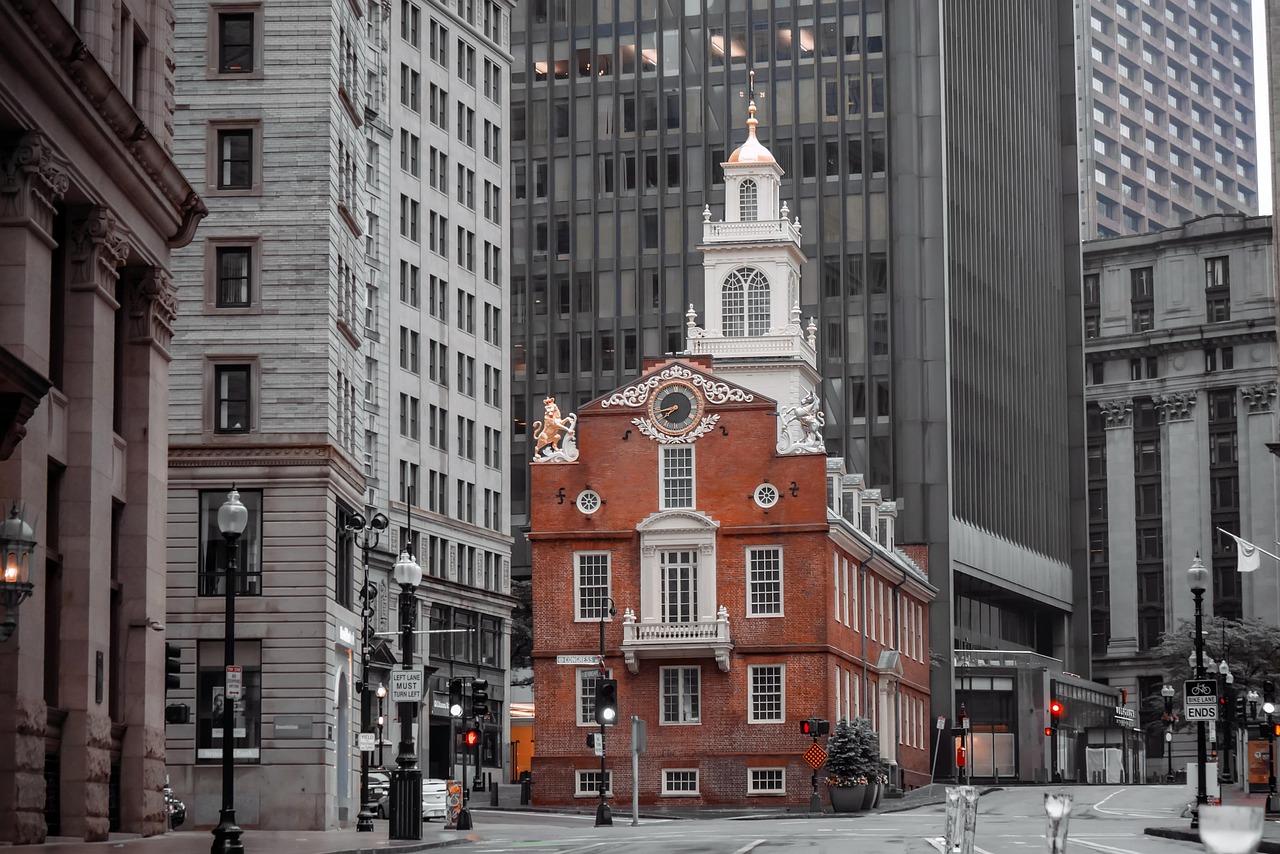
Boston has always had the ingredients for a strong startup ecosystem: MIT, Harvard, a dense concentration of teaching hospitals, and a financial sector that knows how to put capital to work. What's changed over the past few years is the pace. Massachusetts companies raised $7.89 billion in venture capital in 2024, up from prior years, and the state has ranked second in the US for AI-company VC funding every year since 2020. As of early 2026, there are more than 429 recently funded startups in the Boston area and over 1,500 open roles across those companies.
For anyone renting or looking to rent in Boston, this matters. Where startups cluster, workers follow. Where workers follow, housing demand rises. The relationship between Boston's office market and its rental market is tighter than most people apartment hunting realize.
What's actually growing and where
Boston's tech ecosystem is not one industry. It's several, running in parallel, each with a distinct geography.
Cambridge anchors the deep tech, biotech, and AI research end of the spectrum. The proximity to MIT and Harvard means that a meaningful share of Cambridge's startups are university spinouts, companies built on research that crossed the commercialization threshold. Kendall Square in particular has become one of the densest concentrations of life sciences and AI companies in the country, with large institutional players like Pfizer, Novartis, and Google operating alongside early-stage firms.
Downtown Boston and the Seaport district have absorbed more of the SaaS, fintech, and healthcare technology companies. The Seaport has transformed significantly over the past decade, shifting from industrial waterfront to a purpose-built commercial district that now houses a mix of established tech firms and growing startups. South Station's transit connections make it practical for employees commuting from across the metro area.
This geographic split matters for renters because the demand it generates is not uniform across the city. A software engineer working in Kendall Square has a different commute calculus than one based in the Seaport, and the neighborhoods they're most likely to look at reflect that.
The office market is active
The growth in startup funding has fed directly into demand for office space. Boston's commercial real estate market has been more resilient than many comparable US cities in the post-pandemic period, partly because life sciences and biotech companies, which require purpose-built lab space, never fully shifted to remote work in the way that software companies did.
For startups specifically, the search for office space in Boston has gotten more competitive at the smaller end of the market. Early-stage companies looking for private offices for teams of 10 to 30 people are finding a range of options across the city's key commercial neighborhoods. Current listings on Tandem Space for office space in Boston cover neighborhoods including the Seaport, Back Bay, Downtown, and Cambridge, with private office configurations available at a range of price points depending on size, fit-out, and proximity to transit.
The return-to-office push has been more consistent in Boston than in some other tech-heavy metros. Companies headquartered here, particularly in biotech and fintech, have maintained higher in-office expectations than their counterparts in San Francisco or New York, which keeps demand for physical space relatively stable.
What this means for Boston renters
A growing startup sector creates housing demand in specific, predictable ways. Early employees at funded companies tend to be well-compensated and often relocating from other cities. They are, almost by definition, renters in the short to medium term: people who need to be in the city, want a reasonable commute, and are willing to pay for quality and location.
That profile shows up in Boston's rental numbers. Average rent citywide sits at around $2770 per month as of May 2026, with vacancy running near 2.8%. The neighborhoods closest to the major office clusters command significantly more: Back Bay averages around $4,773 per month for an apartment, Downtown and the Financial District runs near $4,508, and South Boston, which sits between the Seaport and the residential neighborhoods to the south, averages $4,180.
The rental market's response to startup growth is not instantaneous, and it's not uniform. A funding round doesn't immediately fill a neighborhood with new tenants. It takes months for a company to hire, for those hires to relocate, and for that relocation demand to show up in lease signings. Several consecutive strong funding cycles have compounded, and the housing market is absorbing that demand now.
Neighborhoods worth watching
For renters trying to get ahead of where demand is building, a few areas are worth understanding.
East Boston has been held as one of the more affordable options in the city, averaging around $3,083 per month, while maintaining reasonable transit connections via the Blue Line to Downtown and the Airport. As the Seaport and surrounding areas have gotten more expensive, East Boston has absorbed some of that spillover demand.
Fenway and the South End are both seeing year-over-year rent growth above the citywide average. Both neighborhoods are close to the medical and biotech corridor along Longwood Avenue, which runs through the Longwood Medical Area and connects to the research institutions and hospitals that anchor Boston's life sciences employment base.
Somerville, particularly the areas near the Green Line Extension stops that opened in recent years, has emerged as a practical option for workers based in Cambridge. Rents run lower than in Kendall Square-adjacent Cambridge neighborhoods, and the commute is manageable.
Allston and Brighton continue to offer relatively competitive pricing, partly due to the high student population that has historically kept the rental market there more liquid and better supplied than in tighter neighborhoods.
The broader picture
Boston's rental market is being shaped by the same forces that are shaping its commercial real estate market: a concentrated pool of well-funded companies, a labor market that draws workers from across the country and internationally, and a physical geography that limits how far the city can sprawl. The VC funding, the university pipeline, and the institutional anchors in life sciences and finance have been building for decades. That base is not going anywhere, and the rental market reflects it.
For renters, the supply-demand imbalance that keeps Boston rents elevated is unlikely to resolve quickly. Understanding which neighborhoods sit closest to the employment clusters driving demand is more useful than shopping on price alone.