What a Glass Greenhouse Gives a Canadian Backyard Besides a Longer Growing Season
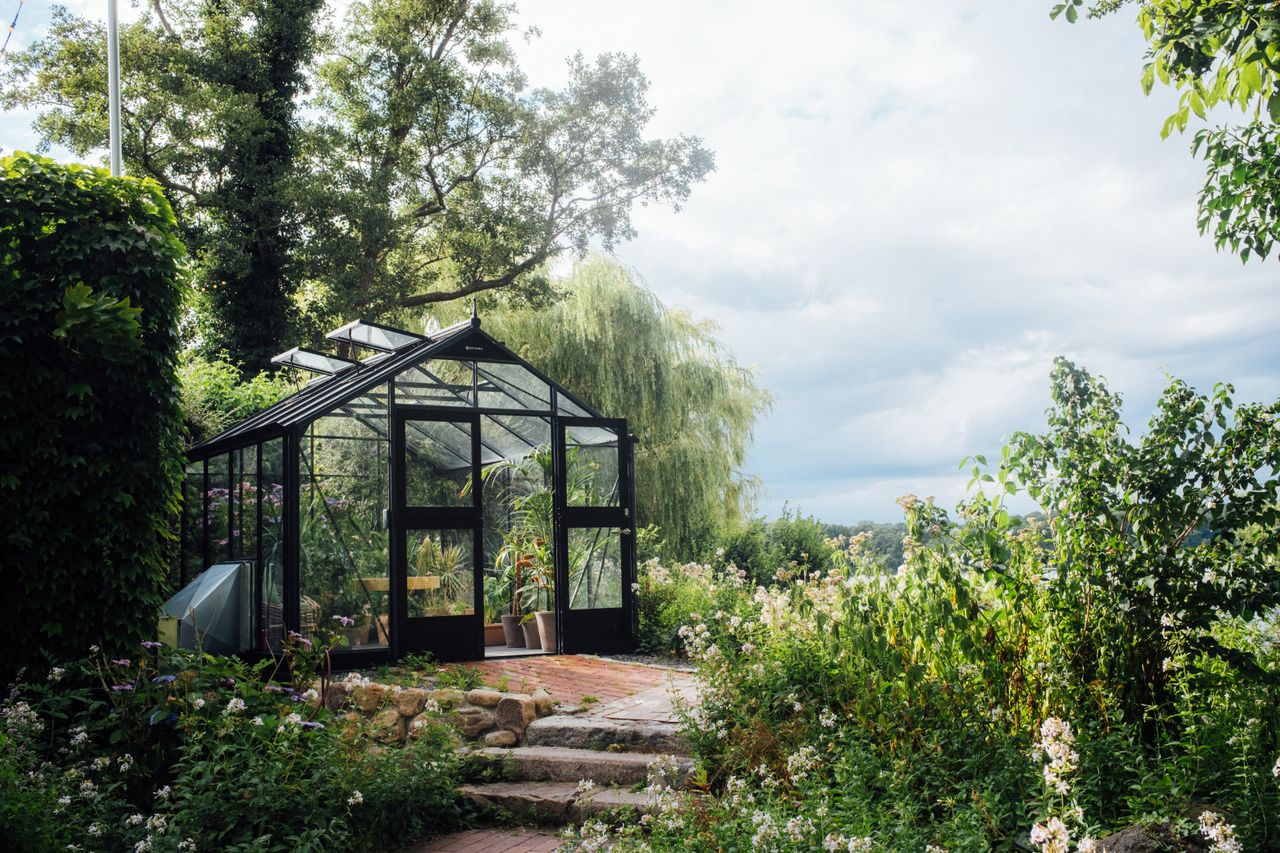
The garden does not start when the frost ends
Anyone who has gardened in Canada knows the rule about waiting for the Victoria Day weekend before putting tender plants outside. It exists for good reason, and it also means that every spring there are weeks when the seeds are ready, the gardener is restless, and the soil is not. A gazebo-style greenhouse closes that gap by giving those early weeks somewhere to happen, and it quietly changes what the backyard is for. Instead of a patch visited on weekends, it becomes a room with weather of its own.
The idea is older than most people realize. The orangery, a glazed room first built to keep citrus trees alive through European winters, is the ancestor of this design, and the family resemblance is easy to see: tall glass walls, a roofline with some architecture to it, and a floor wide enough to hold a chair. Where the early versions belonged to large estates, this one fits an ordinary suburban yard and goes up over a weekend.
Glass holds heat in a way thin plastic cannot
Think of a car parked in a sunny lot on a cold day. The cabin is warm when you open the door, because sunlight passes through the glass, strikes the seats, and leaves again as longer-wave heat that glass does not let out easily. A glass greenhouse works on the same principle at a larger scale, which is why the air inside can feel comfortable while the yard outside is still stiff with frost.
Full 4 mm tempered glass on both walls and roof, as used on the Orangery Series, adds two things beyond warmth. It stays clear for years instead of clouding as some plastic panels do, so light levels stay steady, and tempered glass breaks into small blunt pieces rather than long shards if something does go wrong.
Ventilation matters more than heat on a sunny day
The surprise for new owners is overheating. A greenhouse that feels pleasant in the morning can climb to tomato-wilting temperatures by early afternoon on a bright spring day, even with cold air outside, because the same trapped sunlight keeps heating the space. Good greenhouse ventilation means opening the vents before it feels hot, since by the time you notice, the plants are already stressed.
Warm air rises, so airflow works best when one vent sits low and another sits high and the cooler air is allowed to push through. The Orangery Series comes with four standard ventilation windows, and a sensible routine is to prop two open on any day with real sun and close them again before the late-afternoon chill. Humidity matters too, since damp still air breeds mildew on leaves, and a little morning airflow protects the plants even in cool weather. A cheap automatic vent opener is worth a look for anyone who works away from home, because the hottest hours often fall when nobody is there to open a window.
A greenhouse is only as steady as what it sits on
Canadian ground moves. Frost heave lifts one corner of a poorly supported base and drops another, and a glazed structure does not forgive that kind of twisting the way a wooden shed does. A proper greenhouse foundation, whether treated timber, a poured pad, or a ring of compacted gravel, keeps the frame level and gives the anchors something solid to hold. Spend a Saturday getting the base square within a few millimeters. It is the most boring job of the whole project and the one most worth doing right.
Water and snow are the other half of the story. An integrated gutter with four downpipes carries meltwater away from the glass and off the footing instead of letting it freeze at the base. Check the manufacturer's stated snow loading before settling on a site, and keep the roof cleared after heavy falls rather than trusting the glass to carry more than it was designed for.
What people really do with the space
A backyard greenhouse fourteen feet on each side gives close to two hundred square feet of floor, which is more room than most spare bedrooms. The first spring tends to go to seed trays, tomatoes, and peppers started weeks ahead of the garden. By summer the same space is where herbs thrive, cucumbers climb the walls, and somebody drags in a folding chair. By autumn it is a sunroom with a kettle, and the fittings that earn their place are modest:
- Slatted benches along both side walls
- Shade cloth for peak summer sun
- A simple minimum and maximum thermometer
- A rain barrel fed from the downpipes
None of it is expensive or complicated, and all of it can wait until the second year. What cannot wait is the thermometer, because a greenhouse without one runs on guesswork, and guesswork is how a full tray of seedlings ends up cooked on the first sunny day.
Putting it together without losing a weekend
Aluminum greenhouses have a reputation for fiddly assembly, mostly from sliding tiny nuts into narrow tracks while holding a panel with the other hand. The Orangery Series ships with its structural nuts already inside the aluminum box profiles, which the maker says cuts installation time by more than half. Even so, plan for two adults and a calm day.
Large glass panels are heavy and awkward in wind. Wear cut-resistant gloves and eye protection, keep panels lying flat until they are ready to lift, and leave the roof glazing until the frame is fully braced.
Honest limits, and where backyard growing is heading
Glass costs more than polycarbonate, weighs more, and can still be damaged by a severe hailstorm, so siting and insurance both deserve a few minutes of thought. In return it stays clear for years and looks like part of the garden instead of a utility building. Powder-coated aluminum resists rust, which matters where winter and spring thaw keep a frame wet for months.
More households are treating the backyard as a place to grow part of their food and to spend time, not only to mow. A glass greenhouse that works as both growing space and garden room fits that shift, and it can be extended later. Anyone weighing a backyard greenhouse against a simple cold frame should think about how much time they expect to spend inside it, because that answer usually settles the question. TMG Industrial offers a 4.7-foot extension kit for this model, which turns a decision about a fixed footprint into one that can grow with the garden.