Choosing Lamps for Furnished Boston Rentals Before September 1
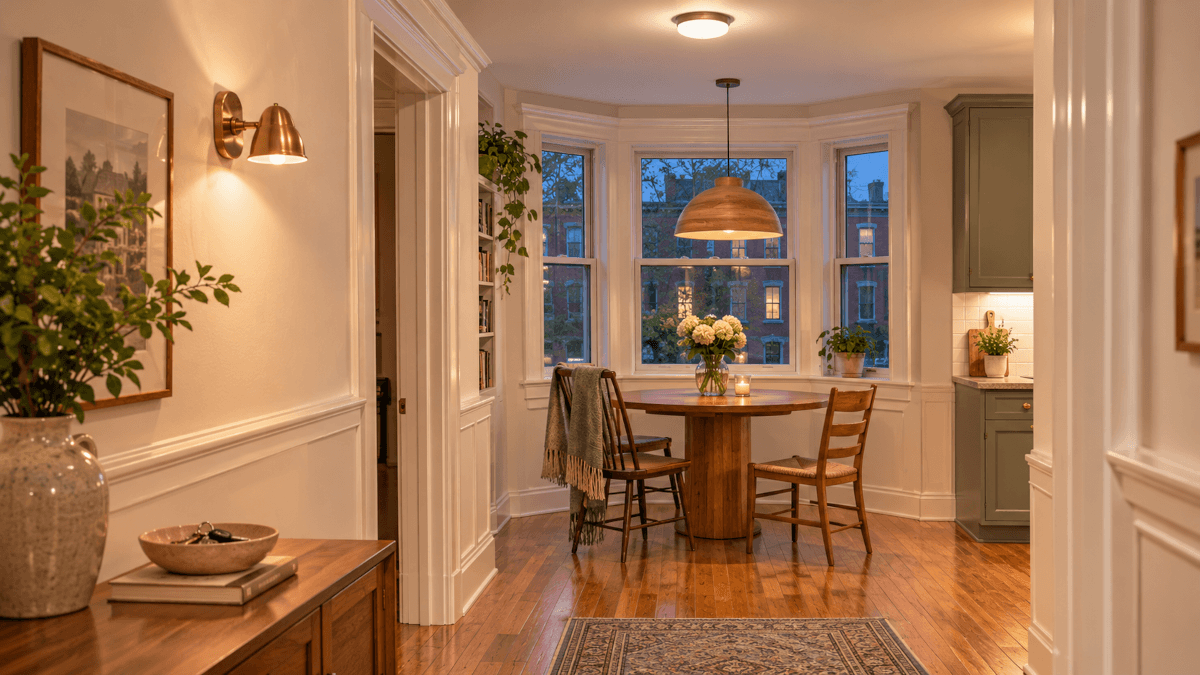
A large share of Boston's leases turn over on September 1, so landlords with furnished units spend late August making sure every room is ready for someone arriving with a suitcase. Beds and couches get most of the attention. Lamps tend to be bought last, often one at a time, and that is usually where the trouble starts.
In many apartments, especially older ones, the living room and bedrooms have no ceiling fixture at all. The electrical code lets a wall switch control an outlet instead of a built-in light in living rooms and bedrooms, so in a furnished unit the lamps you supply may be the only light in the room. They deserve more thought than a last-minute run to a big-box store.
Find the switched outlet first
Before choosing anything, walk the unit with a phone charger or an outlet tester and find which outlets the wall switch controls; in some rooms it's only the top half of one duplex outlet. That is where the main lamp belongs, so a tenant can light the room from the doorway. Test any lamp you are considering on that outlet. Some lamps with electronic touch controls stay off after the wall switch cuts the power and need a tap before they come back on, which defeats the point of the switch.
One or two models for every unit
Matching lamps across units saves time at turnover. A broken lamp can be swapped from a spare instead of replaced with whatever is on the shelf that week, and listing photos look consistent from one unit to the next. Some landlords standardize on one or two designs bought by the carton from a manufacturer, such as accent lamps from BeginLighting, a lighting factory in Foshan, China, and keep one spare of each model in the building's storage room.
Whatever you buy, make sure every lamp in a unit gives off the same warm color. A living room with one warm lamp and one bluish one looks unfinished in person and worse in photos.
Built for turnover
Lamps in a furnished unit get moved around, wiped down and bumped on moving day. A weighted metal base is harder to knock over than a tall, light one. A fabric or linen shade can be brushed clean between tenants, while a shade that is hard to clean usually ends up being replaced. Check that the cord reaches the switched outlet on its own. Extension cords tend to end up under rugs, where a cord can't release its heat.
Cordless, rechargeable lamps are handy on a desk or a bedside table far from an outlet, but someone has to keep them charged. For the main light in a room, a plug-in lamp on the switched outlet is the simpler choice in a rental.
Controls a tenant can use in the dark
A new tenant shouldn't need instructions to turn on a lamp. On lamps away from the switched outlet, a touch base or a plain switch on the cord is easy to find at night, while a remote control is one more small thing that leaves with the last tenant. Lamps with a few brightness steps let one lamp work as a reading light and a night light, which matters in a studio where the bed and the couch share a room.
Put them in the move-in paperwork
List each lamp, its location and its condition on the move-in inventory, alongside the statement of condition Massachusetts landlords must give tenants when they take a security deposit. A photo of each room with the lamps on takes a minute and settles most questions at move-out.
Do the final walk-through at night
A unit that looks fine at a 2 p.m. showing can feel dim at 9 p.m., and that is when the tenant will be standing in it surrounded by boxes. Walk each furnished unit once after dark before move-in day, switch on every lamp from the doorway, and fix what you find while there is still time to order.