What Landlords Should Consider When Choosing a Fence for a New England Rental Property
For landlords, a fence is more than a backyard feature. It shapes how tenants use the outdoor space, whether a property feels pet friendly, and how much maintenance lands on your plate each year. In New England, where winters are hard on anything left outdoors, the right choice can save a lot of time.
Whether you manage a two-family in Greater Boston or own rentals elsewhere in the region, here are the main points to weigh before adding or replacing a fence.
Start With How Tenants Use the Space
Different rentals call for different fences. Think about who lives there now and who you hope to attract.
- Pet owners. Many renters search specifically for pet friendly listings. A secure, fully enclosed yard with a self-closing gate can make a unit more appealing to dog owners.
- Families. A fenced yard gives parents a safer place for children to play.
- Shared yards. In multifamily buildings, a fence can separate private patios or define a shared area so each unit knows its space.
- Privacy. Dense neighborhoods and corner lots often benefit from privacy fencing that screens the yard from the street.
Match the Material to Your Maintenance Budget
Maintenance matters more for rentals than for owner-occupied homes, because every repair takes your time or a contractor's.
Vinyl and PVC
Vinyl does not need painting or staining and handles moisture well. For many landlords, that low upkeep is the main appeal. Occasional washing keeps it looking clean between tenants.
Wood
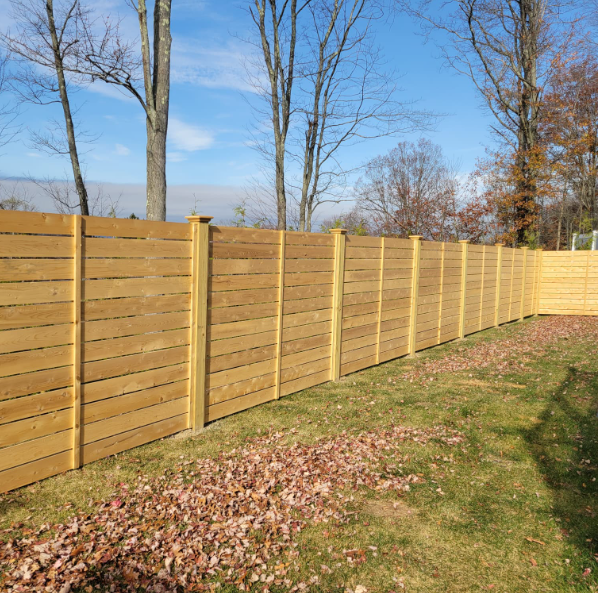
Cedar and pressure-treated pine offer a traditional look that fits New England homes. Wood needs periodic staining or sealing and an eye on posts at ground level, where moisture can lead to rot over time.
Aluminum
Aluminum resists rust, holds up well to snow and road salt, and works well for decorative front yards and pool areas where an open view is useful.
Chain Link and Welded Wire
These are practical, cost-conscious options for side yards, utility areas or large lots. They keep pets contained without blocking light.
Plan for New England Winters
Freeze and thaw cycles can push fence posts upward over time, a process often called frost heave. Proper post depth for local conditions is one of the most important parts of any installation in the region. Snow piled against a fence from shoveling or plowing also adds pressure, so think about where snow will go before deciding on placement.
Gates deserve extra thought. A gate that sags or freezes shut is one of the most common tenant complaints. Sturdy posts, quality hinges and a latch that works with gloves on can prevent a lot of maintenance calls.
Check Rules Before You Build
Fence rules differ widely across Massachusetts and Connecticut communities. Many towns set limits on height, placement near sidewalks and which side of the fence faces the neighbor. Pools usually have their own barrier requirements, and some neighborhoods have historic district or association guidelines.
Before you start, contact the local building or zoning office to confirm what applies to your property. If there is any question about boundaries, a licensed surveyor can mark the property line. It is also wise to talk with your insurance agent or attorney about how a fence, a pool enclosure or pet rules fit with your coverage and your lease.
Make It Easy on Tenants
A few small choices can make a fence work better for everyone:
- Add a gate wide enough for trash bins and lawn equipment
- Provide a spare gate key or code if the gate locks
- Include basic fence care expectations in the lease or move-in notes
- Walk the fence line during regular inspections and after major storms
Getting Help With Rental Properties Outside Boston
Many Boston area landlords also own property in Connecticut or southern Massachusetts. Working with an installer who knows those communities can simplify the process.
Fence Builders USA is based in Seymour, Connecticut, and installs and repairs vinyl, PVC, wood, aluminum, chain link, composite and welded wire fencing, including pet, pool, security and deer fences. The company also installs manual and automatic gates and handles storm damage repair. It serves communities across Connecticut, along with select areas of southern Massachusetts, New York, New Jersey, Pennsylvania and Rhode Island. To reach Fence Builders USA, call 203-997-6978 or visit their office at 132 Silvermine Road, Seymour, CT 06483.
Frequently Asked Questions
Does a fence add value to a rental property?
It can make a property more attractive to certain renters, especially pet owners and families. The effect on rent or resale value varies by market.
How tall should a rental fence be?
It depends on the purpose and local rules. Privacy fences in backyards are often taller than front yard fences, but height limits vary, so confirm with the local building or zoning office first.
What is the lowest maintenance fence for a rental?
Vinyl and aluminum generally need the least ongoing care.
A Fence That Works as Hard as You Do
The best rental fence fits how tenants live, stands up to New England weather and keeps your maintenance list short. A bit of planning before installation can pay off across many years of tenancies.