The Subdivision Renaissance: How Master-Planned Communities Are Redefining Suburban Real Estate Investment
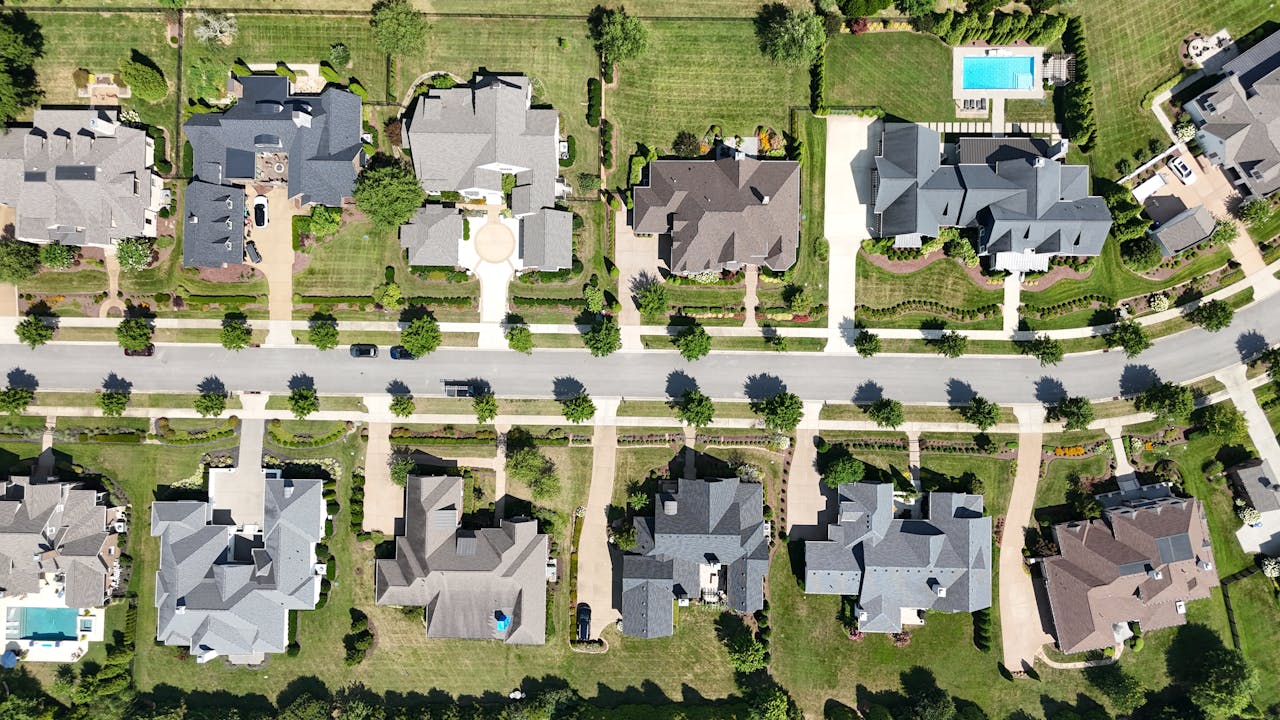
For most of the decade following 2008, master-planned communities were the cautionary tale of residential real estate. Overbuilt on speculative demand, underwritten with assumptions that never materialized, and saddled with half-finished amenity packages that became liabilities overnight, the model nearly collapsed. Lenders walked away. Developers went dark. And the conventional wisdom that followed was simple: large-scale, long-horizon land development was too risky for serious capital.
That consensus is now being dismantled, market by market, across the Sun Belt. The same model that looked like a liability fifteen years ago has become one of the most structurally sound plays in residential real estate, and the reason comes down to who is buying homes today, where they are choosing to live, and why the phased development structure that once seemed like a weakness is now functioning as a risk management tool that pencils out in ways it simply could not before.
What a Master-Planned Community Actually Is
A master-planned community is a large-scale residential development, typically spanning 1,000 acres or more, designed from the ground up to function as a self-contained neighborhood or small town. Parks, trails, retail centers, schools, recreational facilities, and multiple housing types are all incorporated under a single unified development plan. Unlike a conventional subdivision that delivers a single housing product and exits, a master-planned community is built in phases over 5 to 20 years, with the developer controlling land release, builder selection, and the pace of amenity delivery throughout the entire buildout.
The MPC model creates a cycle of value: the developer sells a portion of land to homebuilders, those neighborhoods generate demand for commercial properties and amenities, and the existence of those amenities makes the remaining land more valuable, allowing the developer to sell subsequent parcels at progressively higher valuations. That compounding dynamic is what separates a well-run master-planned community from a standard subdivision, and it is exactly what institutional investors are pricing into acquisition decisions today.
The Numbers Behind the 2026 Comeback
The performance data coming out of the top-selling master-planned communities makes the case clearly. According to RCLCO Real Estate Consulting, new home sales in master-planned communities outperformed the broader market through 2025, with the top 50 communities setting a pace only 3% below the top communities of 2024, even as overall new home sales fell more than 6% at mid-year.
In 2026, Florida and Texas continue to anchor the national MPC rankings, with Florida accounting for 43% of combined net new home sales among the Top 50 communities, up from 38% in 2024. Texas placed 17 communities in the Top 50, including two Houston-based projects in the Top 10. These are not marginal gains in a softening market. They represent a structural separation between master-planned communities and the broader housing inventory around them.
Looking ahead, RCLCO projects a modest improvement in the for-sale housing market in 2026, with a roughly 5% increase in total new home sales and low single-digit price appreciation, and expects MPCs to continue outperforming the market given their lifestyle appeal, amenity mix, and broader range of housing product including more attainably priced detached homes on smaller lots.
Why Remote Income Changed Everything
The master-planned community model failed in 2008 largely because it was built on locally concentrated employment. When regional job markets collapsed, so did the demand base. The communities that survived were those with enough geographic diversification to weather the cycle, but most did not have it.
The remote work shift has fundamentally altered that equation. Today's MPC buyer in Celina, Texas or Punta Gorda, Florida is often earning income tied to a tech firm in Austin, a finance company in New York, or a consulting practice with no fixed geography. Their housing decision is driven by lifestyle, school quality, and cost of living, not by proximity to a local employer. That buyer base is far more resilient across local economic cycles than anything the master-planned model was underwritten on before 2008.
Jake Miakota, CEO of Subdivisions, frames the shift directly:
"The master-planned model fell out of favor after 2008 because it was overextended and underwritten on speculation, but the fundamentals today are completely different. You have a defined buyer base with remote income that isn't tied to local employment cycles. Phased development lets you derisk the land basis while the community itself builds the demand for later phases, which is a dynamic that pencils out in mid-tier markets in a way it simply couldn't ten years ago."
— Jake Miakota, CEO of Subdivisions
That last point matters for investors evaluating where capital is moving. Mid-tier Sun Belt markets including Charlotte, San Antonio, Huntsville, and the outer rings of Atlanta and Nashville are now seeing MPC activity that was previously concentrated only in Houston and Central Florida.
How Phased Development Derisk the Investment
The structure of a master-planned community is not just a planning exercise. It is a capital management strategy. Phase 1 infrastructure, covering grading, road construction, utility installation, and initial amenity construction, typically takes 12 to 24 months. Phase 1 home construction follows for another 12 to 18 months, meaning first home closings generally occur 2.5 to 4 years after land acquisition. Subsequent phases move faster because major trunk infrastructure is already in place.
This structure allows developers to prove demand before committing capital to later phases. If absorption in Phase 1 comes in below projections, the developer can slow lot releases, adjust pricing, or modify the product mix before deploying capital further into the land. That optionality does not exist in a speculative greenfield project where all the infrastructure is built upfront. Babcock Ranch in Punta Gorda, Florida demonstrated what strong absorption looks like in practice, selling 1,066 homes in 2025, a 34% increase over the prior year.
From an investment perspective, Cushman and Wakefield research shows that MPC residents are more likely to hold bachelor's degrees and earn higher household incomes than surrounding areas, with an average of 63% of residents completing college compared to 49% in surrounding neighborhoods and 41% in their broader metro statistical areas. That buyer profile supports higher price points, lower default rates, and more stable resale values throughout the development cycle.
The Charlotte Effect: Capital Returning to Surrounding Counties
The dynamic playing out in Charlotte is a useful case study for understanding where MPC capital is flowing and why. The metro has absorbed relocating households at a consistent pace for years, but the supply of well-located infill land close to the city core has compressed sharply.
John Swann, Founder of John Buys Your House, explains:
"Charlotte has been absorbing relocating households for years, and what we're seeing now is that the demand has finally outpaced the infill supply close to the city core, which is pushing serious capital back toward large-lot subdivision development in the surrounding counties. The entitlement timelines are still painful, but developers who got into the land pipeline two or three years ago are sitting on something genuinely valuable right now."
— John Swann, Founder of John Buys Your House
That pattern is repeating itself across the Sun Belt. As inner-ring land becomes harder to source and more expensive to entitle, capital is moving to the outer counties of Charlotte, Nashville, Raleigh, Jacksonville, and San Antonio, where large tracts are still available and master-planned development timelines, while long, are predictable.
What Drives Value Inside a Master-Planned Community
The amenity package is the most visible differentiator of a master-planned community, but it functions as more than a marketing tool. RCLCO research finds that residents increasingly view master-planned communities as a safe haven from housing affordability challenges and market uncertainty, with the amenity infrastructure and place-making acting as insulation from broader market risk.
The specific amenities that drive absorption in today's Sun Belt MPCs have shifted meaningfully from earlier generations. Resort-style pools and golf courses still matter in certain markets, but the features generating the strongest buyer response in 2025 and 2026 are trail systems and connected open space, high-speed fiber infrastructure built into the community plan, flexible commercial zones that support remote work, proximity to highly rated schools within the development footprint, and mixed housing typologies that allow buyers to move through the community at different life stages.
That last point deserves specific attention. The MPCs that are outperforming today are not built around a single housing product. They offer detached single-family homes at multiple price points, townhomes, age-restricted sections, and in some cases multifamily rental product. That diversity keeps the absorption rate more consistent through market cycles because different buyer segments respond to rate and price environments differently.
The Risks That Cannot Be Underwritten Away
Master-planned communities carry risks that are specific to their scale and timeline, and investors who treat them as simply a larger version of a conventional subdivision tend to misunderstand those risks.
Entitlement exposure is the most significant. A 2,000-acre MPC in a fast-growing Sun Belt county can take three to six years from land acquisition to first home closing, and any change in political leadership, municipal infrastructure capacity, or environmental permitting can extend that timeline further. Developers who acquired land in the right markets in 2021 and 2022 are in strong positions today, but new entrants in 2026 are buying into a different entitlement risk profile than existed three years ago.
Buyers in master-planned communities also take on two layers of financial obligation beyond the mortgage: homeowners association assessments enforced through private covenants, and in many communities, special district taxes that funded the roads and utilities built during the development phase. Rising HOA costs have become a friction point in some Sun Belt markets as insurance premiums and maintenance expenses have climbed, and developers underwriting future phases need to model realistic carrying costs for the associations they are creating.
Finally, the self-reinforcing value cycle that makes a well-run MPC attractive can also work in reverse. If early phases absorb slowly and commercial tenants do not materialize on the projected timeline, the later-phase land that was expected to appreciate significantly may not perform as underwritten. Phase discipline and accurate absorption modeling are not optional.
Where the Opportunity Is Concentrating in 2026
The Southwest gained 12 spots in the 2026 Top 50 MPC rankings, up from 9 in 2024, reflecting structural evolution in how master-planned communities are being financed, developed, and brought to market outside the traditional Florida and Texas strongholds. Las Vegas, Phoenix, and several secondary markets in the Carolinas and Tennessee are absorbing capital from developers who have recognized that the demographic tailwinds driving Sun Belt growth extend well beyond the markets that dominated the last cycle.
The window is not unlimited. Land in the most desirable outer-ring suburban counties is moving fast, entitlement pipelines are filling up, and the developers who positioned early are already delivering Phase 1 product. For investors evaluating this asset class in 2026, the question is no longer whether master-planned communities work. The question is whether the right land, in the right market, is still available at a basis that supports the 10 to 20-year development horizon the model requires.
The capital that understood this earliest has already moved. The rest is working to catch up.