Innovative Ways You Can Make The Most Out Of Your Space At Home
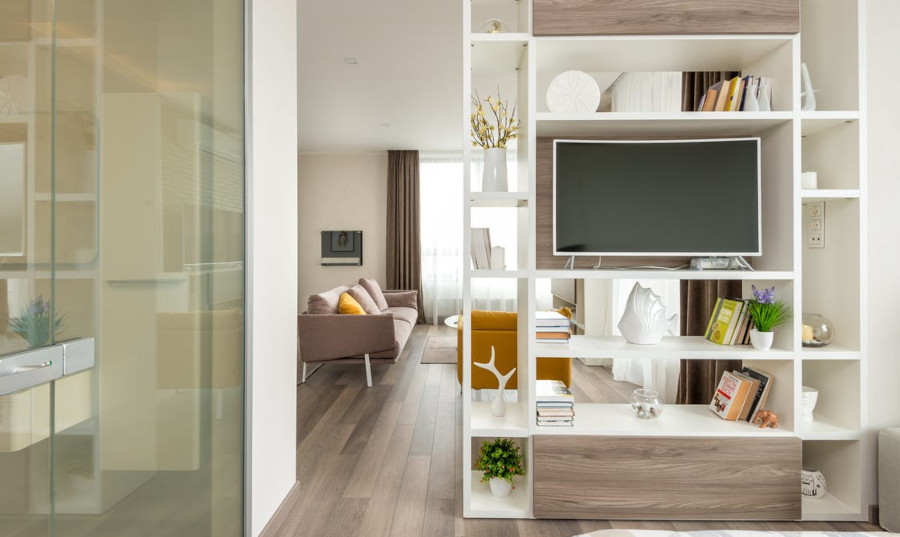
Home is where the heart is. When you fall in love with a house, you do all that you can to transform it into a home. With careful determination, you select piece after piece of furniture to bring to life the vision you hold for your dwelling place. Sometimes the notion is held that the more items placed in a room, the better. This may not be so.
But can there be a consensus that there is always more that can be done to enhance the layout of an area? Great! You'll be glad, then, to read about inventive ways to take advantage of every inch of your home, making it more people and pet friendly. It may well be that some of these tips are already employed by you and if that's the case, Kudos! Great minds think alike.
Starting From The Outside In
You got it, the garage. Ah, what can and has been described many times as the most neglected space of a home. And as a home in itself, it becomes the residence for old furniture that just won't do being seen but isn't raggedy enough to be tossed out. The abode to non functioning appliances; old refrigerators, toasters that don't toast, and blenders that have ceased to blend. Not to mention the chief location to store bags and heaps of clothes for charity that somehow never makes it there, sports equipment, tools and the list goes on. Does your car even still fit?
It gets to the point where no actual flooring can be seen because it has been overcome with stuff. It is now an obstacle course to get from one point to another and congratulations if you make it without getting poked, tripped, or worse. Why keep torturing yourself? If you are not ready to dispose of any of your belongings, then begin the process of sourcing better storage options. With garage storage solutions in Atlanta, this should no longer be a problem. Find easily many fixes you may not have even thought of. Everything from modular hook arrangements, wall shelves, ceiling racks, totes, and bins that can be stored overhead can be built, delivered, and professionally installed.
You may already have some of these in your garage. Awesome if you do. Were they expertly built using the best materials. Wood you say? Well, that can come with its own host of problems down the line. Rot, termite infestation, splintering. Can it withstand the weight of up to one thousand pounds? Yeah...probably not.
No judgement whatsoever. You saw the need for something to be done and you made it happen. But think long term. Steel sounds like a better option for longevity. What do you think? This may not be a do-it-yourself project like the woodworks were, but if the products come with a lifetime warranty, won't a specialist installation be worth it?
Help Yourself
Not all changes that can be made require outside or expert help. A lot of simple changes that you can do yourself can free up more space at home. Nothing will be thrown your way that's too difficult.
Storage boxes are your friend. Now please don't just dump things into boxes, no no. Take some time and as meticulously as possible, pack away belongings that you do not regularly use, those you want to donate or sell or dump. Adding labels can help you with remembering what's in which box so as to not confuse the final location. And simply stack them neatly in a corner. If you prefer not to keep many boxes in your home, look into renting a storage space. That way you keep everything you like out of sight but not out of mind.

When selecting furniture, if you know that you are working with limited space, choose ones that can be folded onto themselves, deflated or made to be more compact. Are you following? It should be becoming apparent how these modifications can work in your favor with tables, chairs and beds. And best of all, no one needs to know, unless you choose to disclose. While you're at it, select items that have multiple uses, that way you save time and money while freeing up your environment.
Install your own wall shelves. These can be purchased ready made and can be erected by sticking or hanging, thereby creating more space. If you intend to store items that weigh little then this is definitely an option to consider. For things like clothes, books, and pictures in frames, this may be perfect. For your shoes, shoe racks both hanging and standing can significantly free up some square inches. This is surely preferable to shoes scattered willi nilli everywhere.
Do you have countless photos, piles and stacks of important documents? These don't need to be stored physically. Make the decision today to store them in the 'cloud'. Not only will you then have more space, your treasured items will be safe and protected from loss or damage.

The benefits of making such changes far surpass what you might imagine. Reduce stress and anxiety with greater feelings of happiness. The more content you are in yourself, the more your personal relationships will flourish.
Not having your attention pulled in many different directions due to clutter and disorganization has been proven to increase productivity. And who doesn't like a deeper and more peaceful rest?
It would not be surprising if many of these perks didn't occur to you. But isn't it great all these additional gains you stand to receive when you choose to declutter your living space and promote a free flowing layout of your environment?
These adjustments, additions and subtractions don't need to be hard. Many times the simple way is the best way. Remember, reaching out for professional help when the problem becomes too big is always recommended and commendable.
Be excited for yourself on this new journey that will ultimately lead to loving your home and yourself even more.
Frequently Asked Questions
What are the biggest space-saving mistakes apartment dwellers make?
Three common patterns. First: keeping items "just in case" that haven't been used in over a year — these accumulate in storage areas and crowd out things that earn their space. Second: buying organizing products before decluttering, which just creates organized clutter. Third: choosing furniture that doesn't fit the actual space (oversized sectionals in small living rooms, wide dressers in narrow bedrooms). The decluttering should always come first; the storage system should match what you decided to keep, not the other way around. Most apartments could shed 25-40% of their possessions without anyone missing them.
How much can clever storage actually free up in a small apartment?
Realistic gains: a well-organized storage strategy in a 600-800 sq ft apartment typically frees 15-25% of usable floor space compared to typical disorganized layouts. Vertical wall storage (shelving above eye level), under-bed storage containers, behind-the-door hangers, and ceiling-mounted bike or seasonal item racks add roughly 40-80 cubic feet of storage capacity without consuming floor space. That's enough to clear visual clutter from main living areas and meaningfully change how the apartment feels day to day. Bigger gains come from selling or donating items, not from storing them more cleverly.
Are professional organizers worth the cost?
Depends on your situation. Professional organizers typically charge $50-$150 per hour and bring expertise in maximizing space, choosing the right storage products, and helping clients make difficult keep-or-toss decisions. They're particularly valuable for: post-move organization, downsizing transitions (aging parents, divorce, kids leaving home), and chronically cluttered homes where DIY attempts have repeatedly failed. They're less valuable for routine seasonal organization or simple decluttering, which most people can handle with a few weekends and YouTube guidance. A 6-8 hour engagement ($400-$1,200) often produces dramatic results for first-time clients.
What's the best way to store seasonal items in a Boston apartment?
Boston's strong seasons (heavy winter coats, summer beach gear, holiday decorations) make seasonal storage a real challenge in apartments without basements or attics. Best strategies: vacuum-sealed compression bags for bulky textiles (winter coats, comforters) which reduce volume by 60-80%, clear stackable bins on closet shelves for grouped categories, hard-shell suitcases used as seasonal storage when not traveling, and off-site storage units ($50-$200 monthly) for items used only annually. Label everything clearly with contents and the season it belongs to — vague labels guarantee re-rummaging through everything when the season changes.
How do I make a small Boston apartment feel larger?
Several proven techniques. Use light wall colors (whites, light grays, soft neutrals) to reflect more light. Hang large mirrors opposite windows to double the perceived light and depth. Choose furniture with visible legs rather than skirted bases — visible floor space creates illusion of more room. Eliminate visual clutter from horizontal surfaces (coffee tables, kitchen counters) which makes spaces feel busier than they are. Hang curtains high (close to ceiling) and wide (extending past the window frame) to maximize perceived window size. Use one statement piece per room rather than many small decorative items competing for attention. The cumulative effect: a 600 sq ft apartment can feel like 800 sq ft with these techniques.
Should I rent off-site storage for things I rarely use?
Often yes, but with discipline. Off-site storage in Boston runs $75-$300 monthly depending on unit size (5x5 small unit to 10x15 larger unit). Worth it when: you're between homes during a move, storing genuinely valuable items (heirloom furniture, art) with no current display space, holding business inventory for a side business, or temporary downsizing during major life transitions. Not worth it when: you're storing things you'll never realistically use again, when storage costs over 2-3 years would exceed replacement cost, or when "storage" becomes the place items go to be forgotten. Set a 12-month review on stored items — anything not retrieved in a year should be reconsidered.
What furniture is best for small or multi-purpose use?
Multi-functional pieces with integrated storage deliver the most value per square foot. Top categories: storage ottomans (provide seating, footrest, and hidden storage), Murphy beds or wall beds (free up daytime floor space entirely), sleeper sofas that genuinely sleep well (replaces a separate guest room), drop-leaf or extendable dining tables (small footprint daily, expandable for guests), nesting coffee tables (separates into multiple surfaces), bed frames with built-in drawers, and bookshelf room dividers (storage plus visual separation). Avoid "space-saving" furniture that's only theoretically functional — test it in store before buying. A flimsy fold-out desk that nobody actually uses costs as much square footage as a real desk would.
How often should I declutter to maintain optimal space?
Major decluttering twice yearly (spring and fall) works for most households, with quick mini-passes every 6-8 weeks for entry-point areas (entryway, kitchen counters, bedroom surfaces) where clutter accumulates fastest. Set the seasonal pattern: in spring, go through winter items and decide what stays; in fall, do the same with summer items. The "one in, one out" rule helps maintenance: when a new item enters the home, an equivalent old item should leave. Most clutter problems aren't acquisition problems — they're disposal problems. Build the habit of moving items out at the same rate you bring them in, and the space stays optimized indefinitely.