Why Apartment Dryer Vents Need Regular Cleaning
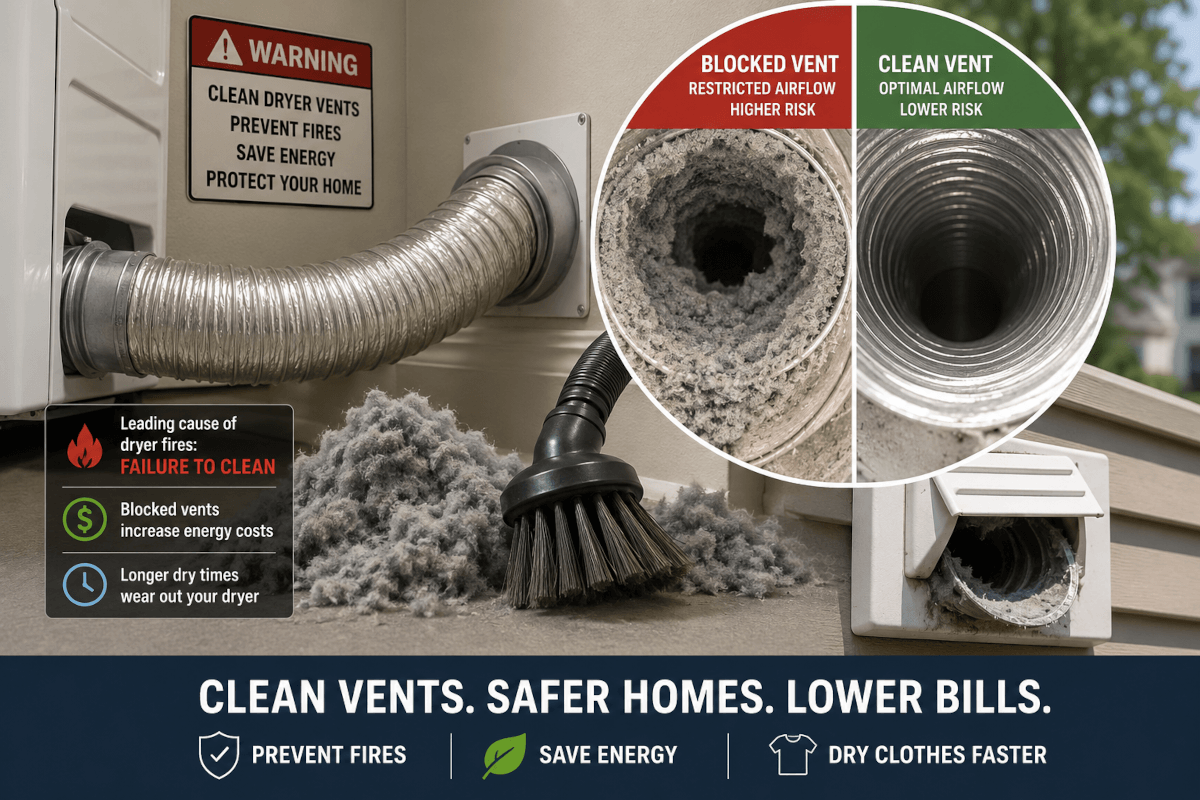
Most tenants only think about the dryer when it stops working well. By the time clothes come out damp after a full cycle, the vent behind the machine has usually been struggling for months already.
What Actually Happens Inside a Blocked Vent
A dryer vent is a straight path for hot, moist air to escape a building. Lint rides along with that air on every single cycle.
The lint trap sits at the front of the system. It stops the largest fibers. Smaller particles slip past and travel down the duct, where they stick to the inside walls, especially at joints and turns. This layer thickens slowly, cycle after cycle.
As the layer thickens, the duct narrows. Airflow that used to move freely now pushes against resistance. The dryer's heating element keeps running at full output, but the air carrying that heat away has less room to move.
The Fire Data Landlords and Tenants Should Know
This isn't a theoretical risk. The U.S. Fire Administration found that residential clothes dryer fires cause an estimated $35 million in property loss every year, with failure to clean identified as the leading cause of ignition.
Trapped heat with nowhere to go is what turns ordinary lint into a fire source. Lint ignites at a lower temperature than most people expect, and a blocked duct holds heat right where the fibers are packed tightest.
Where Professional Cleaning Fits In
Wiping out the lint trap handles maybe a third of the system. The rest of the duct, the part hidden behind the dryer and inside the wall, needs equipment a tenant doesn't have access to.
Dryer exhaust vent cleaning clears that hidden section using rotary brushes paired with vacuum extraction, pulling compacted lint out through the full duct run instead of just the first few feet. Technicians also confirm the exterior vent flap opens and closes the way it should, since a stuck flap traps moisture and invites pests.
Airflow Problems Cost Money Too
Fire risk gets the most attention, but a partially blocked vent also drives up utility costs. A dryer fighting restricted airflow needs more cycles, more time, and more electricity or gas to finish the same load.
Landlords covering utilities in a building often see this cost show up across every unit at once. Tenants paying their own utilities notice it on their individual bill instead. Either way, the inefficiency is the same problem showing up in a different place.
The Lint Trap Isn't the Full Story
Cleaning the trap after every load is still worth doing. It reduces the volume of lint reaching the duct in the first place, which slows down buildup further along the line.
It doesn't replace duct cleaning, though. A perfectly clean trap can sit in front of a duct that's already 70 percent blocked from years of use before a tenant moved in.
Multi-Unit Buildings Change the Equation
Apartment vent systems often run longer distances than a house would need. Interior units and upper floors route exhaust through extended horizontal sections or shared vertical shafts before reaching open air.
Every extra foot of duct and every additional bend gives lint more surface area to catch on. A building with dozens of units multiplies that risk across a shared structure, which is why building-wide maintenance schedules matter more than any single tenant's habits.
Older apartment buildings add another layer to this. Vent systems installed decades ago weren't always built to current airflow standards, and retrofits sometimes route ducts through longer paths than a modern build would allow. That history matters when a property manager decides how often cleaning needs to happen.
Setting a Realistic Cleaning Schedule
A few factors determine how often a vent needs attention:
- Household size and laundry frequency
- Length and number of bends in the vent run
- Whether the building has a shared laundry room or in-unit machines
- How long it's been since the last professional cleaning
Most vents benefit from a full cleaning once a year. Longer runs or heavier use can push that closer to every six to eight months.
Tenants can't see inside their own walls, but they can ask. A quick question to the property manager about the last cleaning date tells you more than watching the dryer for warning signs.