How to Find a Cool Mattress Without Losing Back Support
If you sleep warm and worry about back support, mattress shopping can feel like a tradeoff. A softer foam bed may sound comfortable but risky under the waist. A firmer cooling bed may sound stable but too hard at the shoulders or hips. The right choice should not force you to pick only one concern.
Look for cooling and support in the same practical tests. Your job is to test whether the bed feels stable, breathable, and easy to move on.
Start with the middle of the bed
Back support complaints often show up around the midsection. The hips sink, the waist feels unsupported, or the center of the mattress feels softer by morning. These are comfort observations, not diagnoses, but they are useful shopping signals.
Lie on your back for several minutes and notice whether the lower back feels lightly connected to the mattress. Then turn to your usual side if you use one. A good fit should not make the middle of the body feel like it is dropping away from the rest of you.
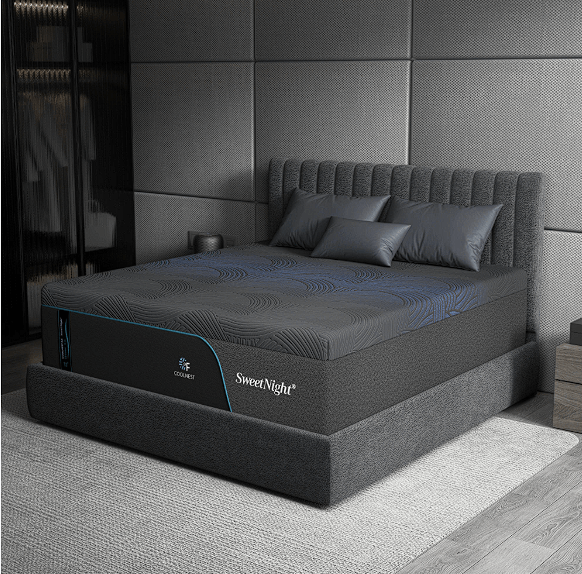
Image by Sweetnight.com
Cooling should not mean flimsy
Some shoppers see breathable or airy materials and wonder whether the mattress will lose support. Cooling features should not be judged as separate from the support design. The question is whether the comfort layers manage heat while the transition and base layers keep the body from sinking too far.
Read the construction in order. Cover, comfort layer, transition layer, support core, foundation guidance. If the page only talks about cool touch and never explains support, you are missing half the decision. If it only talks about firmness and never explains heat, warm sleepers are missing the other half.
Do not buy the firmest bed automatically
Firmness can help if your current mattress is sagging, but the firmest choice is not always the most comfortable. A surface that is too hard can make you shift more often, especially if you also sleep on your side. Frequent shifting can make sleep feel restless even when the bed sounds supportive.
If you are comparing a best cooling mattress, use this section to keep support in the conversation. Cooling matters, but the mattress still has to let the shoulders, hips, and middle settle in a controlled way.
Look for controlled comfort. The upper layer should ease pressure enough that you can relax. The deeper layers should stop the hips and torso from drifting. That balance matters more than a one-word firmness label.
Watch for heat in the same place as sink
Heat often gathers where the body compresses the mattress most. If your hips sink deepest, that area may also feel warmest. If your torso is held in a slow foam impression, turning may feel harder and warmth may build around the same contact zone.
During a trial, note whether heat and sink show up together. "Warm under lower back" tells a different story from "warm across the whole surface." The first may involve depth and response. The second may involve bedding, room conditions, or cover breathability.
Edge support is a useful reality check
A mattress can feel supportive in the center but weak at the edge. If you sit on the side of the bed every morning, share the mattress, or sleep near the perimeter, edge stability affects daily comfort. It also affects usable width, which can influence heat when two people sleep close together.
Sit on the edge, then lie near it. You should not feel as if you must move inward to stay secure. Strong edge support is not a medical feature. It is a practical sign that the bed gives you usable space and a steadier surface.
Movement tells you about support and cooling
Roll from back to side and sit up as you normally would. If you need to brace or push hard, the mattress may be too slow or too deep. Easy movement matters for anyone who wakes warm because changing position can relieve concentrated heat.
Responsive does not have to mean bouncy. It simply means the surface releases your shape well enough that you can move naturally. A cooling mattress that traps you in one position may still feel hot by morning.
Check the bed frame before judging the mattress
Support does not come only from the mattress. A flexible, broken, or incompatible frame can make the bed feel softer in the middle. Slat spacing, platform design, and foundation rules can affect how the mattress performs.
Before deciding a new mattress lacks support, confirm that the frame matches the current product guidance. If the foundation dips, the mattress may follow it. This is one of the easiest problems to overlook because the softness feels like it comes from the bed itself.
Bedding can hide cooling features
A thick protector or topper can change both temperature and support. A topper may make a mattress softer but also increase sink. A waterproof protector may be necessary but can reduce breathability depending on the material.
Test with the setup you plan to use. If warmth is the only problem, try lighter bedding for one night. If support changes after adding a topper, judge the combined system, not the mattress alone. Real sleep happens with accessories, so they deserve a place in the notes.
A 30-night trial note plan
For the first week, record first impressions: temperature at bedtime, lower-back contact, hip depth, edge feel, and ease of turning. During weeks two and three, look for patterns. Does the center feel more stable as you adjust, or does the same sink repeat?
By the final week, compare your notes to the reason you bought the mattress. If heat improved but support did not, the cooling design may be right and the firmness wrong. If support improved but warmth remains, bedding or a fuller cooling construction may need attention.
If you are also reading a mattress for back pain page, use it here as support guidance rather than a promise. Your notes should still lead the decision.
For a product-level CTA, review the SweetNight CoolNest® Ultra Memory Foam Mattress page after the 30-night notes show whether heat, support, or both are still the problem. SweetNight lists the Ultra with a five-stage cooling design, AirMesh™ breathable memory foam, ventilated gel memory foam, refined 7-zone support, and enhanced stability support foam. Those details make it a reasonable comparison point for someone who wants cooler sleep but is worried about the middle of the mattress losing support. Compare it with the CoolNest® lineup and verify current construction, foundation, and trial details before choosing.
If the page cannot answer your support concern clearly, keep looking. A cooling choice should still pass the middle-support, edge-use, and turning checks from your own notes.
If those notes point mainly to heat, a cooling product page belongs in this later review. Use it to check whether the cooling features match the pattern you recorded, not to replace the trial notes.
Who should prioritize this balance
This balance matters most for warm sleepers who have disliked sagging beds, people who sleep on their back for part of the night, and couples who need both edge space and temperature control. It also matters if you use foam but dislike feeling held in one warm impression.
It may matter less if your main problem is pressure at the shoulder or hip and you rarely wake warm. In that case, pressure relief may deserve the first comparison. Still, support should not disappear from the decision.
What should make you pause
Pause if a mattress talks about cooling in detail but gives little information about support. Warm sleepers still need to know how the center of the bed behaves. Pause if a page talks about back comfort as if it can guarantee an outcome. Comfort claims are useful only when you can connect them to firmness, contour, movement, and trial terms.
Also pause if you need to add a thick topper immediately to make the mattress bearable. A topper can be useful, but it changes sink and temperature. If the base mattress is too firm or too soft from the start, the combined setup may become harder to judge.
Bottom line
The best cool mattress for back-support concerns is the one that keeps the middle stable, lets heat move, supports easy turning, and works on your actual frame with your actual bedding. Avoid absolute promises. Let repeated, ordinary sleep notes tell you whether the balance is right.