Stone Vanity Tops: What Owners and Renovators Should Check Before Installing
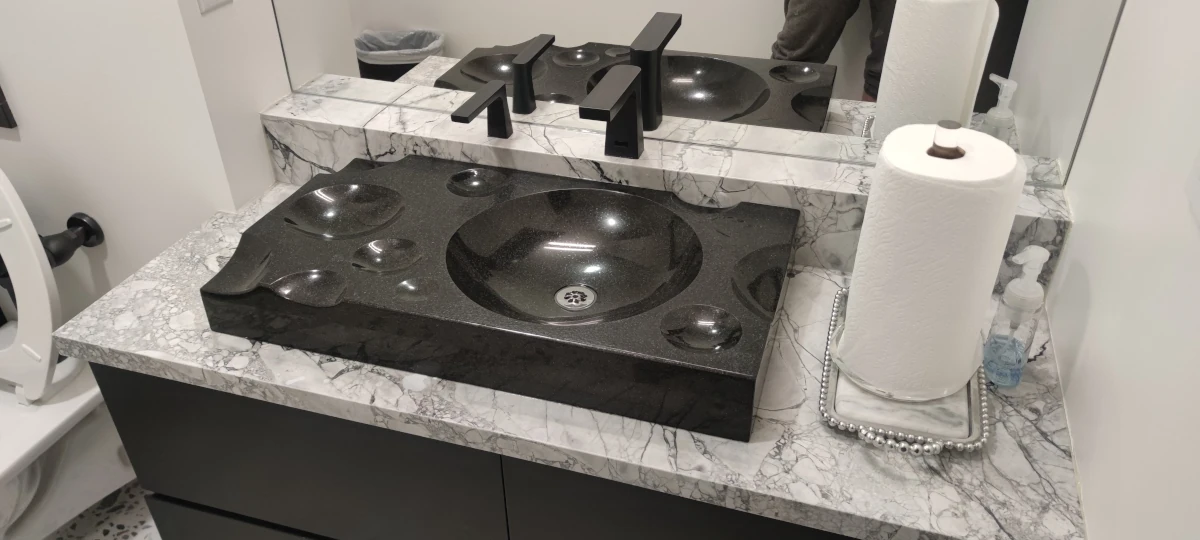
A bathroom vanity top gets more daily abuse than almost any other surface in a home: water, toothpaste, hair products, cleaning chemicals and the occasional dropped bottle. Whether you are renovating your own place or preparing a unit for tenants or buyers, the material and the way it is installed decide how the bathroom looks a few years from now.
Pick the stone for the people using it
Not every beautiful stone is right for every bathroom.
- Quartz is non-porous and does not need sealing. It is the low-maintenance choice for rentals and busy family bathrooms.
- Porcelain is hard, stain-resistant and comes in large thin slabs, so it works well for a vanity top that continues up the wall as a backsplash.
- Marble looks warm and classic but etches from acidic products and needs sealing. It suits a primary bathroom where the owner accepts that it will age.
- Travertine has a soft, natural texture. Its pores are usually filled, and it needs honing and sealing to handle daily water.
For a rental or a unit going on the market, durability and easy cleaning usually matter more than rare veining. For a home you plan to live in for years, it is worth choosing the stone you actually love and accepting its care routine.
The sink decides the details
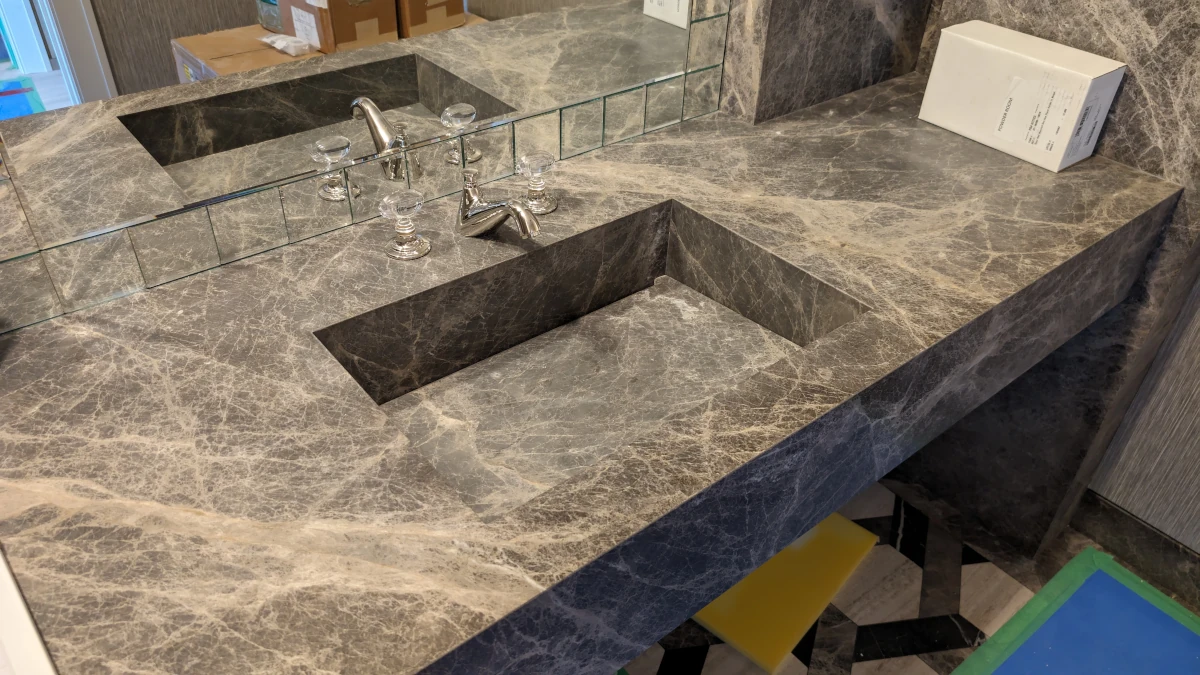
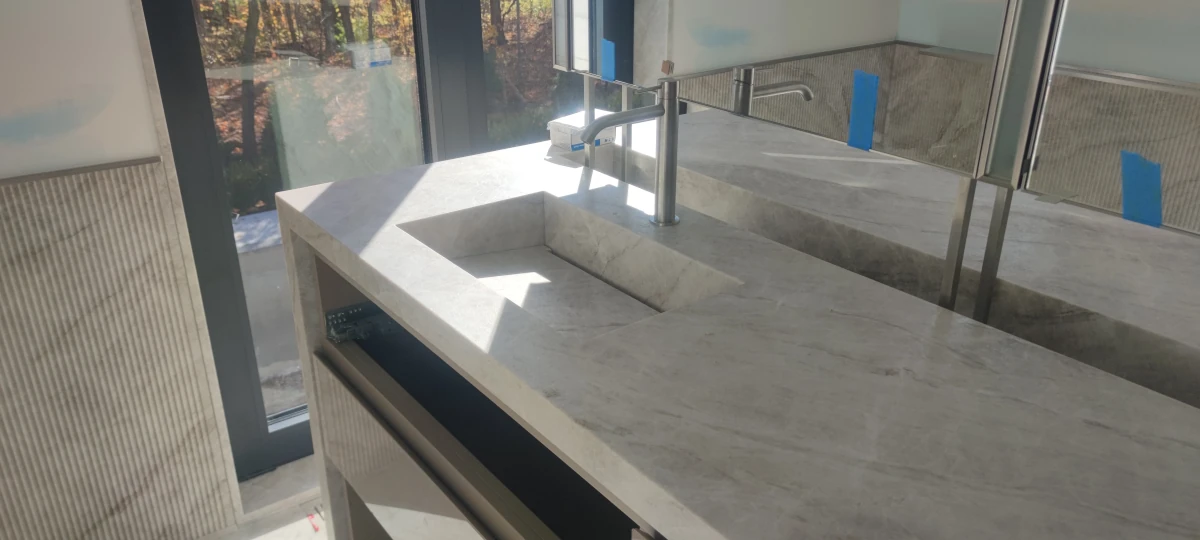
An undermount sink looks clean and is easier to wipe down, but the cutout has to be polished properly and the sink has to be supported, not just glued. An integrated sink carved or fabricated from the same stone gives a seamless look but needs a good slope to the drain so water does not sit. A vessel sink sits on top and is the simplest to install, but it changes the height people work at.
Decide the sink and faucet before the top is measured. Changing a faucet with a different hole spacing after the stone is cut is an expensive mistake.
Water is the enemy behind the vanity
Most vanity problems are not in the stone itself. They come from water getting where it should not: a backsplash that is not sealed to the wall, a gap at the back edge, or a cabinet that moved because it was not fixed properly. Before the top goes on, the cabinet should be level, solid and fastened to the wall. The joint between the top and the backsplash should be sealed with a colour-matched silicone, and any seams kept tight and flat.
Floating vanities need real support
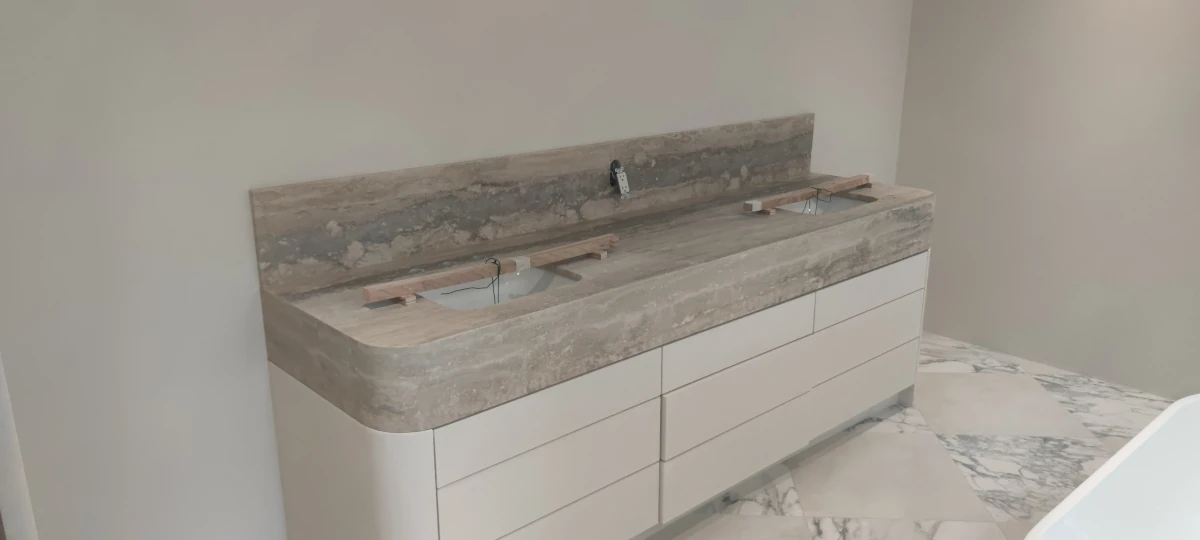
Wall-hung "floating" vanities are popular in modern condos and renovations. Stone is heavy, so the wall behind needs proper blocking or a bracket system rated for the weight of the cabinet, the top and the sink with water in it. This is something to plan while the wall is open, not after the drywall is finished.
Custom versus off-the-shelf
A ready-made vanity with a pre-cut top is fine for a standard-size bathroom. Custom work makes sense when the space is unusual — a tight alcove, an angled wall, a long double vanity — or when you want the top, backsplash and shower walls to match. If you are looking at custom bathroom vanities, ask how the top will be templated, how the sink will be supported and how the back joint will be sealed. Those three answers are where quality shows.
A short checklist
- Choose the material for who will use the bathroom, not only for the photo.
- Pick the sink and faucet before measuring.
- Fix and level the cabinet, with blocking for wall-hung units.
- Template on site.
- Seal the backsplash joint and any seams.
- Give tenants or family simple care instructions for the stone you chose.
Done this way, a stone vanity top is one of the longest-lasting upgrades you can make in a bathroom.