How to Choose Cabinet Hardware for an Apartment Kitchen
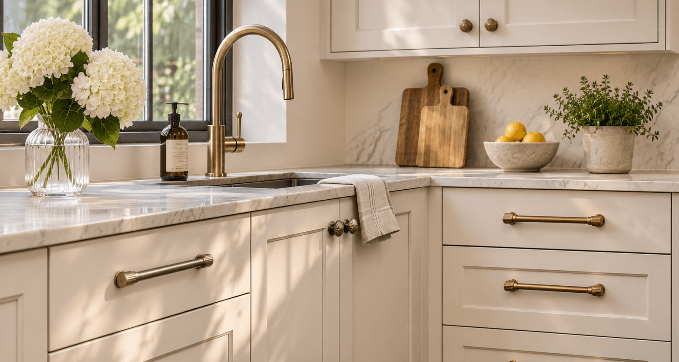
Apartment kitchens tend to share the same problems: limited space, builder-grade finishes and rules about what tenants can change. Cabinet hardware is one of the few upgrades that fits within those limits. New knobs and pulls can make a tired kitchen feel deliberate without touching the cabinets, counters or appliances. The trick is choosing hardware that suits a small space, survives daily use and can come off cleanly when your lease ends. These seven ideas will help.
1. Start With What Your Lease Allows
Before buying anything, read your lease and check with your landlord or property manager. Many landlords are comfortable with a hardware swap as long as the originals go back on at move-out, while others prefer to approve changes in writing first. A short email that describes what you plan to change, and confirms you will reinstall the original hardware, protects you if questions come up when your security deposit is returned.
If you own your apartment or condo, the decision is yours, but the same thinking applies when you plan to rent the unit out later. Hardware that is easy to maintain and replace helps with turnover.
2. Choose a Material That Handles Daily Use
Kitchen hardware is touched dozens of times a day, often with wet or greasy hands, so material matters more than most people expect. A lot of the hardware sold as brass is actually zinc or steel with a brass-colored plating, and that plating can thin or chip at the spots fingers touch most. In a small apartment kitchen, where the same few drawers do all the work, wear shows quickly.
The difference comes down to construction. Solid brass cabinet hardware is a copper and zinc alloy all the way through, so it will not chip or wear down to a different colored base metal the way plated pieces can, and it can be repolished if the finish is ever knocked back. A few quick checks help: a magnet sticks to brass-plated steel but not to solid brass, solid brass feels heavier than plated zinc of the same size (zinc is not magnetic either, so weight is the better clue there), and a scratch on the back of solid brass shows the same gold color rather than a grey or silver base.
3. Match Your Existing Holes
For renters, this is the most important tip. Measure the existing hardware before you shop, so your new knobs and pulls fit the holes already in the cabinets. Drilling new holes is the change most likely to cost you at move-out.
- Knobs: most use a single hole and a standard 8-32 screw, so almost any knob will fit.
- Pulls: measure center to center, from the middle of one screw hole to the middle of the other, and buy pulls with exactly that spacing.
- Backplates: remove one piece first, since a backplate can hide extra holes or old marks.
If a screw hole has loosened over the years, a common renter fix is to pack it with wooden toothpicks and wood glue, trim them flush and drive the screw back in. It is a small repair that keeps the cabinet intact.
4. Scale Hardware to a Small Kitchen
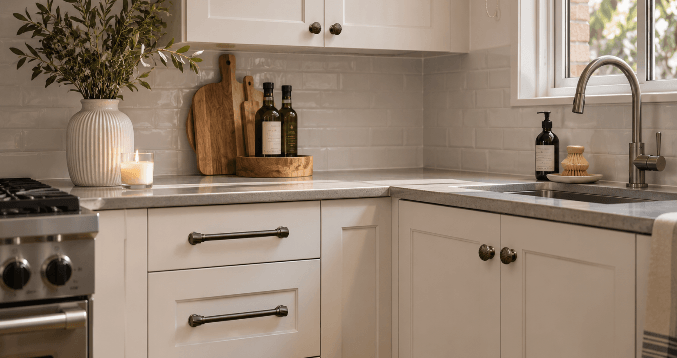
Oversized hardware can overwhelm a compact kitchen, especially on narrow doors. Knobs of around 1 to 1-1/4 inches suit most apartment cabinets, and pulls of 3 to 5 inches (76 to 128mm) suit most standard drawers. In a galley kitchen, where cabinets face each other across a narrow aisle, low-profile hardware also reduces the chance of catching a hip or a bag on the way through.
5. Mix Knobs and Pulls With a Plan
You do not have to choose between knobs and pulls. A simple, widely used approach is knobs on cabinet doors and pulls on drawers, since drawers carry more weight and benefit from a full-hand grip. In an apartment, keeping to one knob size and one pull length across the kitchen makes the space look calmer and more intentional, and it simplifies ordering.
6. Pick a Finish That Works With What You Cannot Change
Renters rarely get to choose the faucet, the appliances or the light fixtures, so pick a finish that works with them rather than against them. A few guidelines:
- Stainless appliances and chrome faucets: brushed brass adds warmth without clashing, and a two-metal kitchen looks deliberate when the brass appears in more than one place.
- White or light cabinets: brass or matte black both add contrast and help builder-grade cabinets look more custom.
- Busy kitchens: brushed or antique finishes hide fingerprints and light scratches better than polished ones.
- Older, character apartments: antique or unlacquered brass suits original trim and vintage cabinets often found in older Boston buildings.
7. Keep the Originals Safe
Label a zip bag with the original knobs, pulls and screws and store it somewhere you will find it at move-out, such as taped inside a cabinet. When you leave, swap the originals back in, and take your new hardware with you to the next apartment. Good hardware travels well, which makes it one of the few kitchen upgrades a renter actually keeps.
Bringing It Together
Choosing cabinet hardware for an apartment comes down to a few steps: confirm what your lease allows, match the existing holes, size pieces to a small space and pick a durable finish that works with the fixtures you cannot change. Done well, it is a weekend upgrade that makes a rental kitchen feel like your own.
Frequently Asked Questions
Can renters change cabinet hardware?
In many cases, yes, as long as the landlord agrees and the original hardware goes back on before move-out. Get approval in writing, match existing holes so no new drilling is needed, and keep the originals stored safely.
What cabinet hardware is timeless?
Simple round knobs, classic bar pulls and cup pulls in brass or nickel have stayed popular for decades. Finish matters too: warm metals like brushed or antique brass tend to age gracefully rather than date quickly.
Can you mix and match cabinet knobs and pulls?
Yes. Knobs on doors and pulls on drawers is one of the most common combinations. Keep the finish consistent and stick to one knob size and one pull length so the mix looks planned rather than random.
What is the 1/3 rule for cabinet hardware?
The one-third rule suggests choosing a pull about one third the width of the drawer front. In apartments, where drawers are often narrow, it is a helpful check against hardware that looks too big for the space.
Are there no-drill options for cabinet hardware?
Adhesive-mounted knobs and handles exist and can work on lightweight doors, but they are less secure on heavy drawers. Swapping hardware into the existing holes is usually the sturdier renter-friendly option.