The Basement Window That Could Become Your Most Important Emergency Exit
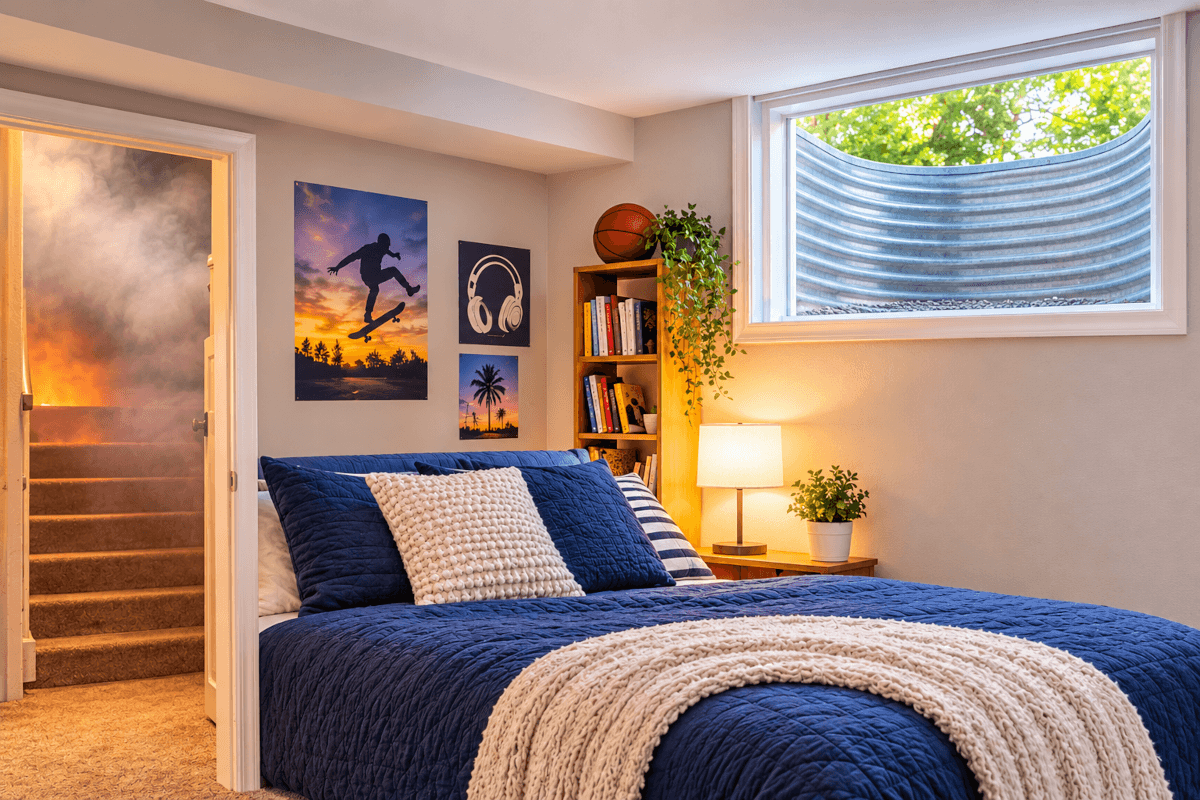
Picture a cozy basement bedroom. Soft carpet, a comfortable bed, maybe a teenager's posters on the wall or a guest room ready for visiting family. It feels like any other bedroom in the house, just a few steps further from the kitchen.
Now picture the stairs blocked by smoke in the middle of the night. Suddenly that little window near the ceiling isn't just a source of light. It might be the only way out. That's a sobering thought, and most people never think about it until they're asked to.
Basement windows in sleeping rooms can serve as emergency escape routes. Whether that window and the well outside it are actually up to the job depends on size, design, installation, and maintenance. It's a safety feature worth taking seriously, long before anyone needs it.
Why Some Basement Windows Have Special Safety Requirements
Building codes often require sleeping rooms, including those in basements, to have an emergency escape and rescue opening. The idea is simple. If the normal exit is blocked, people need another way out, and firefighters need a way in.
That opening is usually a window that meets minimum size and height requirements. And when the window sits below ground, the window well outside it becomes part of the escape route. If the well is too small or too deep to climb out of, the window alone isn't enough.
That's why finding the best window well contractor in Fort Collins means looking at more than price. Safety, installation quality, and knowledge of applicable building codes all matter, because this is one feature that truly has to work when it counts.
What Makes a Window Well Suitable for Emergency Escape
The window itself needs a large enough clear opening, meaning the actual space a person can climb through once it's open. It also generally needs to be low enough on the wall that someone can reach it and pull themselves up without a ladder inside.
The well outside needs enough room too. A cramped well can make it nearly impossible to climb out, especially for an adult. Codes typically set minimum dimensions for the well area so a person has space to move, turn, and climb.
Deeper wells often need ladders or steps. Under many versions of the residential code, wells deeper than about 44 inches require a permanently attached ladder or steps. Local requirements can vary, so checking current local code provisions before any installation is essential.
The Hidden Problems That Can Make an Escape Route Unusable
Blocked openings are a surprisingly common issue. Furniture pushed in front of the window, boxes stacked against the wall, or a heavy dresser can make the window hard to reach in an emergency. Inside access matters just as much as outside access.
Stuck windows create another danger. Paint, swelling, broken hardware, or years without use can leave a window that refuses to open when someone desperately needs it to. Testing windows periodically helps catch that before it matters.
Outside, debris and heavy covers can turn a well into a trap. Leaves, snow, and junk can pile up, while some covers are too heavy or fastened too tightly to push open from below. Deteriorated well walls can also collapse or narrow the space. All of these can make an escape route unusable.
Why Installation Quality Matters Beyond the Window Itself
A well that meets size requirements but floods every spring isn't doing its job. Good drainage keeps water from pooling in the well, protecting both the basement and the escape route. Nobody wants to climb out through a puddle of ice water.
Soil conditions and structural support matter too. The well needs to resist soil pressure without bending or collapsing over time. Secure attachments to the foundation help keep the well stable and properly positioned against the house.
Coordination with the basement window installation ties everything together. The window size, sill height, and well dimensions all need to work as a system. When the window and well are planned together, the result is safer, more functional, and far more reliable.
Conclusion
A basement bedroom window might seem like a small detail, but it can become the most important exit in the house during an emergency. That's why its size, location, and the well outside it deserve serious attention.
Proper escape openings depend on clear window dimensions, adequate well space, ladders or steps where required, and clear, unobstructed access. Debris, stuck windows, heavy covers, and failing well walls can all undermine that safety.
The best emergency exit is one you never have to use. Thoughtful design, quality installation, and regular maintenance help make sure that if the worst ever happens, everyone in the basement has a reliable way out.