How Regular Tank Inspections Drive Operational Excellence for Massachusetts Businesses
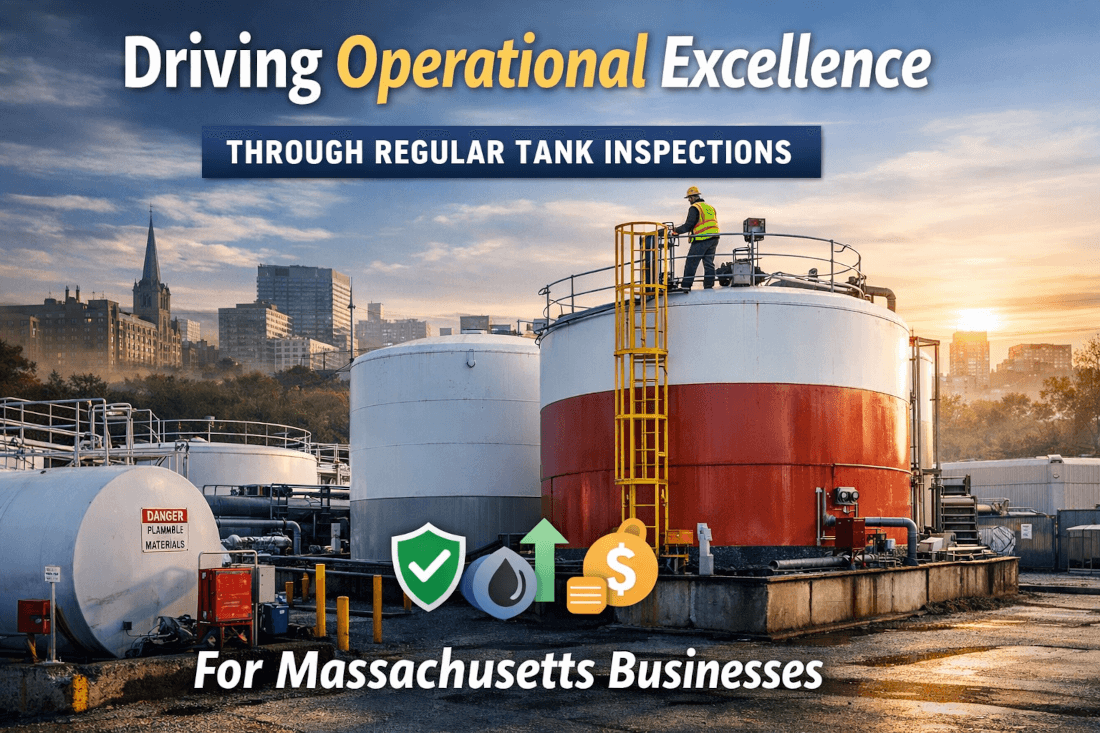
Across the Commonwealth, commercial entities - from logistics centers in Worcester to factories in the Pioneer Valley - can define their own level of operational excellence through their ability to keep producing with as little risk as possible. However, in 2026, we have seen that the complexity of managing industrial infrastructure has reached an unprecedented level, especially with regards to storing fuel and chemicals.
The "wait-and-see" method of assessing the health of tanks is no longer a prudent business practice or option; it is a potential liability. By making the effort to conduct regular professional tank assessments, Massachusetts-based businesses can turn a compliance requirement into a powerful means of achieving higher levels of efficiency, ensuring employee and customer safety, and improving their long-term financial health.
The Strategic Value of Proactive Tank Management
There are many differences between a high-performing facility and one that struggles with downtime, the number one difference is how each manages its fuel assets. In the state of Massachusetts, commercial above ground storage tanks (ASTs) are governed by stringent oversight from the Office of the State Fire Marshal and the Department of Environmental Protection (MassDEP).
Tanks which contain more than 10,000 gallons must apply for and be issued a use permit, under 502 CMR 5.00; the use permit must be renewed every 5 years, and it must be supported with certified inspection reports. However, inspections provide more than just a box to be checked for a state inspector.
When integrated into an operational plan for the facility, inspections for ASTs provide a level of visibility unmatched by underground alternatives. A proactive inspection schedule allows facility managers to identify the internal corrosion, microbial growth, and build-up of sediments before those contaminants have the chance to enter their equipment. With engine tolerances for fleet vehicles and industrial generators getting tighter every day-by 2026-any minor degradation of fuel can easily cause clogged filters and catastrophic pump failures.
By identifying these types of issues early on, businesses can avoid the "emergency premium", which is defined as having to pay the high costs of rush repairs; lost productivity while repairs are being made; and potentially creating a localized environmental catastrophe resulting in damage to the company's reputation within the local community.
Navigating Above Ground Fuel Tank Installation and Compliance
When a facility expands, the choice of above ground fuel tank installation becomes a critical juncture for future operational success. In Massachusetts, installing a new AST requires a detailed permit application (Form FP-101), including a site plan reviewed by a Professional Engineer (PE). This process ensures that the tank is positioned safely relative to property lines and structures, and that it includes necessary fire safety features like emergency venting and spill containment.
Selecting a contractor who specializes in Massachusetts-specific codes is vital. A certified installer ensures that the foundation, dikes, and piping meet the "approved standard" declared in your permit. This documentation serves as the baseline for all future inspections. For many Bay State businesses, transitioning to modern, double-walled tanks has become the preferred route.
These systems offer secondary containment "out of the box," simplifying the Spill Prevention, Control, and Countermeasure (SPCC) requirements mandated by the EPA. By investing in professional installation and subsequent annual inspections, facility owners create a transparent audit trail that is invaluable during property appraisals or insurance renewals.
The Financial Benefits of Maintenance Over Repair
Regular inspections provide overwhelming financial justification through the evaluation of risk mitigation. The cost of conducting a typical annual inspection on a mid-size commercial tank is an easy cost to manage as an operational expense, compared to remediation costs associated with a fuel spill in the state of Massachusetts, where soil excavation starts at approximately $15,000 per occurrence and remediation costs quickly escalate into hundreds of thousands of dollars once the groundwater has been impacted.
Besides the ability to avoid fines through regular inspections, you can also extend the service life of your storage assets. For example, a steel tank that is cleaned professionally and coated with protective coatings at regular intervals will have an expected lifespan of 40 to 50 years. On the other hand, without that care, pitting caused by internal condensation may result in the tank becoming unusable at less than 50% of its life expectancy. In addition, performing regular tests of high-level alarms and leak detection systems ensures that those safety systems are fully operational; thereby protecting your most at-risk asset, your employees.
Common Questions from Massachusetts Facility Managers
• How often are AST use permits renewed in Massachusetts?
Use permits must be renewed every five years with the Office of the State Fire Marshal. However, best practices and SPCC rules typically require monthly visual inspections by staff and annual professional assessments.
• What happens if a tank fails a state inspection?
The owner will receive a notice of deficiency and a timeline for repairs. If the issues are structural, the tank may be tagged out of service until a certified professional certifies it as "fit for service" again.
• Do I need a permit for a used tank?
Yes. In Massachusetts, used tanks must undergo a detailed suitability assessment by a Professional Engineer before they can be relocated or installed for commercial use.
Responsible Use / Compliance
This guide has been created solely for educational reasons and should never be used in place of a professional engineer's or an attorney's opinion. Things change rapidly around the Commonwealth of Massachusetts, with both the Fire Code (527 CMR 1) and the environmental laws in effect there. It is essential to check with your local fire department to confirm the specific requirements for your facility and have a licensed engineer create an engineered plan of construction for all systems you are installing in your facility.
Also note that regardless of whether or not an inspection was passed, the owner of a facility still remains legally liable if an unauthorized release occurs; providing documented proof of due diligence by properly managing the facility will be evidence that the owner took adequate precautions against the release of hazardous materials from their facility.
Conclusion
Massachusetts-based companies will benefit from having an operational excellence strategy based on dependable services as well as the ability to anticipate customers' needs. Performing periodic inspections on tanks isn't just required by law; it represents an investment in the continued operation of your business.
By identifying weaknesses before they result in downtime and taking steps to keep your fuel supply infrastructure up to par, you are protecting your profits, your employees, and the environment in the Commonwealth of Massachusetts. The time to act is now-don't wait until something breaks down in order to engage a professional company to provide tank oversight in your facility's success for the year 2026.