Apartment Homesteading: Small-Space Self-Sufficiency in Boston
Homesteading used to mean acreage, a barn, and a long driveway. For a growing number of Boston renters, it means something far more compact: a windowsill of herbs, a closet shelf of mason jars, and a chest freezer that pays for itself by spring. The instinct behind it is the same one that has always driven people to grow and preserve their own food, but the motivation has sharpened. Since grocery prices have risen sharply since 2020, the gap between buying everything and making some of it yourself has become impossible to ignore. You do not need land to close that gap. You need a system that respects the square footage you actually have.
Apartment homesteading is not about pretending a 600-square-foot one-bedroom is a farm. It is about borrowing the most useful habits from rural self-sufficiency and scaling them down to fit a city life: growing what you use constantly, preserving what you buy in bulk, cooking in batches, and getting the overflow out of your living space so the apartment still feels like a home. Done well, it lowers your grocery bill, cuts food waste, and gives you a steadier supply of the things you eat every week.
Why Boston Pushes Homesteading Indoors
Boston is one of the hardest places in the country to homestead the traditional way, and the numbers make the case plainly. In a recent ranking of the best states for self-sufficient living, Massachusetts landed near the bottom — scoring around 22 out of 100, with farmland averaging roughly $14,900 an acre and effectively zero available acreage per resident. There is simply nowhere affordable to spread out. That is exactly why the smart move here is to scale down rather than give up.
The cost of space is the whole reason the strategy works. A studio in Boston rents for about $1,900 a month, which means every square foot in your apartment is expensive real estate. When the floor is that costly, the goal is not to cram more into it — it is to make each square foot do real work and to move anything that does not earn its place somewhere cheaper. That single principle quietly governs every decision below, from what you grow to where you keep the things you only use twice a year.
Start with What You Eat Most: Herbs and Greens
The fastest return on apartment homesteading comes from growing the things you reach for constantly and pay a premium to replace. A clamshell of fresh basil or cilantro costs a few dollars and wilts in a week. A single plant on a sunny sill produces for months and only asks for water and light. Start with the herbs that show up in your actual cooking — basil, mint, parsley, chives, thyme — rather than an ambitious lineup you will forget to use.
South- and west-facing windows give you the strongest light, but most Boston apartments do not come with ideal exposure, and the winters are long and dim. A small clip-on grow light solves both problems for the cost of a couple of takeout orders and extends your growing season straight through the gray months. Leafy greens like loose-leaf lettuce, arugula, and spinach also do well in shallow containers and can be harvested a few outer leaves at a time, so one planting keeps giving rather than ending in a single salad.
Keep the footprint honest. A narrow rail planter, a tiered stand in a corner, or a row of pots along one windowsill is plenty for a household of one or two. The point is not to grow all your produce — that is not realistic indoors — but to take the highest-cost, fastest-spoiling items off your grocery list and have them within arm's reach of the stove.
Fermenting and Preserving in a Galley Kitchen
Preserving is where small-space homesteading earns its keep, because it turns cheap, in-season abundance into food that lasts. Fermentation in particular needs almost no equipment: a jar, salt, and a vegetable will get you sauerkraut, kimchi, or pickles on a counter with no special gear and no canning setup. A few wide-mouth jars take up the space of a coffee maker and can run continuously, so something is always working while you go about your week.
When local produce hits its seasonal low price — tomatoes and corn in late summer, apples in the fall — buying a flat and preserving it is where the savings compound. Freezing is the most apartment-friendly method: blanch and bag vegetables, freeze berries on a sheet pan before bagging, and portion sauces flat so they stack like files. If you want shelf-stable results, water-bath canning works for high-acid foods like jams and pickles using a single large pot, no pressure canner required. The constraint is rarely skill; it is storage, which is the problem the next two sections solve.
Batch-Cooking and the Bulk-Buy Math
Batch-cooking is the homesteading habit that survives best in a busy city life, because it trades a few hours on the weekend for a week of meals you do not have to think about. Cooking a large pot of beans, a tray of roasted vegetables, or a double batch of soup costs barely more effort than a single serving and dramatically lowers your per-meal price compared with takeout or convenience food. Portioned into containers, it also makes the freezer your most valuable square footage in the kitchen.
Bulk buying is the supply side of the same equation. Dried beans, rice, oats, flour, and spices are far cheaper by weight in large quantities, and they store for months if you keep them airtight and cool. The catch is obvious in a small apartment: a 25-pound bag of rice and a case of canned tomatoes have to go somewhere, and that somewhere is usually a cabinet you needed for something else. The savings are real, but only if you have a place to put the inventory — which is exactly where apartment homesteading runs into the wall of city square footage.
Where the Bulk Goods Actually Go
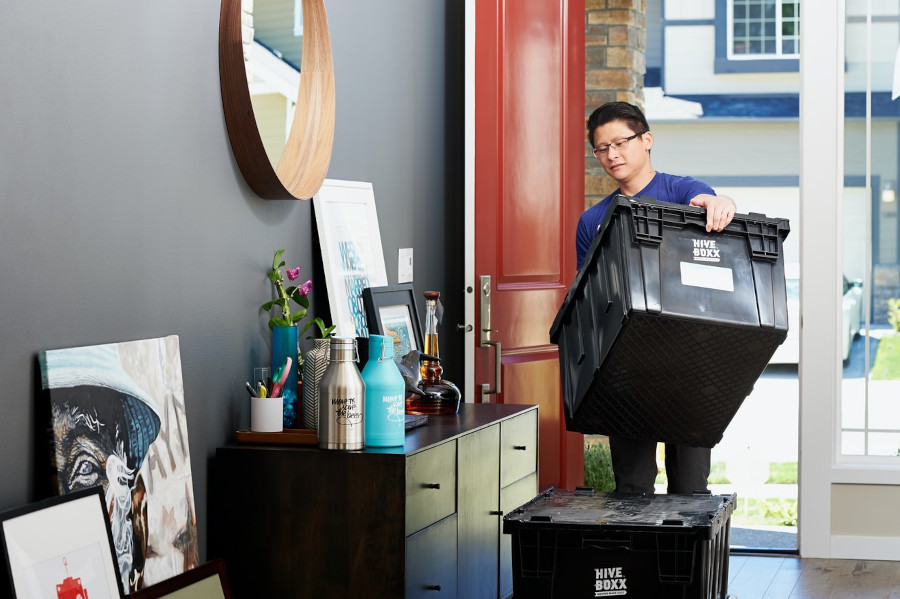
The honest limit of small-space self-sufficiency is not ambition; it is volume. Canning supplies, seasonal harvest gear, the dehydrator you use twice a year, the pressure canner, the flat of empty jars, the bulk staples you bought because the price was right — all of it competes with your bed, your desk, and your only closet. The moment your apartment starts feeling like a pantry, the system stops being livable. For the equipment and reserves you do not need in daily rotation, a self-storage unit in the Boston area keeps the overflow accessible without surrendering your living space to it. Off-season canning gear, bulk dry goods, and harvest-time equipment live there between uses, and the apartment goes back to being an apartment.
Think of it as the barn the city does not give you. Rural homesteaders keep their seasonal tools in an outbuilding and bring them in when it is time to use them; an apartment homesteader rents that outbuilding by the month and only pays for the footprint the gear actually needs. It is the practical fix to the central tension of the whole approach — you want to buy in bulk and preserve at scale, but you cannot let that ambition swallow the room you live in.
Borrow the City's Land: Community Gardens and CSAs
If growing on a windowsill is the indoor half of apartment homesteading, the outdoor half is borrowing land you do not own. Boston has one of the oldest and densest community-garden networks in the country, with hundreds of plots spread across neighborhoods from the South End to Dorchester. A plot gives you real growing space for the crops that will never work indoors — squash, beans, a row of tomatoes — for a modest seasonal fee, and most gardens come with the kind of neighbor knowledge that no app can replace. Waitlists are common, so it is worth getting your name down well before spring.
A community-supported agriculture share is the lowest-effort version of the same idea. By paying a local farm up front for a season of produce, you get a weekly box of whatever is fresh and in season, often at a better price than the equivalent at a grocery store, while supporting growers in the region. It pairs naturally with the preserving habit: a CSA box tends to deliver more of a given vegetable than you can eat in a week, which is precisely the surplus that fermenting and freezing exist to capture. Between a garden plot and a share, a renter with no yard can still source a meaningful share of their produce locally.
Composting Without a Backyard
Self-sufficiency is also about wasting less, and food scraps are the easiest place to start. Apartment composting has gotten genuinely easy: a sealed countertop bin and either a city or private curbside collection service handles the scraps with no smell and no yard. Boston's residential composting program and several local pickup services make it possible to divert peels, coffee grounds, and trimmings from the trash even from a third-floor walk-up. If you keep a community-garden plot, your own finished compost closes the loop entirely — kitchen scraps become next season's soil.
For renters who want the full cycle indoors, a small worm bin fits under a sink and quietly turns scraps into fertilizer for the windowsill garden. It is not for everyone, but it captures the spirit of the whole project: nothing leaves the system that could feed the next thing you grow.
Making It a Routine, Not a Project
The apartments where this works are not the ones with the most gear; they are the ones with the simplest habits. Pick the two or three practices that match how you actually live — herbs on the sill, a weekend batch-cook, a CSA box, a couple of fermenting jars — and let them run on a rhythm rather than treating each one as a special effort. Add the next habit only once the last one is automatic.
None of it requires land, and in a city where Massachusetts landed near the bottom for traditional homesteading, that is the entire point. You grow what you use most, preserve what you buy cheap, cook ahead, lean on the city's shared land, and move the overflow to a self-storage unit in the Boston area so the apartment stays a home. Scaled down and kept simple, self-sufficiency fits a Boston floor plan — and pays you back every month at the register.