How Digital Signage is Transforming Property Marketing for Real Estate Agencies
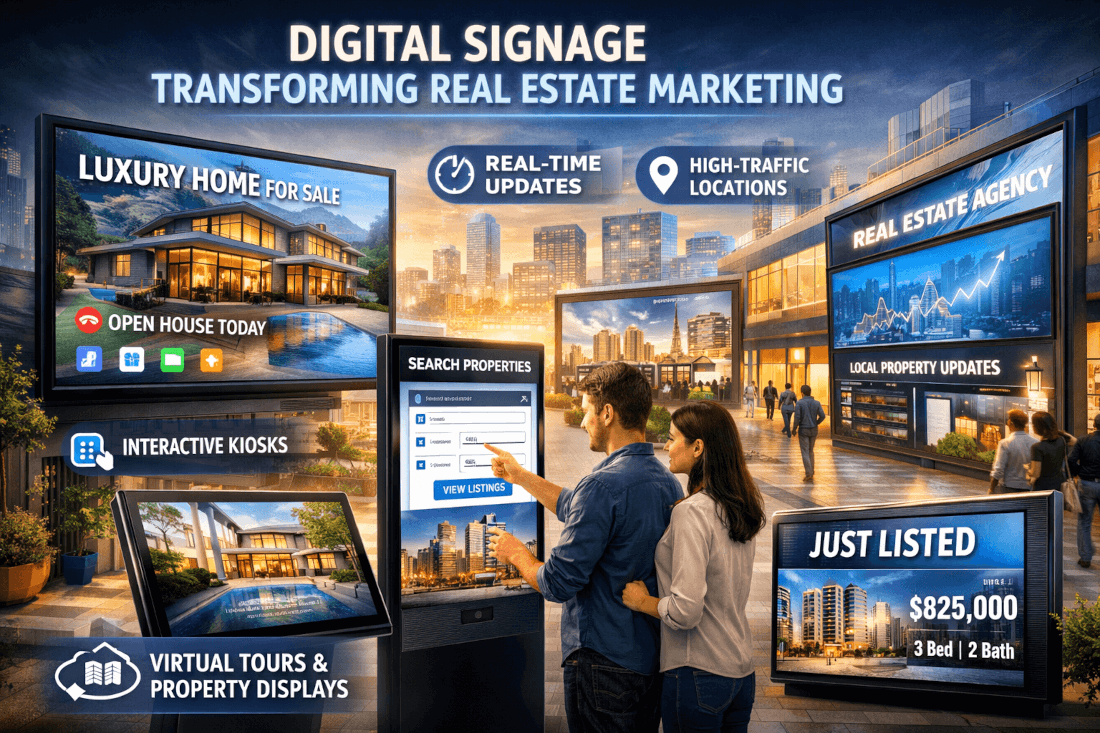
In the fast-paced world of real estate, where first impressions can make or break a deal, staying ahead of the competition is crucial. With the growing importance of digital marketing, real estate agencies are constantly looking for innovative ways to showcase properties and engage potential buyers. Enter digital signage—a dynamic, interactive solution that is revolutionizing property marketing.
Digital signage is becoming an essential tool for real estate agencies, helping them not only to showcase properties in a more compelling way but also to enhance customer engagement and streamline the sales process. If you're looking to integrate real estate digital signage into your property marketing strategy, this technology can help you stand out in a competitive market and create more meaningful connections with potential buyers.
1) Engaging Property Displays with High-Quality Visuals
Traditional printed materials and static posters can often fail to capture the attention of today's tech-savvy consumers. Digital signage, on the other hand, brings properties to life with high-definition visuals and videos that can be easily updated and customized in real time. Whether it's a high-definition property tour, virtual staging, or simply showcasing high-quality photos of the property, digital signage provides a much more engaging experience.
Property listings can be displayed on screens in real-time, allowing potential buyers to see updated information on properties, including new listings, price changes, or upcoming open houses. The ability to showcase properties through immersive visuals helps buyers better visualize the space and envision themselves living in the property, making it a more powerful marketing tool than static displays.
By integrating digital signage with other marketing tools, real estate agencies can ensure that their property displays are always fresh, relevant, and engaging.
2) Interactive Kiosks for Self-Service Property Exploration
One of the key features that make digital signage a game-changer for real estate marketing is interactivity. Interactive digital kiosks are increasingly being used by real estate agencies to allow prospective buyers to explore properties on their own. These self-service stations provide users with the ability to browse property listings, view photos, floor plans, and videos, and even schedule property viewings.
With interactive signage, agencies can create a personalized experience for each potential buyer. For example, a visitor may search for properties based on their specific needs—such as location, price, or type of property—and instantly receive relevant options. This level of convenience enhances the buyer's experience and helps the agency capture more qualified leads without needing additional staff on-site.
3) Real-Time Data Integration for Up-to-Date Information
In the competitive real estate market, timing is everything. Digital signage allows real estate agencies to display real-time data, ensuring that potential buyers always have access to the most up-to-date information. Whether it's changes to property prices, new listings, or details about an upcoming open house event, digital signage ensures that the latest information is available at all times.
Furthermore, with advanced data integration, real estate agencies can sync their digital signage with their CRM systems, enabling them to show properties that match a buyer's preferences or even recommend properties based on their previous searches or interactions. This real-time integration can also include local market trends, providing potential buyers with valuable insights into property values and helping agencies stand out as experts in the market.
4) Attracting Attention in High-Traffic Locations
For real estate agencies, location is key. Displaying property listings on digital signage in high-traffic areas such as office lobbies, shopping malls, or local transportation hubs can significantly boost visibility and attract attention from potential buyers who may not have been actively looking for properties.
By strategically placing digital signage in locations where potential buyers are likely to pass by, real estate agencies can expand their reach and create brand awareness. Eye-catching visuals, along with information about properties that are available for sale or rent, can catch the attention of people who might not have otherwise considered purchasing a property at that moment.
Digital signage also allows for targeted messaging based on the location of the screen. For example, a display near a commercial area could showcase properties ideal for businesses, while a screen in a residential area could display family-friendly homes. This hyper-targeted approach can help agencies attract the right audience at the right time.
5) Enhancing Open Houses and Events with Digital Signage
Open houses and events are a great way for real estate agencies to showcase properties and engage with potential buyers. Digital signage can enhance these events by providing an interactive and engaging experience. Agencies can use digital signage to display property information, create interactive displays of the floor plan, or even provide virtual tours for visitors who might not be able to attend the event in person.
By integrating QR codes into digital signage, attendees can access additional property details on their smartphones or sign up for a follow-up consultation. This creates a seamless and professional experience, helping agencies capture more leads and follow up with prospective buyers after the event.
6) Improving Customer Experience with Personalized Content
Digital signage allows for a more personalized experience for potential buyers. Real estate agencies can customize the content displayed based on factors such as the time of day, location, or buyer preferences. For example, an office lobby screen could show listings that match the buyer's previous inquiries, while a screen in a residential area could display homes within a particular price range.
Personalized content makes the experience more relevant to each buyer, improving customer satisfaction and increasing the likelihood of conversion. Additionally, real estate agencies can use digital signage to display customer testimonials or case studies, helping build trust and credibility with potential buyers.
7) Cost-Efficient and Eco-Friendly Solution
Compared to traditional print marketing, digital signage offers a more cost-effective and eco-friendly solution. The ability to update content remotely and instantly means real estate agencies no longer need to spend money on printing and distributing new flyers or posters every time a property changes or a new listing comes up.
Moreover, with digital signage, agencies can reduce paper waste, making it a more sustainable choice in an industry that traditionally relied heavily on printed materials. Over time, the cost savings from not having to print new marketing materials can add up, while the environmental impact is reduced as well.
8) Real Estate Digital Signage: The Future of Property Marketing
As real estate marketing continues to evolve, digital signage is rapidly becoming an essential tool for agencies that want to stay competitive and offer a modern, engaging experience for their clients. Whether it's through dynamic property displays, interactive kiosks, or real-time data integration, digital signage enables real estate agencies to provide a higher level of customer service and improve the overall buying process.
By adopting real estate digital signage, agencies can increase their brand visibility, provide valuable information to potential buyers, and streamline their marketing efforts. Digital signage offers the flexibility and scalability needed to keep up with the ever-changing demands of the real estate market.
Conclusion
In today's digital age, where consumers expect immediate access to information and personalized experiences, real estate agencies can't afford to rely on outdated marketing methods. Digital signage offers a dynamic, interactive, and cost-effective solution to meet these needs and provide a modern property marketing experience.
From enhancing property displays and improving customer engagement to providing real-time data and streamlining open houses, digital signage is revolutionizing the way real estate agencies market their properties. As technology continues to evolve, digital signage will undoubtedly play a key role in shaping the future of property marketing and the overall real estate experience.
By incorporating real estate digital signage into their marketing strategy, real estate agencies can elevate their brand presence, drive more leads, and ultimately close more deals.