Tiny Homes & Micro Apartments: Living Large in Small Spaces
Why millions of people are trading square footage for freedom, financial independence, and a lighter footprint on the planet.
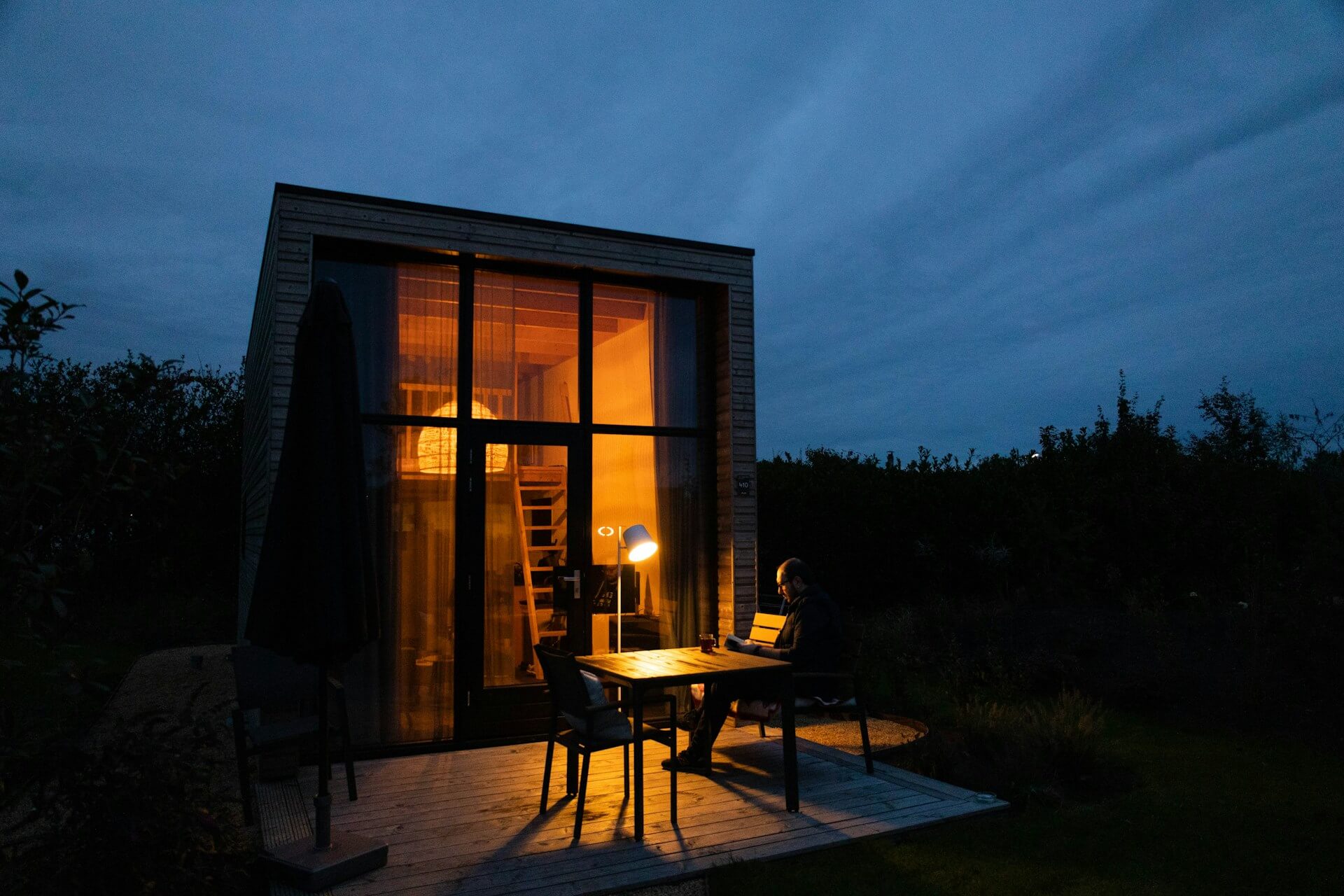
The Movement Taking Root
In an era defined by sky-high real estate prices, environmental urgency, and a collective desire to simplify, the tiny home and micro apartment movement has moved well beyond fringe lifestyle choice. It has become a genuine cultural shift — one that challenges everything we've been told about what a "good life" looks like and how much space it requires.
Tiny homes — broadly defined as dwellings under 400 square feet — and micro apartments, typically under 350 square feet in urban settings, are attracting a remarkably diverse community. Young professionals priced out of traditional housing markets, retirees seeking to downsize without downsizing their experiences, and environmental advocates looking to walk the talk are all finding common ground in compact living.
"It's not about having less. It's about making room for more of what actually matters."
Why the Appeal? The Four Pillars
Financial Freedom
Tiny homes cost a fraction of conventional houses — often $30,000-$80,000 — freeing up income for experiences, savings, and investment.
Eco-Conscious Living
Smaller spaces consume less energy for heating and cooling. Many are built with reclaimed materials and off-grid solar systems.
Intentional Minimalism
Limited space forces intentional ownership — every item must earn its place, reducing clutter and the mental load that comes with it.
Mobility & Flexibility
Tiny homes on wheels (THOWs) offer location independence — park in rural landscapes one season, near the city the next.
Environmental Impact by the Numbers
The ecological case for tiny living is compelling. Smaller homes consume dramatically less energy across every dimension — from construction materials to daily utility usage. Here's how a 200 sq ft tiny home stacks up against the U.S. average 2,300 sq ft home:
Many tiny home builders go further — integrating solar panels, composting toilets, rainwater collection, and passive heating design to achieve near-zero environmental impact. Some communities have achieved full net-zero status.
Urban Micro Living: The City Apartment Revolution
While rural tiny homes capture the imagination, the urban micro apartment is solving a different — but equally urgent — problem: how do you house millions of people in dense cities where land is precious and rents are punishing?
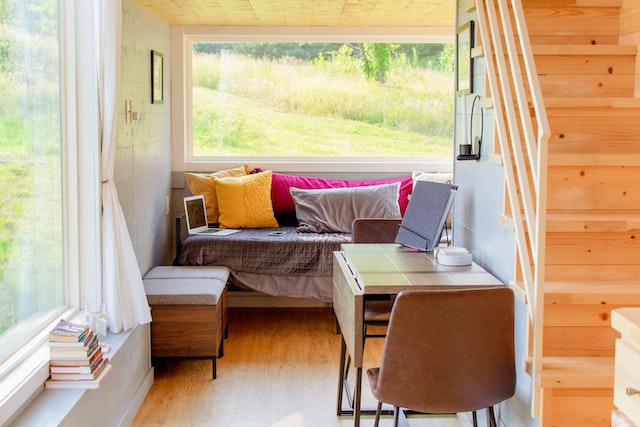
Cities like New York, Tokyo, Hong Kong, and San Francisco have pioneered the micro apartment concept, where clever design replaces raw square footage. Transforming furniture — Murphy beds, fold-out dining tables, retractable desks — combined with high ceilings, generous windows, and smart storage solutions create spaces that feel surprisingly livable despite their compact dimensions.
Developers have found that well-designed micro units in prime locations can command rents per-square-foot that outperform larger apartments, while residents benefit from walkable neighborhoods, reduced commute times, and the ability to live affordably in the cities they love.
Who Is Choosing to Live Small?
- Millennials & Gen Z — priced out of homeownership, embracing tiny homes as an accessible path to equity without decades of debt
- Digital nomads & remote workers — tiny homes on wheels offer the ultimate flexible living arrangement aligned with location-independent careers
- Empty nesters — retired couples downsizing from family homes, finding freedom and dramatically reduced maintenance burdens
- Environmental advocates — individuals who want their housing footprint to match their values around climate and consumption
- Minimalist philosophy adherents — people inspired by Marie Kondo, "The Minimalists," and similar movements toward intentional living
- Affordable housing seekers — tiny home villages are being explored as solutions to housing insecurity and homelessness in several cities
The Challenges: What You Should Know
Zoning & Legal Barriers
Many municipalities have minimum square footage laws that make tiny homes technically illegal. Zoning reform is slowly catching up to demand.
Financing Difficulties
Traditional mortgages don't always apply to tiny homes. RV loans, personal loans, or specialized lenders are often needed.
Resale & Appreciation
The tiny home resale market is less established than conventional real estate, making long-term investment returns less predictable.
Social & Lifestyle Adjustments
Entertaining guests, working from home, or living with a partner requires creative solutions that not everyone finds comfortable.
The Future of Small: What's Coming Next
The tiny home movement is evolving rapidly. Prefabricated modular designs are slashing build times and costs. Architecture firms are competing to push the boundaries of how much livability can be packed into 200 square feet. Tiny home communities — essentially modern villages with shared amenities like gardens, workshop spaces, and community kitchens — are addressing the social limitations of isolated tiny dwellings.
On the policy front, cities facing acute housing crises are increasingly looking at accessory dwelling units (ADUs), micro apartment zoning, and tiny home village programs as legitimate tools for affordable housing. What was once a countercultural experiment is quietly becoming urban planning strategy.
Technology is playing its part too. Smart home systems are perfectly suited to tiny spaces — automated climate control, app-controlled lighting, and voice-activated appliances make small spaces feel effortlessly managed. Meanwhile, innovations in battery storage and solar panel efficiency are making off-grid tiny living more reliable than ever.
"The question is no longer whether tiny living is viable. The question is whether our cities and zoning codes are ready to meet the demand."
Is Tiny Living Right for You?
The honest answer is: it depends on your values, lifestyle, and what you're optimizing for. Tiny living isn't a sacrifice for everyone — for many, the trade-offs are features, not bugs. Less cleaning. Less maintenance. Less financial stress. More outdoor time. More travel. More intentionality about what you own and why.
If you're curious, the best approach is to spend a few nights in a tiny home rental before committing — several platforms now list tiny homes and micro cabins as short-term rentals. The experience often surprises people: spaces that look impossibly small in photos feel remarkably comfortable when thoughtfully designed.