Protecting Your Boston Rental's NOI from Rising Water Rates
For Boston landlords, managing operating expenses is a constant balancing act. While property taxes and insurance often get the most attention, water and sewer costs have quietly become one of the fastest-growing threats to Net Operating Income (NOI). In a city with aging infrastructure and complex billing, staying ahead of these costs is no longer optional—it's a necessity for profitability.
The Reality of Rising Water Rates
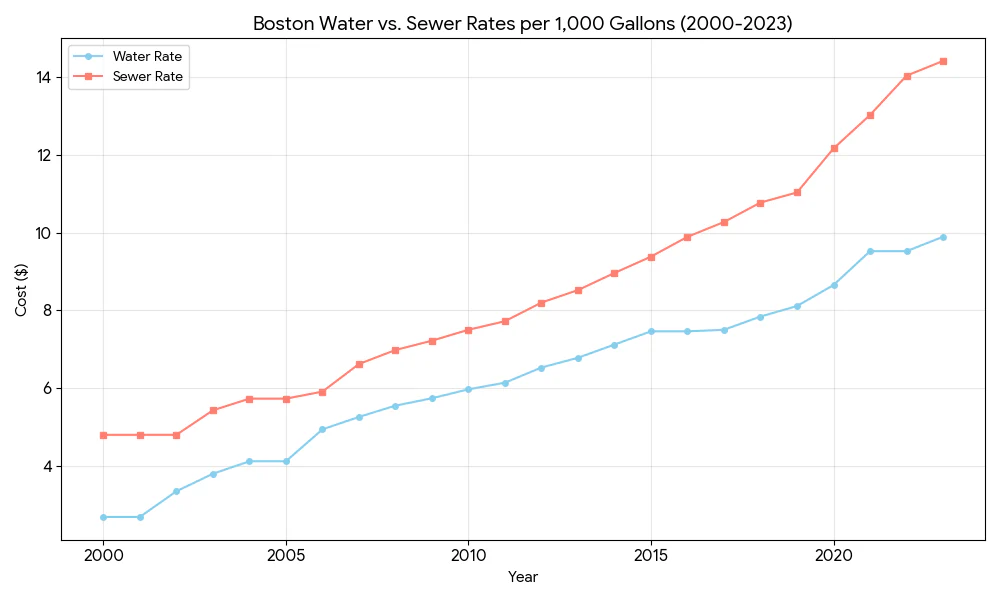
Over the last two decades, Boston has seen a steady, aggressive climb in water and sewer rates. The Boston Water and Sewer Commission (BWSC) must implement these increases to fund critical infrastructure upgrades and maintain a distribution system that spans over 1,000 miles.
As the chart below illustrates, both water and sewer services have seen consistent year-over-year increases since the turn of the millennium.
The Widening Gap: Water vs. Inflation
Many owners assume water bills simply follow the standard rate of inflation. However, historical data tells a different story. Since the year 2000, combined water and sewer rates in Boston have surged by over 224%.
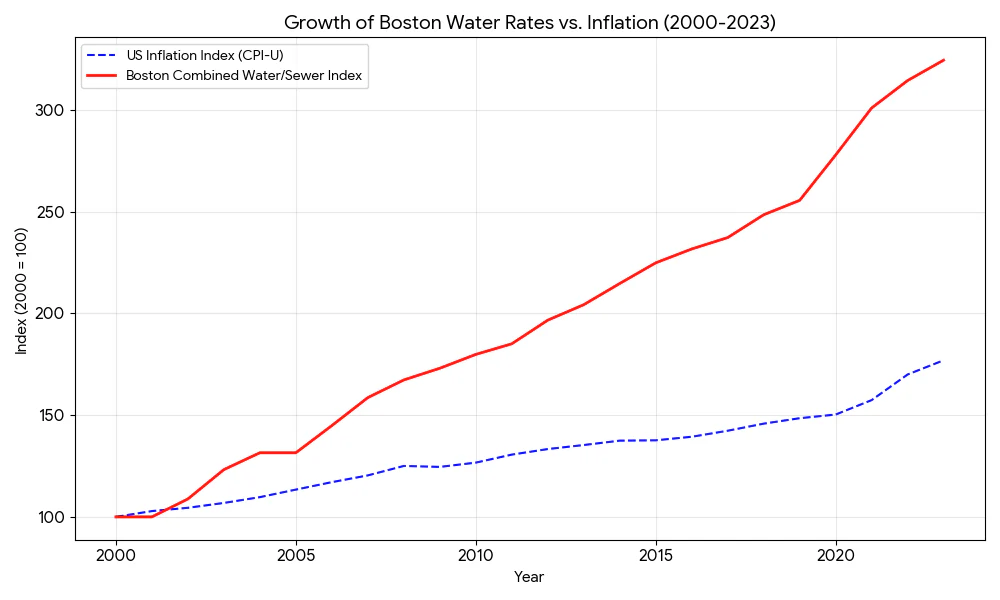
To put that in perspective, general inflation (CPI) grew by approximately 77% during that same period. This means water costs in Boston have outpaced general inflation by nearly three times, making it a primary driver of margin erosion for multifamily properties.
The Invisible NOI Killer: Undetected Leaks
In a typical Boston apartment building, a significant portion of the water bill often comes from water that is never actually "used" by a tenant. Undetected leaks—whether they are slow pinhole leaks behind a wall, malfunctioning irrigation systems, or constant drips in a vacant unit—can run for weeks before discovery.
Because Boston uses an inclining block rate structure, where the price per unit of water increases as your total consumption goes up, even a relatively small leak can push your entire building into a higher, much more expensive pricing tier. Relying on tenants to report these issues is a reactive strategy that often leads to a massive bill at the end of the quarter.
Steps to Regain Control
To protect your property's valuation, landlords should move from a reactive to a proactive water management strategy:
-
Hardware Upgrades: Ensure every unit is outfitted with modern, high-efficiency aerators and low-flow showerheads. These reduce the baseline intended use, keeping your building in lower pricing blocks.
-
Regular Maintenance Cycles: Conduct quarterly inspections of all visible fixtures. Don't wait for a tenant to complain; by the time they notice a leak, the financial damage is already done.
-
Real-Time Monitoring: The most effective way to combat rising rates is through automated monitoring. Technology like that offered by Nowi Sensors allows owners to see usage data in real-time, sending instant alerts when flow patterns indicate a leak.
Summary
The cost of doing nothing is rising every year. By implementing smart monitoring and consistent maintenance, you can stop "invisible" leaks from draining your profits. For a deeper look at the historical data and more tips on managing rising water costs, stay informed on the latest utility trends affecting the Boston market.
Published 1/28/26