How Families Can Handle Pollen, Grass, and Small Debris in the Pool
Pollen, grass clippings, bugs, dust, hair, and small leaves may look harmless at first. For a family pool, though, these little things can quickly change how the water looks and feels. A thin yellow film may sit on the surface after a windy spring day. Grass can blow in after mowing. Fine dirt can settle on the floor, then get kicked back into the water when kids start swimming.
Small debris is frustrating because it does not stay in one place. Some of it floats. Some collect near the waterline. Some sinks into corners, steps, and shallow areas. If it sits too long, it can also add pressure to filtration and water care.
The best approach is not one big cleanup after the pool already looks messy. Families usually do better with a simple routine: reduce what gets into the pool, skim early, keep baskets clean, test the water, and use the right cleaning tool before small debris becomes a bigger job.
Start by Reducing What Gets Into the Pool
The easiest debris to clean is the debris that never reaches the water. Around family homes, much of the mess starts on the deck. Grass clippings, dry leaves, pollen dust, and soil can blow into the pool or get carried in on wet feet.
Clean the deck before debris blows into the water
A quick sweep around the pool can prevent extra cleaning later. After mowing, trimming plants, moving patio furniture, or letting kids play in the yard, clear the deck before people start going in and out of the water.
Time lawn work around pool use
If possible, mow or trim grass when the pool will not be used right away. After lawn work, move clippings away from the pool edge, rinse feet, and check the water surface before swimming starts.
Use a pool cover when the pool is not in use
A cover can help reduce pollen, bugs, and light debris, especially during spring or windy weather. It will not remove the need for cleaning, but it can lower the daily debris load.
Skim the Surface Before Pollen and Grass Sink
Surface cleaning is one of the most useful habits for families. Pollen and grass often float first. If they are removed early, they are less likely to sink, clog baskets, or collect around the waterline.
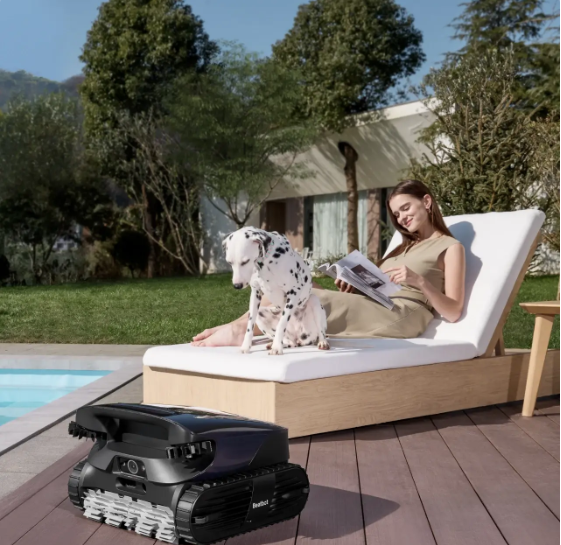
For families comparing a swimming pool vacuum cleaner, the right choice should help manage small debris before it sinks, clogs baskets, or turns into a larger cleanup job. This is especially important during pollen season, after mowing, or after windy weather.
Skim in the morning or after windy weather
Morning skimming works well because debris often gathers overnight. After wind, check the surface again. Even a few minutes with a net can stop grass, bugs, pollen, and small leaves from breaking down in the water.
Watch for yellow film near edges
Pollen often collects near corners, steps, and edges instead of floating evenly across the pool. A yellow line near the waterline does not always mean algae. It may be pollen, sunscreen residue, or dust.
Do not confuse pollen with algae
Pollen is often powdery and may drift or gather on the surface. Algae can cling to walls, make surfaces slippery, or turn water green. If the pool looks cloudy, smells strong, or feels slick, skimming alone is not enough.
Keep Filtration and Water Chemistry Working Together
Small debris can affect more than appearance. Pollen, grass, and organic matter add work for the filter and sanitizer. If chlorine drops too low, debris can become part of a larger water quality problem.
Skimmer baskets, pump baskets, and filters should be checked more often during pollen season or after heavy backyard use. If a basket is full, water flow slows down. If water flow slows, pollen and fine dirt stay in the pool longer.
This is why water testing still matters. Chlorine, pH, and alkalinity need regular checks. If water becomes green, cloudy, or strongly scented, the cause may involve chemistry, circulation, or algae, not just visible dirt.
Where Beatbot Sora 70 Fits Into Handling Pollen, Grass, and Small Debris

Beatbot Sora 70 is a strong fit for family pools where pollen, grass clippings, small bugs, and light debris show up often. These materials usually start on the water surface, then move toward the floor, walls, steps, or waterline. Sora 70 is designed to clean the water surface, shallow platform areas, pool floor, walls, and waterline, which makes it useful after lawn work, windy days, spring pollen, or a weekend of heavy family use.
For parents, the benefit is practical. Instead of separating every task into skimming, vacuuming, brushing the waterline, and checking shallow areas by hand, Sora 70 can support a broader physical cleaning reset. Families comparing a robotic pool cleaner should think about where debris usually appears first. If the surface is often covered with pollen, leaves, or grass, Sora 70 makes more sense than a floor only cleaner.
It still has limits. Sora 70 cannot replace chlorine, pH, or alkalinity testing. It cannot fix severe algae, cloudy water causes, filter problems, or chemical imbalance. Large branches, toys, stones, and sharp objects should be removed by hand before running any cleaner.
A Simple Weekly Routine for Families During Pollen Season
A routine does not need to be complicated. It just needs to happen often enough that pollen and grass do not build up.
After mowing the lawn
Sweep or blow grass away from the pool deck, check the surface, empty the skimmer basket, and skim visible clippings before they sink. If debris has already spread across the water or settled near shallow areas, run the cleaner after removing larger material by hand.
After windy days
Look at corners, steps, waterline areas, and the downwind side of the pool. Pollen and small leaves often gather there. Check baskets before and after cleaning so the system keeps good water flow.
Before weekend swimming
Test chlorine and pH early, not five minutes before everyone wants to swim. Skim the surface, check the floor for fine dirt, and clean the waterline if it looks dusty or oily. This makes the pool feel more ready for family use.
Common Mistakes That Make Pollen and Grass Worse
Many families make pollen problems harder by waiting too long. They only clean when the water looks dirty, which gives small debris time to sink, stain, or clog baskets.
Another common mistake is treating every yellow film as algae and adding chemicals without testing. That can waste products and still leave pollen or grass in the pool. It is also easy to forget the robot basket or skimmer basket after a cleaning cycle. A full basket reduces performance and can make the next cleanup slower.
Families should also avoid asking any cleaner to handle large debris. Branches, sharp toys, stones, and heavy piles of leaves should be removed first.
Cleaner Family Pools Come From Small Habits Done Often
Pollen, grass, and small debris are easier to manage when families deal with them early. Sweep the deck, cover the pool when practical, skim after wind, keep baskets clean, test the water, and use a cleaner that matches the way debris enters the pool.
Beatbot Sora 70 is especially useful when surface debris is a regular family pool problem. It helps reduce repeated skimming, vacuuming, and waterline cleaning. But safe, clear water still depends on testing, sanitizer, filtration, and good family habits. The simplest routine is usually the one families can repeat every week.