How to Prevent Frozen Pipes in Tewksbury, MA: A Guide for Renters and Landlords

Quick answer: To prevent frozen pipes in Tewksbury, MA, keep vulnerable runs above 20°F, insulate anything crossing unheated space, close crawl space hatches, and know where your main shutoff is before you need it. The part that catches most people out: pipes rarely burst during the cold snap. They burst on the thaw, when the ice plug releases and trapped pressure finds the weakest point in the line.
That is the entire guide in three sentences. The rest is the detail that decides whether your building gets through winter clean, shaped by what crews at Dale Plumbing Services run into across Tewksbury and the north suburbs every January.
The timing is remarkably consistent. Read the winter reviews for a plumbing and heating company in Tewksbury, MA and the calls cluster on the first mild morning after a freeze, not during it. By the time a tenant hears water, the damage started days earlier.
Key Takeaways
| Point | Why it matters |
|---|---|
| 20°F is the danger line | Uninsulated pipes in unheated space start freezing here. Tewksbury clears it repeatedly each winter. |
| The thaw breaks the pipe | Pressure builds between the ice plug and a closed faucet, then releases. |
| 250 gallons a day | That is what a 1/8 inch crack can move. Response time beats repair skill. |
| Old stock is the problem | Triple deckers, garden levels, converted basements. Not the weather. |
| Vacancy multiplies risk | Nobody is there to notice the cold spot or the pressure drop. |
| Responsibility splits | Landlord owns heat and envelope. Tenant owns reasonable care. Disputes live in the gap. |
What Temperature Do Pipes Freeze At?
20 degrees Fahrenheit. That is the temperature alert threshold the University of Illinois Building Research Council set for uninsulated pipes running through unconditioned space.
Tewksbury, Andover and Carlisle drop below that mark routinely in January and February. Inland MA suburbs also run several degrees colder than the harbor, so a coastal forecast understates your actual risk.
A unit does not need a polar vortex. It needs one badly routed pipe and one cold night.
Why Buildings in Tewksbury, MA Freeze Before the Weather Explains It
Winters here are not extreme by national standards. The problem is the building stock.
Century-old framing, modern floor plans
A large share of the region's rental inventory was framed before insulation standards meant anything, then chopped into units over the following hundred years.
Kitchens got relocated. Bathrooms got added to back porches that were later enclosed. Supply lines ended up inside exterior walls, crawl spaces and vented basements nobody counted as living space.
The vacancy multiplier
A unit between tenants. A student apartment over winter break. A landlord's own second floor while they are in Florida.
Same failure mode every time. Nobody runs water, nobody notices the thermostat was dialed down to save money, and nobody is standing there when the line lets go.
Which Units in Tewksbury, MA and the North Suburbs Break First?
Risk is not evenly spread. In rough order:
- Triple decker back kitchens and enclosed porches Additions to the original envelope. Supply lines run through walls with little or no insulation.
- Garden level and basement units Pipes sit along the sill near foundation vents. Cold air pools at floor level and stays.
- Top floor units with attic runs Heat rises, but attics vent to the outside. A line crossing an unheated attic is exposed on every side.
- Any unit with an open crawl space hatch The most common preventable cause on the list. Costs nothing to fix.
- Vacant or seasonally empty units No one present to catch a cold spot or a pressure drop.
Landlord tip: Walk the building once in November and mark which of these five apply to you. One hour in the fall prevents most of what happens in February.
What Actually Happens When a Pipe Bursts?
Water expands about nine percent as it freezes. That expansion alone rarely splits copper or PEX.
What splits it is pressure. Water is not compressible, so as the ice plug grows, pressure builds between it and a closed faucet downstream. It has nowhere to go but into the pipe wall.
The split can open several feet away from the ice itself.
Then the thaw comes, the line pressurizes through the new opening, and it runs. The Insurance Institute for Business and Home Safety puts a 1/8 inch crack at roughly 250 gallons of water per day.
In a stacked triple decker in Melrose or Woburn, that water does not stay on one floor. It travels down joist bays into the units below, into electrical boxes, and into finishes that then have to be opened up and dried.
Which is why the useful skill here is not plumbing knowledge. It is knowing where the shutoff valve is and getting to it fast.
Who Pays, the Renter or the Landlord?
Responsibility splits. Here is the clean version:
| Landlord generally owns | Tenant generally owns |
|---|---|
| A heating system that holds the unit at the temperature the State Sanitary Code requires | Not shutting off or unreasonably lowering the heat, including while away |
| The building envelope: insulation, weather sealing, foundation vents, crawl space access | Reporting lost heat, a cold spot, or a pressure drop promptly |
| Pipe insulation on runs through unconditioned space | Keeping windows closed near plumbing runs in winter |
| Repair of the burst and the resulting structural damage | Their own belongings, which is what renters insurance covers |
Where the fight actually starts
A tenant drops the heat to save on a January bill. A pipe in an exterior wall freezes. Both sides believe the other one caused it.
Two lines of text prevent almost all of these disputes:
- A minimum winter thermostat setting written into the lease
- The main shutoff location printed in the move-in packet
For anyone managing multiple units across the north suburbs, keeping one plumbing contact on file who already knows your buildings is worth more in February than any single repair. Vet them in the fall: confirm the master plumber license number, check they actually cover your town, and make sure someone answers after hours.
How to Prevent Frozen Pipes: The 8-Step November Checklist
Work through this in November, not December.
- Insulate exposed runs. Foam sleeve on any pipe in a basement, crawl space, attic or exterior wall cavity you can reach.
- Close foundation vents and crawl space hatches. Free, and it removes the most common cold air path.
- Seal air leaks near pipes. Sill plate gaps, dryer vent surrounds, old service penetrations. One can of foam covers most of it.
- Locate and tag the main shutoff. Label it. Then turn it, because old gate valves seize.
- Service the heating system before the season. A boiler that fails on the coldest night takes the plumbing with it.
- Set a minimum thermostat temperature for vacancies. Hold occupied units steady instead of swinging day to night.
- Disconnect and drain outdoor hose bibs. A connected hose holds water at the valve, a classic split point.
- Open under-sink cabinet doors on exterior walls during cold snaps so room air reaches the trap and supply lines.
How to Thaw a Frozen Pipe Safely
If a faucet gives you a trickle or nothing on a cold morning, you are ahead of the failure.
Do this
Leave the faucet open. A running trickle relieves the pressure that causes the split and gives meltwater somewhere to go.
Warm the pipe from the faucet end backward toward the frozen section. Use a hair dryer, a heating pad, or towels soaked in hot water.
Working faucet-first matters. Warming the middle first traps meltwater behind ice with no escape.
Never do this
No propane torch. No open flame of any kind.
No heat gun on plastic line.
That is how a plumbing problem becomes a fire in a hundred-year-old wood framed building.
Call a licensed plumber when
- You cannot locate the frozen section
- The pipe runs inside a finished wall
- More than one fixture has gone dry
At that point you are no longer preventing damage. You are limiting it, and the main shutoff comes first.
Frequently Asked Questions
How long does it take for pipes to freeze in Massachusetts?
An uninsulated pipe in unheated space can freeze in six to eight hours once ambient temperature holds below 20°F. Insulated pipes in conditioned space take far longer or never freeze at all.
Can a landlord in MA require a minimum thermostat setting?
Yes, if it is written into the lease. It is one of the simplest ways to avoid a winter dispute, and most tenants accept it without argument when the reason is explained.
Does renters insurance cover a burst pipe?
It typically covers the tenant's damaged belongings, not the pipe or the building repair. Those sit with the property owner.
Which pipes freeze first in an apartment?
Kitchen and bathroom supply lines running through exterior walls, followed by anything in a basement, crawl space or unheated attic.
Should I leave a faucet dripping overnight?
During a hard freeze, yes. A slow drip on fixtures fed by vulnerable runs relieves pressure and keeps water moving.
The One Habit That Matters Most This Winter
Check the building when it is cold, not when something breaks.
Ten minutes in the basement during the first hard freeze, touching pipes and looking for cold spots, catches problems while they are still free to fix. Renters can do a version of this in their own unit in about two minutes.
Landlords who do it across a portfolio in November almost never take the February phone call.
About Dale Plumbing Services Inc.
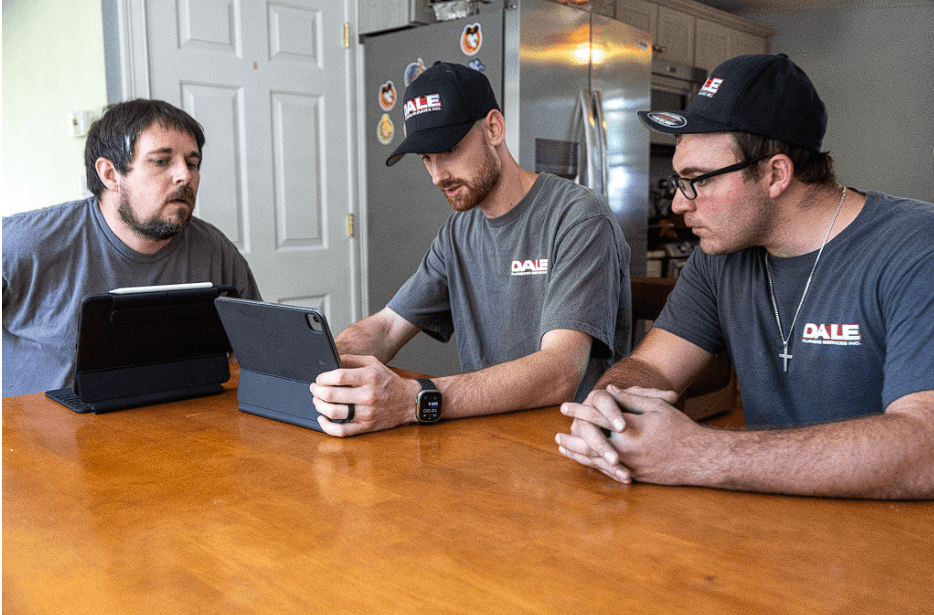
Dale Plumbing Services Inc. is a locally owned plumbing and heating company led by Master Plumber Curtis Dale, serving homes and small businesses across Tewksbury, MA and the northern Boston suburbs since 2020.
| Business Name | Dale Plumbing Services Inc. |
| Address | 1501 Main St #43, Tewksbury, MA 01876, United States |
| Phone | (781) 854-2969 |
| Website | daleplumbingservices.com |
| info@daleplumbingservices.com | |
| Owner | Curtis Dale, Master Plumber, License #4744 |
| Categories | Plumber, Heating Contractor |
| Hours | Monday to Friday, 8:00 AM to 5:00 PM, same-day service available |
| Service Areas | Tewksbury, Andover, North Andover, Bedford, Burlington, Carlisle, Lexington, Melrose, North Reading, Reading, Stoneham, Wakefield, Wilmington and Woburn, MA |