How Long-Distance Moves Shape Relocation to Boston
Moving to Boston rarely happens on impulse. Most relocations into the city follow a clear pattern shaped by career decisions, lease cycles, and long-distance logistics that begin well before a move-in date.
Recent migration data shows that major relocation corridors in the U.S. are highly predictable. One of the most active flows runs from New York to Florida, with tens of thousands of moves each year. At the same time, Boston continues to attract highly educated professionals, even as many leave other Northeast cities.
This creates a layered movement pattern. People relocate once for cost or lifestyle, then move again for opportunity. Boston often sits at the final stage of that shift.
Why Are People Still Moving to Boston Despite High Costs?
Boston attracts a very specific type of relocation, which is driven by access.
The city continues to pull in professionals across healthcare, technology, and academia. Recent figures show a strong inflow of college-educated residents, even while overall population movement trends outward in Massachusetts. This also shapes demand for services like car shipping in Massachusetts, as many long-distance movers choose to separate travel from vehicle transport.
This creates a selective migration effect. People who move to Boston are not looking for lower costs and are positioning themselves closer to institutions, networks, and long-term career paths.
That is why many relocations into Boston happen after one or more prior moves and the decision is usually planned.

What Are the Most Common Long-Distance Routes Connected to Boston?
Boston's relocation patterns are closely tied to movement along the East Coast.
The New York to Boston corridor remains one of the most active short-to-mid distance routes. It is driven by job transitions, especially in finance, tech, and education.
At the same time, New York to Florida continues to be one of the most significant long-distance migration routes in the country. Lower taxes and cost of living pull residents south. Over time, some of those movers return north for career advancement, often choosing cities like Boston.
This creates multi-stage relocation paths:
- New York to Florida
- Florida to Boston
- New York to Boston
How Do National Migration Trends Affect People Moving Into Boston?
Across the U.S., migration has shifted toward the South and Sun Belt regions. Lower costs and lifestyle changes continue to drive that movement.
National moving data shows that relocation decisions are primarily driven by practical factors, with housing accounting for about 40% of moves, family around 27%, and jobs close to 21%. These patterns explain why large population inflows continue toward states like Florida, Texas, and the Carolinas.
Boston does not compete on cost. It competes on opportunity.
While cities in Florida, Texas, and the Carolinas absorb large population inflows, Boston attracts a narrower group. These are typically professionals who prioritize long-term career positioning over short-term savings.
That distinction means Boston's inbound moves are often more structured, with tighter timelines and higher expectations around coordination.
Why Timing Matters More Than Distance When Moving to Boston
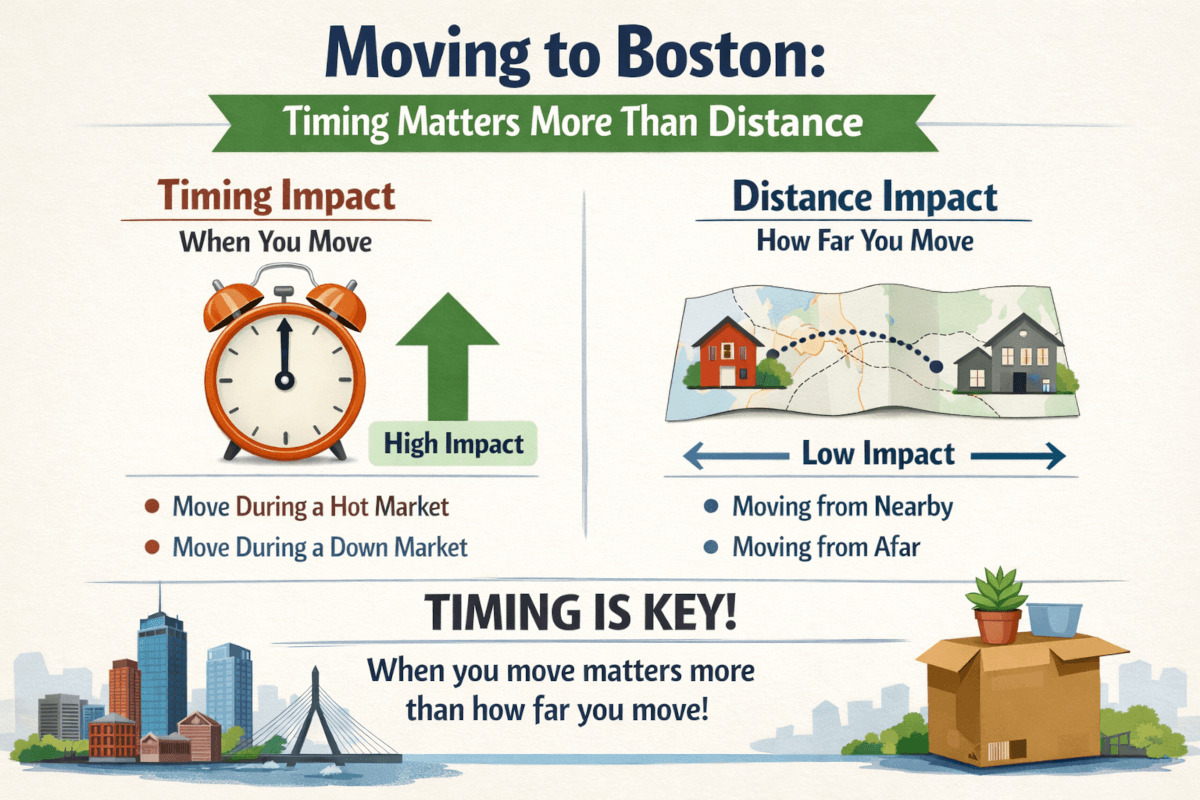
Boston operates on a unique moving cycle. September 1, often referred to as the city's peak moving date, compresses thousands of relocations into a narrow window.
During this period, availability tightens across the board. Moving services, building access, and street parking all become limited. Even small delays can disrupt a carefully planned relocation.
Distance becomes less important than timing.
A move from New York to Boston can face more complications than a cross-country relocation if it falls within this peak window. Congestion, permit requirements, and building schedules create friction that does not exist in less concentrated markets.
Planning around timing is what keeps a move controlled.
What Challenges Come With Long-Distance Moves to Boston?
Long-distance moves into Boston involve more than covering miles.
Routes along the Northeast corridor carry dense traffic. The longer a shipment stays on these routes, the more exposure it has to delays, congestion, and scheduling shifts.
At the same time, urban delivery adds up with the narrow streets, limited parking, and building restrictions require coordination ahead of arrival. Missed timing can lead to rescheduling or extended wait times.
Lease cycles also play a role. Many renters align their move with fixed start dates, leaving little flexibility if something changes during transit.
Each of these factors compounds the complexity of a long-distance relocation.
How Do People Move Vehicles When Relocating Long Distance?
Vehicle transport becomes a key part of relocation when distance increases.
Many people choose not to drive long routes, especially along high-traffic corridors like New York to Florida or across multiple states. Instead, they separate their travel from their vehicle's movement.
This approach allows for more flexibility because flights can be scheduled independently, while the vehicle follows an optimized route based on carrier availability and demand.
The process itself is structured. Vehicles are inspected at pickup, secured for transit, and delivered with minimal handling along the route. Timing is coordinated to align with the broader move, not compete with it.
How Can You Reduce Risk When Moving Long Distance to Boston?
Long-distance moves do not need to be unpredictable. The outcome depends on how the move is planned.
Flexible timing makes the biggest difference. Avoiding peak windows like early September opens up better availability and smoother scheduling.
Choosing accessible pickup and delivery locations also helps. Metro areas allow for easier routing and fewer delays compared to remote or restricted locations.
Booking closer to the actual move date can improve route matching. It allows carriers to align your move with existing routes instead of forcing inefficient scheduling.
Comparing full quotes, not just base pricing, provides a clearer picture of what is included and how the move will be handled.
Each decision reduces friction and keeps the process controlled.
Conclusion
Relocating to Boston is rarely defined by how far you move. It is shaped by when you move, how your route is structured, and how well each step is coordinated.
Migration patterns across the U.S. show that long-distance moves follow predictable paths. Boston sits within those patterns as a destination tied to opportunity rather than cost.
Understanding those dynamics allows you to plan ahead, avoid peak constraints, and manage the move with precision.
A well-structured move does not rely on distance. It relies on timing, routing, and control.