What Boston Landlords Need to Know About Vaping Damage and Lease Violations
In recent years, many people have transitioned away from smoking traditional cigarettes and towards vaping. As of 2025, almost 10% of U.S. citizens regularly use e-cigarettes, with data suggesting around 90% of individuals who vape on a regular basis are likely to do so indoors.
For owners and operators of rental properties, indoor vaping can be of serious concern. If left unaddressed, e-cigarette vapor can leave behind a sticky, oily residue, stain surfaces and soft furnishings, contaminate HVAC systems and introduce undesirable odors into properties.
Establishing and communicating no vaping policies to tenants should be a top priority for all landlords, as well as introducing measures to identify and address policy violations. With that said, here's what Boston landlords need to know about vaping damage and lease violations.
Why Boston landlords should consider indoor vaping bans
While some tenants may believe e-cigarette vapor is less damaging to indoor surfaces than tobacco smoke, indoor vaping can and will increase maintenance costs if left unaddressed.
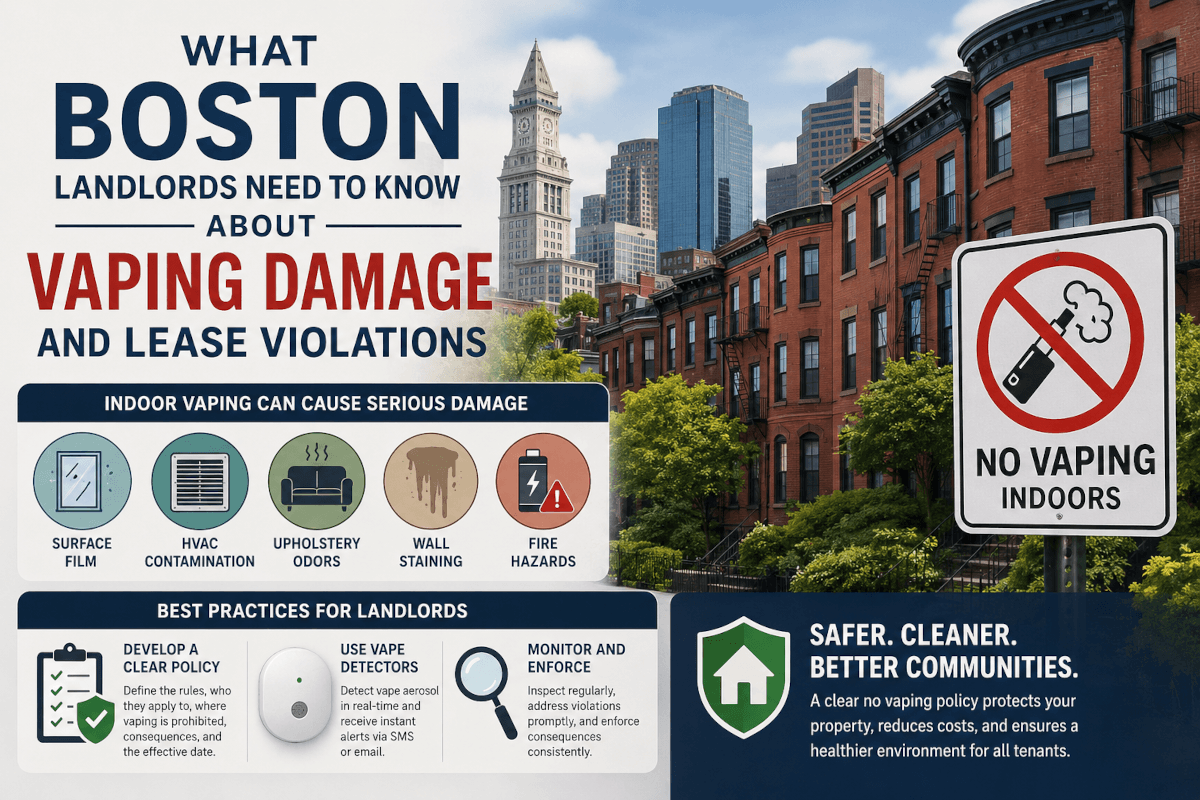
Common damages directly linked to indoor vaping include:
- Surface film: Exhaled e-cigarette vapor can leave a sticky, oily film on hard surfaces like windows, countertops and mirrors that can attract dust and be difficult to remove.
- HVAC contamination: Vape smoke can be pulled through HVAC systems and settle in ducts where it collects dust, clogs filters, grows bacteria and cuts energy efficiency.
- Upholstery odors: E-cigarette vapor contains aerosolized oils and chemicals that can settle in carpets and soft furnishings and introduce persistent, unpleasant odors.
- Wall staining: Aerosolized vape smoke can leave oily residues on walls and ceilings that stop new paint from sticking to surfaces and require powerful solvents to remove.
- Fire hazards: Vape batteries can malfunction while charging and start fires in rental properties; in the UK, over 1000 vape-related fires have been reported since 2020.
Best practices for implementing an indoor vaping ban
In Boston, there is no legal right to vape in multi-unit housing and vaping is not a protected activity under fair housing laws. Provided landlords give ample warning to new and existing tenants, no indoor vaping rules can be added to lease agreements and reasonably enforced.
Develop a clear policy
An effective smoke and vape-free housing policy will be clear and communicated to tenants through multiple channels as early as possible. Policies must be discussed with new tenants before the lease is signed and with existing tenants at least 30 days before the ban is enacted.
When writing a no vaping policy, make sure to include:
- A clear definition of which smoking and vaping products will be banned.
- A clear definition of where smoking and vaping will not be permitted.
- Exactly who the smoking and vaping ban applies to.
- Clearly defined consequences of policy violations.
- An exact date for when the ban will take effect.
Use vape detectors
Vaping can be much more difficult to address than traditional smoking as vapes are not uniform in design and e-cigarette vapor does not leave behind a single distinctive odor. To ensure bans are adhered to at all times, landlords should consider utilizing vape detectors.
Modern vape detectors can identify unique chemicals in vape smoke to a high degree of accuracy and alert landlords in real-time via SMS or email. Landlords can legally install vape detectors provided they cannot record audio or video and tenants are informed of their use.
Monitor and enforce violations
To help ensure no vaping policies are adhered to, landlords should enforce bans uniformly across all properties. During routine maintenance, units should be inspected for telltale signs of vaping and smoking like stains and paraphernalia and all vape detectors should be tested.
Consequences of lease violations, as described in the no vaping policy, should be enforced without delay. Provided agreements have been signed, enforceable consequences can include warnings, fines, lease non-renewals and court-ordered evictions for repeat offenses.
Enjoy safer, cleaner rental properties
By taking the initiative to fairly and enforceably ban vaping across rental properties, Boston landlords can safeguard their investments against damage, avoid unnecessary maintenance costs and provide existing and prospective tenants safer and cleaner environments to enjoy.
Boston landlords should know that, provided a clearly defined policy is presented to and signed by tenants, vaping can be banned indoors across all units, and that vape detectors and regular inspections can help to ensure that bans are reliably and consistently enforced.