Underground Pipe Leaks in Boston: Warning Signs, Detection Methods, and Why Early Action Matters
By the time most Boston property owners realize there's a leak beneath their building, the damage is already done. Water has been quietly undermining the foundation, feeding mold colonies inside walls, and inflating utility bills — often for more than two months before anyone notices. According to industry data, water leaks go undetected for an average of 2,000 hours before discovery. That's more than 75 days of continuous damage.For landlords, property managers, and condo owners across Greater Boston, underground pipe leaks are not a theoretical risk. They're a predictable consequence of aging infrastructure, punishing winters, and the freeze-thaw cycles that define New England life. Understanding the warning signs, knowing how professionals find leaks, and acting quickly are the three things that separate a manageable repair from a five-figure structural crisis.
Why Boston Properties Face a Higher Risk
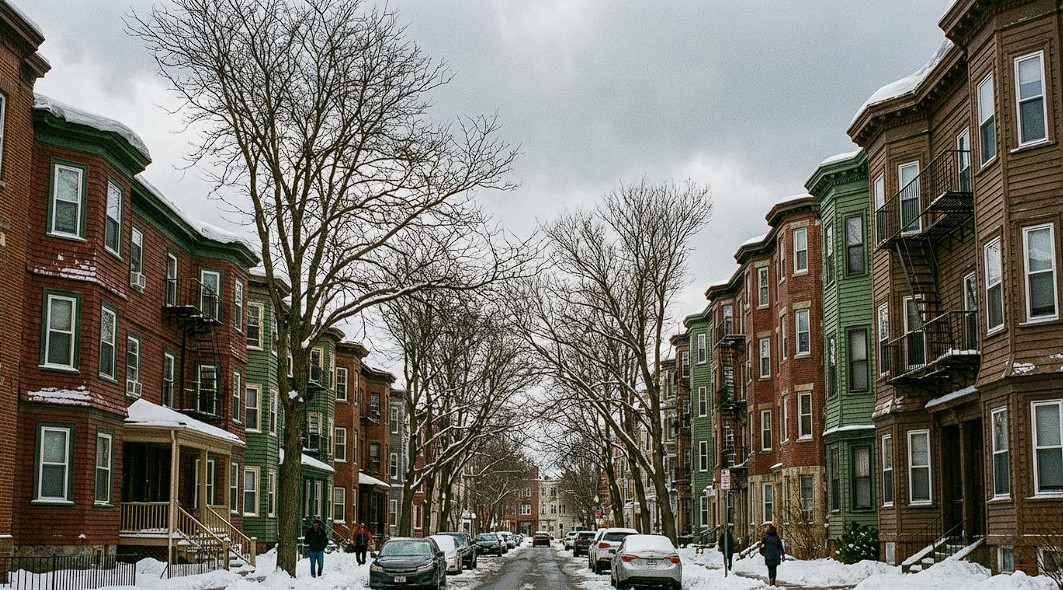
Boston's residential infrastructure is among the oldest in the country. Many underground service pipes beneath triple-deckers, brownstones, and mid-century apartment buildings were installed 50 to 100 years ago or longer. Cast iron, galvanized steel, and older copper lines all corrode over time — and that corrosion accelerates with every freeze-thaw cycle.
The mechanics are straightforward. When water trapped in or around a pipe freezes, it expands with enough force to crack cast iron and split copper joints. When temperatures rise again, that crack allows pressurized water to escape into the surrounding soil. The cycle repeats all winter. By spring, what started as a hairline fracture can be a steady, invisible flow.
Multi-unit buildings face a compounding problem. Apartment buildings share underground pipe infrastructure. A single service line breach beneath the front yard of a six-unit building doesn't just affect one tenant — it threatens water pressure, water quality, and structural integrity for everyone in the building. The scope of the problem scales with the number of units.
There's also a regulatory dimension that Boston property owners cannot afford to ignore. The Boston Water and Sewer Commission (BWSC) holds property owners responsible for all pipes running from the street meter to the building — commonly called the service line. Under the BWSC Leak Up To Owner (LUTO) program, once a leak on that service line is identified, the property owner has just 15 days to arrange a repair before BWSC can terminate water service to the building. A delayed response isn't just expensive — it can leave tenants without running water.
Warning Signs of an Underground Water Leak
Underground leaks rarely announce themselves dramatically. More often, they reveal themselves through small, easy-to-dismiss signs that accumulate over weeks. Knowing what to look for is the first line of defense.
Signs Outside the Building
- Unexplained wet or soggy patches in the yard during dry weather, particularly near the building's foundation or the path of underground pipes leading from the street.
- Unusually green or rapidly growing grass in a specific patch of lawn. Leaking water acts as continuous irrigation and fertilizer, causing localized growth that stands out from the surrounding area.
- Sunken areas or soft soil near the foundation, driveway, or walkway. Water erodes the supporting soil beneath paved surfaces, causing subsidence.
- New or widening cracks in driveways, sidewalks, or the foundation itself. These are often the last visible symptom — by the time the pavement cracks, substantial erosion has already occurred below.
Signs Inside the Building
- An unexplained spike in water bills with no change in occupancy or usage patterns. Even a small underground leak can waste hundreds of gallons per day.
- A building-wide drop in water pressure — not isolated to a single fixture, but affecting multiple units or floors simultaneously.
- The sound of running water when no taps or appliances are in use. This is most noticeable at night when the building is quiet.
- Discolored water — brown or rust-tinged output from faucets can indicate that a compromised pipe is drawing in sediment or that corrosion has accelerated at a breach point.
- Warm spots on floors can signal a hot-water line leak beneath a concrete slab, a condition sometimes called a slab leak.
The DIY Meter Check
BWSC provides a simple self-diagnostic method for property owners who suspect a leak. Turn off every water source in the building — all faucets, appliances, and irrigation systems. Then check the water meter. If the red triangle or sweep hand on the meter is still moving with no water running anywhere in the building, water is flowing somewhere it shouldn't be.
BWSC recommends checking the meter during a period of guaranteed zero usage — early morning is ideal. A moving meter under these conditions is strong evidence of a leak between the meter and the building, and the next step is calling a professional.
How Professionals Find Leaks Without Digging Up Your Property
The most common misconception about underground leak detection is that finding a leak requires excavation. Modern detection methods are largely non-invasive. Professionals can pinpoint a leak to within inches without opening a trench — and the excavation, when it happens, is targeted and minimal.
Acoustic Leak Detection
Escaping pressurized water produces sound as it moves through soil. Acoustic leak detectors amplify this sound using ground microphones or contact sensors placed along the pipe route. By moving sensors systematically and listening for the characteristic hiss or rumble of escaping water, technicians narrow down the leak location progressively.
Cross-correlation technology advances this further. Two sensors are placed at different access points along the pipe, and signal-processing software compares the sounds received at each point. Because the leak is closer to one sensor than the other, there's a measurable time difference in when each sensor picks up the same sound. The software uses that time delay and the pipe's known characteristics to calculate the exact distance to the breach. This is the most widely used method for pressurized service lines and can work through asphalt, concrete, and compacted soil.
Thermal Imaging
Infrared cameras detect temperature anomalies in surfaces and soil. A cold-water leak chills the surrounding ground; a hot-water line leak creates a warmer zone. Thermal imaging allows technicians to scan large sections of a property quickly and identify zones that warrant closer acoustic investigation — functioning as a first pass to narrow the search area before deploying more precise tools.
Tracer Gas Detection
For cases where acoustic methods are less reliable — high ambient noise from traffic, construction, or complex pipe configurations — tracer gas offers a complementary approach. A non-toxic mixture of nitrogen and hydrogen is introduced into the isolated pipe section. The gas escapes through any breach point and migrates upward through the soil. A surface sensor detects concentration peaks, marking the leak location with precision.
Pressure Testing
Pressure testing is typically used to confirm a suspected leak rather than locate it. The relevant pipe section is isolated and pressurized. A pressure gauge monitors for drops over a fixed period. A drop confirms the presence of a breach and, combined with acoustic or thermal findings, allows the technician to move forward with confidence before any excavation begins.
Professional underground leak detection combines these methods based on the specific conditions of each property — pipe material, soil type, depth, surrounding infrastructure — to deliver a precise diagnosis without unnecessary disruption to the property.
The Real Cost of Doing Nothing
Inaction is almost always the most expensive choice. What starts as a small underground leak follows a predictable and damaging progression if left unaddressed.
Foundation erosion is the primary structural risk. Water washing through soil beneath a foundation removes the material that supports the building's weight. This causes settlement — uneven sinking that stresses the structure and produces cracks in walls, floors, and the foundation itself. In severe cases, structural repairs extend into six figures.
Mold follows moisture within 24 to 48 hours. Once established in wall cavities or beneath flooring, mold spreads rapidly through an apartment building's shared spaces and HVAC systems. Mold remediation in a multi-unit building is invasive, expensive, and may require temporarily displacing tenants.
Financial impact accumulates in multiple directions at once. According to EPA WaterSense data, the average household wastes nearly 10,000 gallons per year from leaks — enough to fill a backyard swimming pool. Fixing those leaks saves homeowners approximately 10% on water bills. For a multi-unit building with a significant underground breach, the monthly water waste can be far higher. Meanwhile, water damage and freezing accounted for 22.6% of all home insurance claims in 2025, with the average claim costing over $15,000.
Property value takes a direct hit. A documented foundation leak or chronic water intrusion issue can reduce property value by 10 to 25%, which in Boston's market translates to a substantial loss.
Legal exposure for Boston landlords is real and specific. Massachusetts habitability law requires landlords to maintain functioning plumbing. A known underground leak that a landlord fails to address is not just a maintenance oversight — it's a potential legal liability. And once BWSC identifies a leak on the service line, the 15-day clock under the LUTO program begins regardless of whether the landlord is aware.
Understanding who is responsible for pipe repairs in a rental is essential knowledge for both landlords and tenants. In Boston, the service line from the street meter to the building is unambiguously the owner's responsibility.
When to Call a Professional — and What Not to Wait For
There is a short list of conditions that warrant an immediate call to a licensed underground leak detection service — not a call to "monitor the situation."
Call now if:- The water meter is moving with all water sources turned off.
- The water bill has jumped unexpectedly with no change in usage.
- Water pressure has dropped across multiple units or floors.
- Wet patches have appeared in the yard without a rain event.
- Cracks have appeared or widened in the foundation or driveway.
- The sound of running water is audible in the building with no taps open.
The inclination to wait and see whether conditions worsen is understandable, but the math works against it. An undetected leak running for 75 days causes exponentially more damage in week ten than it does in week one. Soil erosion, mold colonization, and pipe degradation compound over time.
For property owners concerned about repair costs, BWSC's LUTO program offers eligible owners the ability to arrange service line repairs through the Commission and pay for them in installments over 24 months — removing the barrier of a large upfront cost from the equation.
Tenants who notice any of the warning signs listed above should report them to their landlord or property manager in writing immediately. Documented notice protects tenants and gives property owners the information they need to respond appropriately. For guidance on routine plumbing maintenance and how to prevent issues before they start, building owners can take several proactive steps between professional inspections.
Protecting Your Boston Property Before the Leak Finds You
Boston's aging underground infrastructure, combined with the mechanical stress of New England winters, makes underground pipe leaks a routine risk for apartment owners, condo associations, and property managers throughout the city. The freeze-thaw cycle alone is enough to turn a minor pipe imperfection into a significant breach over the course of a single winter.
The encouraging reality is that modern detection technology makes early diagnosis both accessible and precise. Non-invasive methods — acoustic correlation, thermal imaging, tracer gas — allow professionals to locate leaks without tearing up floors, driveways, or landscaping. When a leak is caught early, the repair is surgical. When it's caught late, the damage is structural.
If you've noticed any of the warning signs described here — a climbing water bill, soft soil near the foundation, a meter that won't sit still — the right move is to get a professional assessment before the situation escalates. For Boston property owners managing apartment buildings, that assessment is not just a maintenance decision. It's a financial and legal obligation.