Apartment Water Damage: 7 Warning Signs and What to Do Next
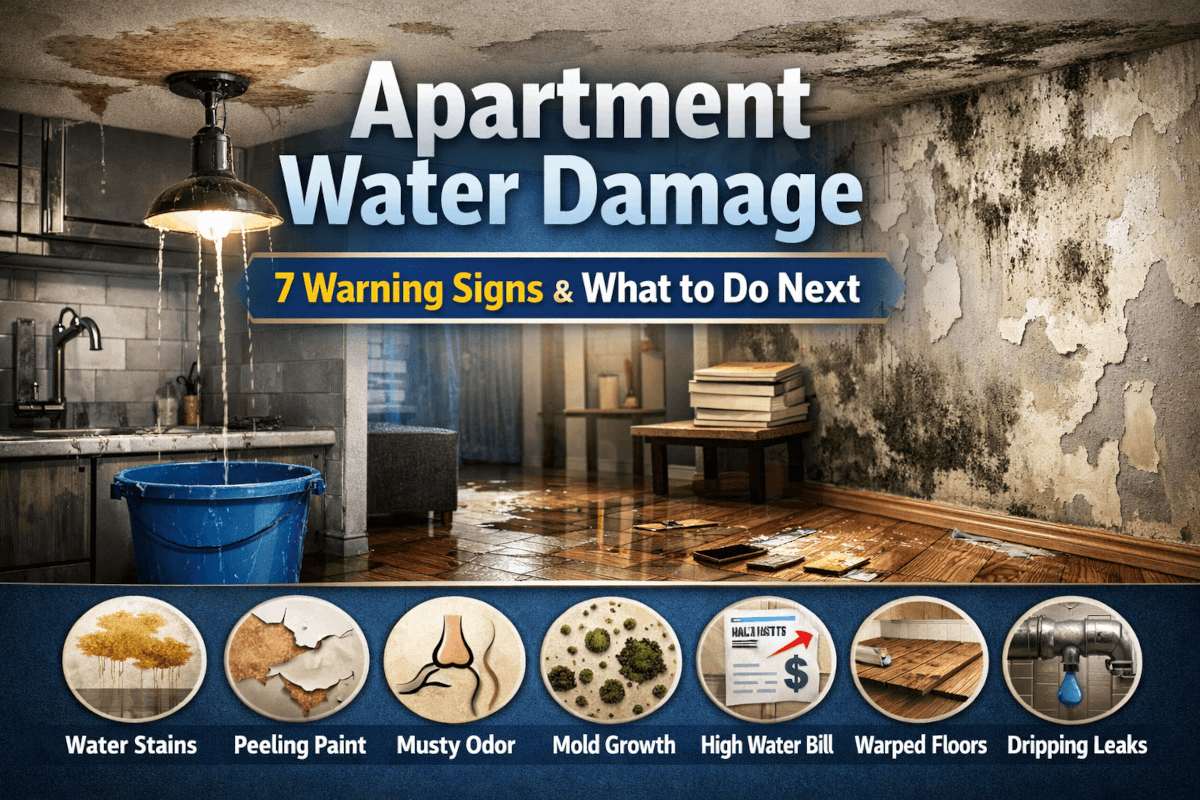
Water damage in apartments can happen from a burst pipe, a leaking roof, a broken appliance, or even a neighbor's overflowing bathtub. Even a small leak can become a big problem if left unchecked.
The good news is that water damage usually gives warning signs before it becomes serious. If you know what to look for, you can act fast to prevent mold, structural damage, and costly repairs. Below are seven warning signs of apartment water damage and the steps you should take next.
What Causes Water Damage in Apartments?
Water damage in apartments often starts with plumbing problems. Pipes can crack, loosen, or corrode over time. Washing machines, dishwashers, and water heaters can also leak if hoses break or connections fail.
Sometimes the source is not inside your unit. Roof leaks, heavy rain, clogged gutters, or flooding from an upstairs neighbor can cause damage. Air conditioning units can drip water if not maintained. No matter the cause, moisture that stays too long can damage walls, ceilings, and floors.
7 Warning Signs of Apartment Water Damage
1. Water Stains on Walls or Ceilings
One of the first signs is discoloration. You may notice yellow, brown, or dark rings on the ceiling or walls. These stains often grow larger over time.
Water stains usually indicate a leak above or behind the surface. Even if the area feels dry, moisture may still be trapped inside. Ignoring stains can lead to mold growth or weakened drywall.
2. Peeling Paint or Warped Drywall
If paint starts to bubble, crack, or peel, water may be trapped beneath it. Drywall can also swell and feel soft to the touch.
Warped drywall is a sign that water has soaked into the material. Over time, this can weaken the wall or ceiling. In severe cases, parts of the ceiling may sag or collapse.
3. Musty Odors
A strong, musty smell is often a warning sign of hidden moisture. This smell is common in bathrooms, kitchens, or closets.
Even if you do not see visible water damage, the odor may mean mold is starting to grow behind walls or under flooring. Mold thrives in damp, dark spaces. If the smell persists, have it checked.
4. Mold Growth
Mold can appear as black, green, or white spots on walls, ceilings, or around vents. It may look fuzzy or slimy.
Mold spreads quickly in damp areas. It can affect indoor air quality and cause health issues such as coughing, sneezing, or headaches. If you see mold covering a large area, professional cleanup may be necessary.
5. Sudden Increase in Water Bill
If your water bill suddenly goes up without a clear reason, there may be a hidden leak. Toilets that run constantly or pipes leaking inside walls waste a lot of water.
Hidden leaks are dangerous because they can go unnoticed for weeks. During that time, water can damage insulation, flooring, and wood framing.
6. Damp or Warped Flooring
Flooring can change shape when it gets wet. Wood may buckle or swell. Laminate can lift at the edges. The carpet may feel damp or smell unpleasant.
If the floor feels soft when you walk on it, water may be trapped underneath. Moisture under the flooring can lead to mold and structural damage.
7. Dripping Sounds or Visible Leaks
If you hear dripping inside the walls or see water coming from the ceiling, you likely have an active leak. Water may drip from light fixtures, vents, or cabinets.
This is a serious warning sign. Active leaks can cause fast damage and raise the risk of electrical hazards. Immediate action is needed.
What to Do Next If You Notice Water Damage
Step 1: Stop the Source of WaterIf you can safely stop the water, do it right away. Turn off the main water valve if a pipe has burst. Shut off appliances that are leaking.
If the leak is coming from another unit or the roof, contact building management immediately. Do not try to fix major issues yourself.
Step 2: Notify Your Landlord or Property ManagerReport the problem as soon as possible. Send a written message or email so there is a record of your report. Include the date and a clear description of the issue.
Quick reporting protects you as a tenant. It shows that you acted responsibly and did not ignore the damage.
Step 3: Document the DamageTake photos and videos of everything affected. Capture wide shots and close-up images. Save any damaged personal items if possible.
Keep copies of communication with your landlord. This documentation can help if you need to file an insurance claim.
Step 4: Check Your Renters Insurance PolicyReview your renters insurance to see what is covered. Many policies cover damage to personal belongings caused by sudden leaks.
Contact your insurance provider if needed. Ask about the claims process and required documents.
Step 5: Begin Drying the AreaDry the area as soon as possible. Use fans, open windows, and run a dehumidifier if you have one. Remove wet rugs, towels, or items.
The faster the area dries, the lower the risk of mold growth. Do not ignore damp areas, even if they seem minor.
Step 6: Call a Professional If NeededIf the damage is extensive, spreads across walls or floors, or includes mold, professional help from a certified water damage restoration team is necessary. Water damage restoration professionals use specialized equipment to dry hidden moisture within walls and floors.
Professional service may also be required if there is a sewage backup or electrical risk. Do not take chances with your safety.
Who Is Responsible for Apartment Water Damage?
Responsibility depends on the cause of the damage. If the leak is due to normal wear, faulty plumbing, or roof problems, the landlord is usually responsible for repairs.
If the damage was caused by tenant negligence, such as leaving a tub running, the tenant may be responsible. When a neighbor causes flooding, their insurance may be involved. Review your lease agreement and insurance policy.
How to Prevent Future Water Damage in Your Apartment
Check under sinks and around appliances once a month. Look for small drips, rust, or loose hoses. Report small leaks early before they become larger problems.
Avoid clogging drains with grease or food. Do not ignore slow drains or running toilets. If allowed, consider using simple water leak detectors that alert you when moisture is present.
When Is Water Damage an Emergency?
Water damage becomes an emergency when there is fast flooding, electrical risk, or ceiling sagging. If water is near outlets or light fixtures, avoid the area and call for help.
Sewage backups are also emergencies because they carry bacteria. If you notice dirty water or a strong foul smell, leave the area and contact management immediately.
Conclusion
Apartment water damage can start small but grow quickly. Stains, peeling paint, musty smells, and warped floors are signs that something may be wrong. The sooner you act, the easier it is to prevent serious damage.
If you notice any of these warning signs, report the issue right away and begin drying the area. Quick action can protect your health, your belongings, and your living space.