Why Access to Everyday Health Services Matters When Choosing an Apartment
Selecting an apartment involves more than comparing rental prices, floor plans, or nearby commercial establishments. The surrounding environment directly affects long-term health, stress levels, lifestyle habits, and overall quality of life. One of the most important but frequently underestimated factors in residential decision-making is access to everyday healthcare services.
From preventive care and routine consultations to emergency response and chronic disease management, healthcare accessibility plays a critical role in supporting daily wellness. Apartments located near hospitals, clinics, pharmacies, diagnostic centers, and wellness facilities provide measurable advantages that affect both immediate medical needs and long-term health outcomes.
As urban populations continue to grow and healthcare demands become more complex, proximity to medical infrastructure is increasingly viewed as a practical requirement rather than a secondary convenience.
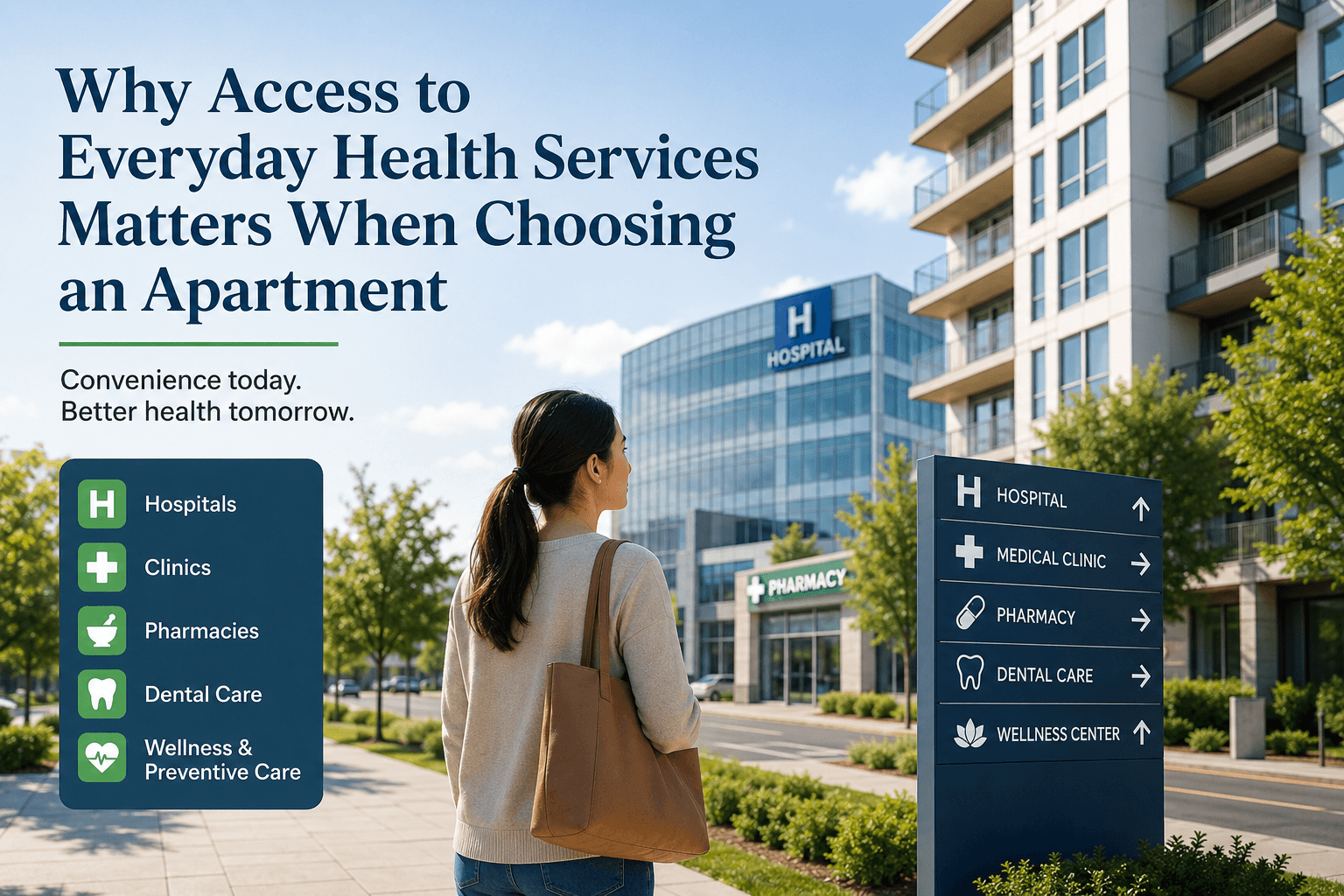
The Relationship Between Residential Location and Health Outcomes
Residential environments influence physical and mental health more than many people realize. Long commute times, delayed medical access, transportation limitations, and inconsistent healthcare routines can contribute to higher stress levels and poorer health management over time.
When residents live far from healthcare providers, they are more likely to postpone appointments, ignore preventive screenings, or delay treatment for manageable conditions. This pattern often leads to worsening symptoms, higher medical costs, and increased dependence on emergency care.
In contrast, apartments located near healthcare services encourage more consistent medical engagement because healthcare becomes easier to access and integrate into everyday life.
This creates several positive outcomes:
- Earlier disease detection
- Improved medication adherence
- Better chronic disease monitoring
- Increased preventive care participation
- Reduced emergency health risks
- Lower healthcare-related stress
Accessibility removes logistical barriers that commonly interfere with long-term wellness management.
Why Fast Access to Emergency Care Is Critical
Medical emergencies require immediate response. Conditions such as cardiac events, respiratory distress, severe allergic reactions, injuries, strokes, and sudden infections can escalate rapidly when treatment is delayed.
One of the most significant benefits of living near healthcare facilities is reduced emergency response time.
Apartments situated near hospitals or urgent care centers provide residents with faster access to:
- Emergency physicians
- Trauma services
- Diagnostic imaging
- Intensive care units
- Surgical intervention
- Ambulance support
In emergency medicine, even small reductions in travel time can significantly improve patient outcomes. Faster treatment reduces the likelihood of complications, permanent damage, and avoidable mortality.
This becomes especially important for households with:
- Young children
- Elderly family members
- Pregnant individuals
- Residents with chronic illnesses
- Individuals with mobility limitations
Healthcare proximity provides a level of residential security that extends beyond standard apartment amenities.
Preventive Healthcare Becomes Easier to Maintain
Preventive healthcare is one of the most effective strategies for reducing long-term medical complications. However, convenience strongly affects whether people consistently engage in preventive care practices.
When healthcare facilities are difficult to reach, residents often delay:
- Annual physical examinations
- Blood pressure monitoring
- Vaccinations
- Laboratory testing
- Dental cleanings
- Specialist consultations
- Mental health appointments
Dental care is particularly vulnerable to postponement because many residents prioritize treatment only after discomfort or visible damage appears. Living near accessible healthcare districts often makes it easier for individuals to maintain regular oral health routines, including preventive cleanings, restorative evaluations, and cosmetic procedures such as porcelain fillings from experienced dentists in NYC that help address structural tooth damage before larger complications develop. Early dental intervention can reduce the likelihood of infections, enamel deterioration, bite misalignment, and more invasive corrective procedures later on.
This delay increases the risk of untreated conditions progressing unnoticed.
Apartments located near healthcare providers improve preventive care participation because appointments become easier to schedule around work, school, and daily responsibilities. Reduced travel time also minimizes disruptions to productivity and household routines.
As a result, residents are more likely to seek medical attention early, which supports better disease prevention and long-term health maintenance.
Pharmacies Support Faster Health Management
Pharmacies are an essential component of community healthcare systems. Their importance becomes highly visible during periods of illness, chronic disease management, or medical emergencies.
Living near a pharmacy improves access to:
- Prescription medications
- Over-the-counter treatments
- Medical supplies
- First-aid products
- Health monitoring devices
- Preventive wellness products
This accessibility becomes particularly valuable during sudden illnesses or time-sensitive medication needs.
For individuals managing chronic conditions such as hypertension, diabetes, asthma, or cardiovascular disease, delayed prescription refills can create serious health risks. Apartments located near pharmacies reduce the likelihood of treatment interruptions and improve medication adherence.
This convenience also benefits caregivers and families managing healthcare needs for children or elderly relatives.
Healthcare Accessibility Reduces Long-Term Stress
Healthcare-related stress is a growing concern in urban living environments. Traffic congestion, transportation difficulties, scheduling conflicts, and long waiting periods often discourage residents from prioritizing medical care.
Living closer to healthcare services reduces these stressors significantly.
Residents benefit from:
- Shorter travel times
- Easier appointment scheduling
- Faster access to treatment
- Reduced transportation expenses
- Lower disruption to daily routines
This creates a more stable and manageable healthcare experience overall.
Reduced stress levels also contribute indirectly to improved physical health. Chronic stress is associated with increased risks of cardiovascular disease, sleep disorders, anxiety, weakened immune response, and elevated blood pressure.
By simplifying healthcare access, residential location can support healthier physiological and psychological outcomes over time.
Apartments Near Healthcare Facilities Benefit Families
Families often require more frequent interaction with healthcare systems due to pediatric care, vaccinations, developmental monitoring, and recurring childhood illnesses.
Parents benefit significantly from apartments located near:
- Pediatric clinics
- Family medicine practices
- Emergency rooms
- Diagnostic laboratories
- Dental clinics
- Pharmacies
Quick access to medical care allows families to respond more effectively to fevers, infections, injuries, allergic reactions, and other common health concerns.
This accessibility also reduces school absences, minimizes work interruptions for parents, and improves continuity of care for children with ongoing medical needs.
For growing families, healthcare proximity contributes to a safer and more practical living environment.
Senior Residents Require Stronger Healthcare Accessibility
Aging populations typically require more frequent medical attention, including specialist consultations, physical therapy, rehabilitation services, and medication management.
Apartments located far from healthcare providers can create substantial physical and logistical challenges for older residents.
Healthcare-accessible communities improve quality of life for seniors by supporting:
- Faster medical intervention
- Easier transportation
- Better chronic condition monitoring
- Reduced physical strain from travel
- Increased independence
Proximity to healthcare services also becomes important during post-surgical recovery periods or ongoing rehabilitation programs.
For residents planning long-term housing stability, healthcare accessibility is an important factor that supports aging in place more comfortably and safely.
Mental Health Services Are Part of Everyday Healthcare
Modern healthcare planning extends beyond physical illness management. Mental health support is now recognized as an essential component of overall wellness.
Access to nearby mental health services can improve consistency in:
- Counseling sessions
- Psychiatric care
- Stress management programs
- Behavioral therapy
- Support group participation
Long commute times and difficult transportation often discourage individuals from seeking regular mental health support. Apartments located near healthcare districts or wellness centers reduce these barriers and make treatment more sustainable.
As awareness surrounding mental wellness continues to grow, healthcare-accessible residential communities are becoming increasingly valuable for long-term lifestyle stability.
Healthcare Infrastructure Strengthens Residential Value
Apartments located near hospitals and healthcare hubs often maintain stronger long-term desirability in the real estate market.
This occurs because healthcare accessibility appeals to multiple demographic groups, including:
- Families
- Working professionals
- Retirees
- Students
- Individuals with medical conditions
- Caregivers
Healthcare districts also tend to attract infrastructure investment, transportation improvements, pharmacies, diagnostic centers, and wellness-related businesses. These surrounding developments strengthen neighborhood functionality and increase residential practicality.
As a result, apartments near healthcare facilities are often viewed as more resilient and future-oriented housing options.
Practical Factors to Evaluate Before Choosing an Apartment
Before committing to an apartment, residents should assess the healthcare infrastructure surrounding the property rather than relying solely on aesthetics or entertainment accessibility.
Important considerations include:
- Distance to the nearest hospital
- Availability of urgent care facilities
- Nearby pharmacies and diagnostic centers
- Access to pediatric and specialist services
- Traffic conditions during emergencies
- Public transportation connectivity to medical districts
- Availability of mental health providers
- Accessibility for elderly residents
It is also useful to evaluate actual travel times during peak traffic hours because short map distances may not accurately reflect emergency accessibility.
Choosing an Apartment That Supports Long-Term Wellness
A well-designed apartment can improve comfort, but location ultimately determines how functional daily life becomes. Access to healthcare services directly affects convenience, safety, preventive care habits, emergency preparedness, and long-term wellness management.
Healthcare accessibility should not be treated as an optional feature during apartment selection. It is a practical investment in physical health, mental well-being, and household stability.
Apartments located near essential medical services create healthier living environments by supporting faster care, reducing stress, improving preventive health behaviors, and providing residents with greater confidence in managing everyday life.
When evaluating future homes, healthcare access deserves the same level of attention as transportation, security, or commercial convenience because long-term wellness depends heavily on how easily healthcare can be reached when it matters most.