Epoxy Resin Furniture: Features and Applications
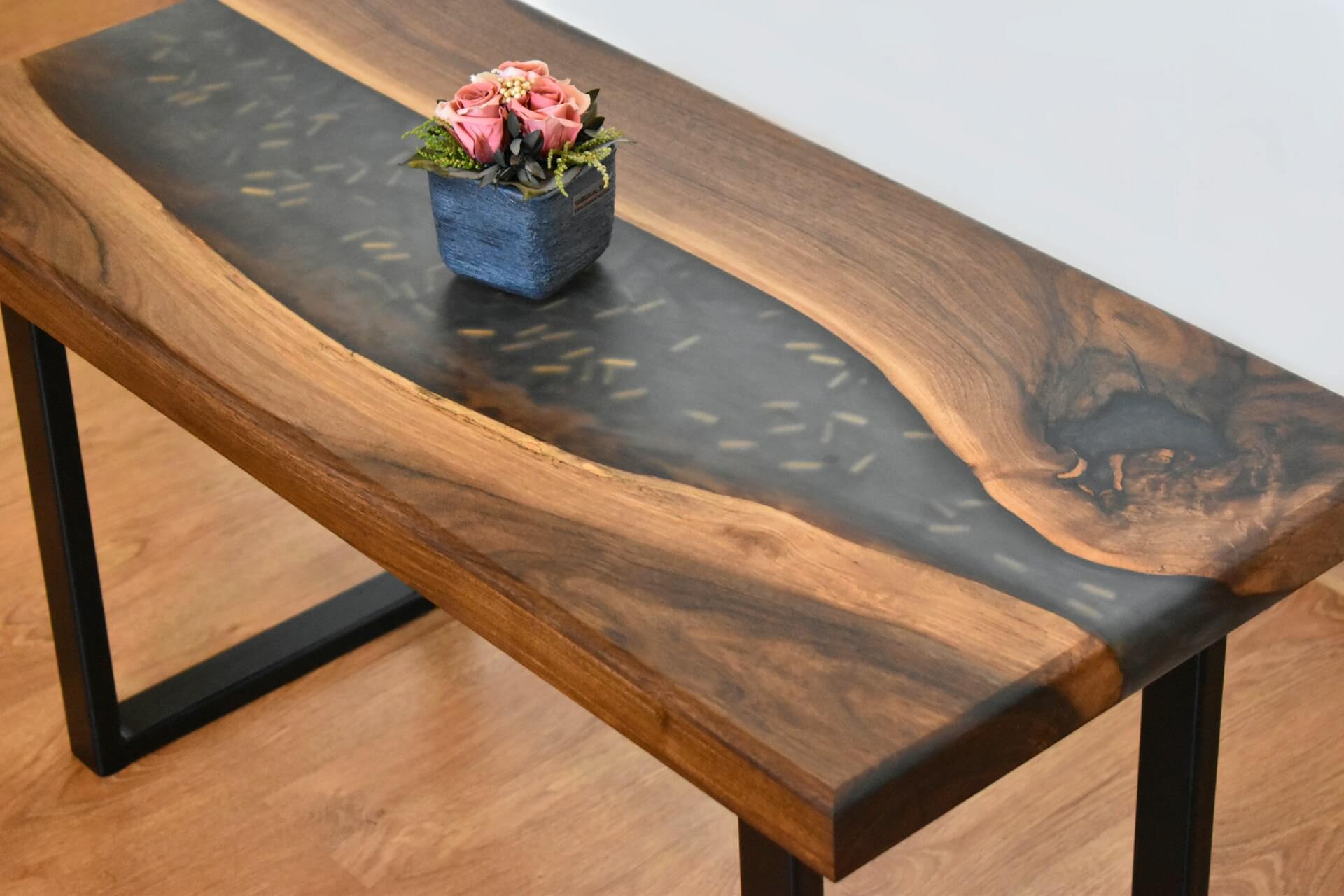
Epoxy resin furniture combines solid wood slabs with poured resin to create functional surfaces that differ structurally from standard wood or manufactured board furniture. Buyers selecting custom wooden furniture with epoxy resin components choose pieces built around specific wood species, resin colors, table dimensions, and edge treatments that mass production cannot replicate. The epoxy resin furniture market has expanded across residential, commercial, and office interior sectors as material costs have stabilized and production techniques have become more precise. Understanding the material properties, production process, and application categories of epoxy resin furniture provides the factual basis for evaluating whether this furniture type meets specific functional and aesthetic requirements.
What Epoxy Resin Is and How It Functions in Furniture
Epoxy resin used in furniture production is a two-component thermosetting polymer consisting of a resin base and a hardener that chemically bond when mixed in defined ratios, typically between 1:1 and 2:1 by volume depending on the specific product formulation. The cured material achieves a Shore D hardness rating between 75 and 85, making it resistant to surface scratching, moderate impact, and water penetration when properly sealed. Furniture-grade epoxy resin maintains optical clarity after curing, allowing pigments, dyes, metallic powders, and natural inclusions such as dried plants or crushed stone to remain visible within the finished surface. The material bonds directly to wood surfaces at the cellular level when applied correctly, creating a joint that resists separation under normal load and temperature conditions ranging from 0°C to approximately 120°C before thermal distortion begins.
Production Process for Epoxy Resin Furniture
Wood Selection and Preparation
Production begins with selecting live-edge wood slabs or dimensioned lumber with moisture content below 8 percent, verified using a calibrated moisture meter before resin application. Wood species commonly used include walnut, oak, ash, elm, and maple, each providing different grain density, color variation, and structural stability under the weight of poured resin. Slabs are sanded to remove surface oxidation, dried to target moisture levels, and sealed along cut edges to prevent air bubble migration into the resin during the pour cycle.
Resin Mixing and Pouring
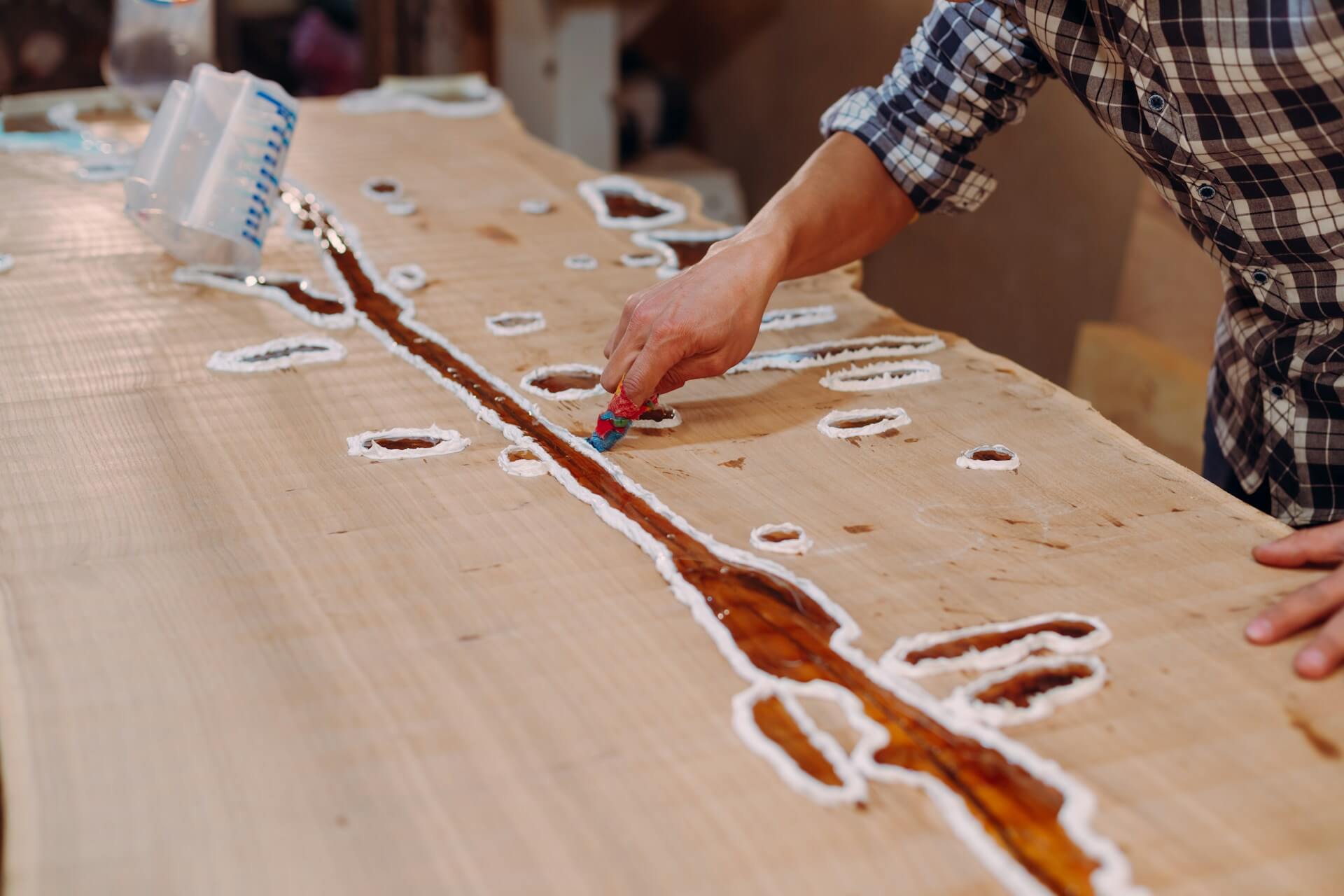
Resin and hardener components are measured by weight rather than volume to maintain accurate mix ratios, since ratio errors exceeding 5 percent cause incomplete curing that leaves tacky surface areas. Mixed resin is degassed using vacuum chambers or heat guns to remove entrained air before pouring into molds constructed around the wood slab. Pour depth per layer is limited to 5 to 8 centimeters for most casting resins to prevent exothermic heat buildup during curing, which can cause cracking, yellowing, or warping in deep pours completed in a single stage. Full cure time at 20°C ranges from 48 to 72 hours before the surface can be machined, with complete mechanical property development requiring 7 days.
Finishing and Surface Treatment
Cured epoxy surfaces are leveled using belt sanders and orbital sanders progressing through grit sequences from 80 to 400, followed by hand sanding to 800 or 1200 grit for high-gloss applications. Final surface treatment options include matte lacquer coatings, oil-wax finishes applied to the wood portions only, or full gloss polyurethane topcoats applied across both wood and resin surfaces. Table legs and base structures are attached after surface finishing using threaded steel inserts or direct bolt connections through the slab, with leg materials including steel, cast iron, solid wood, and powder-coated aluminum.
Applications of Epoxy Resin Furniture by Category
Residential Applications
Residential epoxy resin furniture includes dining tables, coffee tables, kitchen islands, bathroom vanity tops, and console tables. Dining tables represent the highest production volume in this category, with river table configurations using two parallel wood slabs separated by a resin channel accounting for a significant share of custom orders. Surface dimensions for residential dining tables typically range from 180 to 240 centimeters in length and 80 to 100 centimeters in width, with resin channel widths between 15 and 35 centimeters.
Office and Commercial Applications
Epoxy resin surfaces in office environments are applied to conference tables, executive desks, reception counters, and shared workspace surfaces. Businesses specifying epoxy resin for office interiors can review available desk and workstation configurations at https://maxiwoods.com/collections/epoxy-office-computer-tables, including formats designed for computer workstations with cable management requirements and surface area specifications suited to multi-monitor setups. Office applications require higher surface hardness ratings and resistance to repeated cleaning with alcohol-based products, which standard casting resins do not provide without a protective polyurethane topcoat applied at a minimum dry film thickness of 80 to 100 microns. Commercial installations including restaurant tables, bar countertops, and hotel lobby surfaces use thicker resin layers between 20 and 40 millimeters to meet durability requirements for high-frequency contact and daily cleaning with commercial-grade chemical products.