Tent Cities Explained: Uses, Planning, and Temporary Shelter
A tent city groups tents and temporary structures on one site for a short-term need. In Greater Boston, that may mean cold-weather overflow shelter, construction crew lodging, post-storm staging, or a sanctioned safe-sleeping pilot.
Tents are temporary, regulated structures. Despite different uses, they work best when planning begins before the first stake enters the ground.
Most short-term tent sites fall into one of three categories:
- Temporary shelter, emergency overflow, and disaster response when fixed buildings are full or unusable.
- Site-based workforce lodging and support space during construction or seasonal work. This is often a cost decision rather than a logistics one, since local real estate tips and short-term rental rates set the benchmark a temporary site has to beat. Run that comparison before committing to a tent solution, because the answer differs sharply between a six-week project and a six-month one.
- Special events, mobile clinics, and pop-up service days.
One warning belongs up front: NOAA states that tents do not protect people from lightning. During thunderstorms, occupants need a substantial building or hard-topped vehicle. A tent is not a shelter of last resort.
Seven steps for planning a temporary tent site
- Define the purpose and timeline. Identify who the site will serve and how long it will operate. Put the opening and closing dates in writing.
- Select the site. Check vehicle access, drainage, ground conditions, utility connections, and the site's relationship to the surrounding neighborhood.
- Set the layout and capacity. Plan tent spacing, fire lanes, accessible routes, and separate zones for sleeping, dining, storage, and services.
- Address permits and life safety. Confirm requirements with Boston Inspectional Services and the Boston Fire Department before ordering equipment.
- Plan water, sanitation, and hygiene. Provide enough potable water, restrooms, handwashing stations, and waste removal for the expected population.
- Prepare for weather and evacuation. Give a specific person on site the authority to order an evacuation, and document the conditions that would trigger it.
- Create an exit plan. Decide how the site will close, who will remove the equipment, and how the ground will be restored.
Boston and Massachusetts permit snapshot
Under 780 CMR 3103.1, temporary structures intended to stand for fewer than 180 days must still comply with the Massachusetts building code and the fire code provisions it references. The state fire code is based on NFPA 1, 2021 edition, with Massachusetts amendments, and took effect on December 9, 2022.
Boston also has local tent rules. Up to four 10-by-10-foot pop-up tents may be placed in a row without a Boston Fire Department permit. When no permit is issued, a 10-foot separation is required after each group of four. Tents measuring 20 by 20 feet or larger require a BFD tent assembly permit.
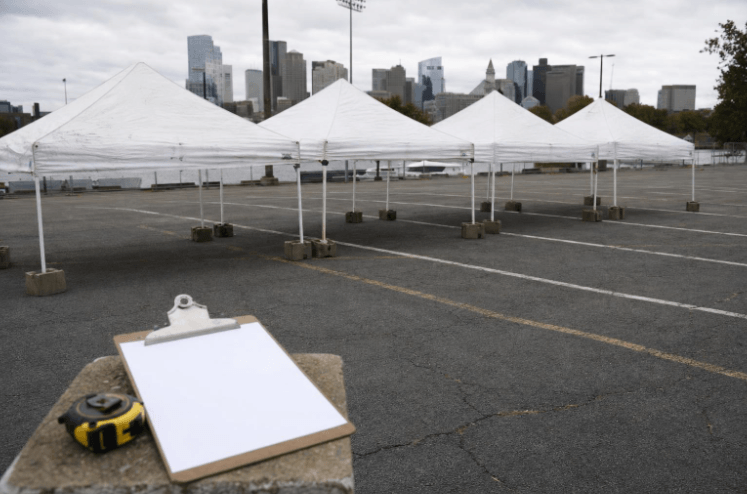
Inspectors may check for a posted permit, clear exits, and compliant exit signs. Cooking and candles inside tents are prohibited.
Permit requirements can change or vary by site. Confirm the current rules with Inspectional Services and the fire department before buying or building. Vendor documents can inform the plan, but only local officials can confirm what a specific site requires.
Layouts and tent styles by function
Frame tents have no center poles, which helps in dining, intake, and clinic areas. Pole tents need more room for stakes and tension lines. Clear tops admit daylight but can warm in direct sun. Pop-ups cover small stations; larger membrane structures may suit storage or higher occupancy. For examples of how tents support sleeping, dining, clinic, and storage zones in a tent city, review planning guidance before sketching the layout.
Accessibility in practice
ADA planning guidance for temporary events generally calls for an accessible route at least 36 inches wide, with periodic 60-inch passing spaces and surfaces that are firm and stable.
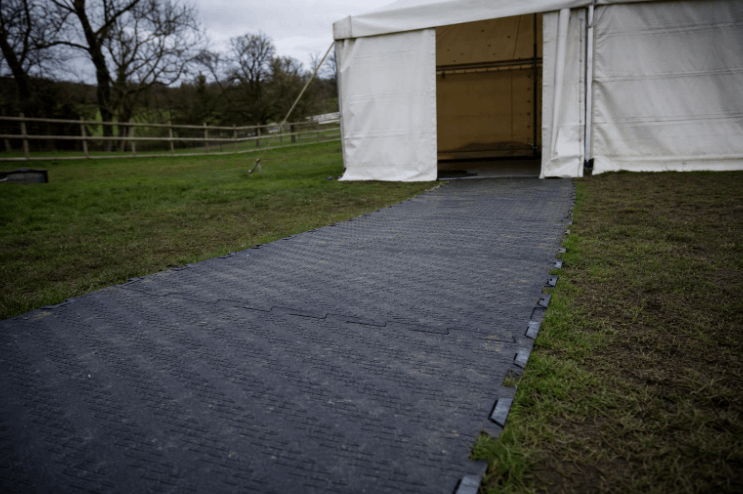
Grass, gravel, and muddy ground may require temporary matting. Inspect the full route after rain and during operations, not only on setup day.
Weather and evacuation planning
Write wind, lightning, and severe-weather thresholds into the plan before occupancy. Some manufacturer manuals recommend evacuating tents when sustained forecast winds reach roughly 35 to 40 mph or when long, strong gusts are expected. Manufacturer limits, local requirements, and site conditions should guide the final threshold.
Anchoring deserves the same attention. American Tent notes that sandbags are not considered an approved or reliable anchoring method for commercial tents. Use properly designed staking or ballast based on the surface, tent specifications, and any required engineering review.
Operations and essential services
Daily operations determine whether a temporary site remains safe and usable. Cover staffing, check-in, security lighting, generator placement, waste handling, pest control, maintenance, and quiet hours in a short written protocol.
For worker and event settings, OSHA requires at least one toilet seat and one urinal per 40 workers at construction sites with 20 or more workers, with minimum facilities for smaller crews. That ratio is a planning baseline for work sites, not a residential shelter standard.
For residential or shelter settings, consult the local board of health and review the Massachusetts sanitation rules that apply to the site. Restroom servicing and waste collection should also be scheduled according to occupancy and actual use.
Exit planning and neighborhood care
Set a closing date and define the conditions for any extension. Budget for equipment removal, waste disposal, and ground restoration at the same time as setup costs.
Keep neighbors, residents, and service providers informed about the schedule and any operational changes. Use people-first language when describing residents. Suppliers such as American Tent can explain tent and anchoring options, but code officials must approve the final plan.
FAQ
Do small canopies need a Boston permit?
Up to four 10-by-10-foot pop-up tents may be placed in a row without a BFD permit, with a 10-foot gap after each group of four. Confirm the current rule with the fire department for the specific address.