Compare Professional vs DIY Blind Cleaning Costs NYC: Window Blind Care Breakdown
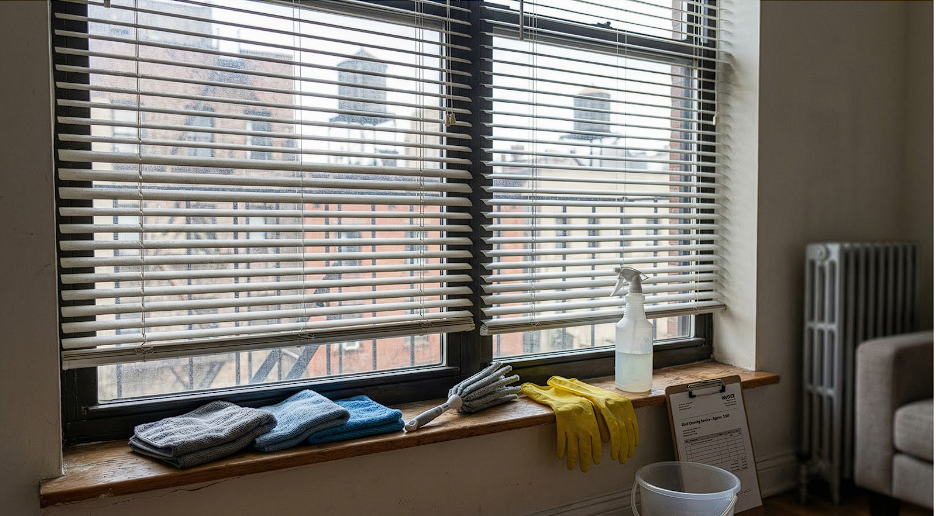
Dust, soot, and city grit don't take days off in New York. Ignore your blinds for a month and they'll look decades older. So do you pull out a bucket and scrub, or hire a pro with the right gear? This guide breaks down cash outlays, time, results, and risk—and ends with a quick matrix so you can decide with confidence. Ready for a clearer view of the city? Read on.
Cost showdown: dollars out of pocket
New York is a premium market, and blind cleaning shows it. Professional crews charge about $28 to $43 per mini-blind, and most tack on a minimum visit fee near $150. Even a modest six-window apartment can hit $200 before tip. Add oversized panes, real wood slats, or fabric shades and the invoice moves toward $400; a brownstone with twenty blinds can cross $500. In return, you're paying for equipment, insured labor, and the convenience of one visit.
DIY appears cheaper. A starter kit—microfiber cloths, a blind-duster brush, cleaning vinegar, gloves, and a bucket—runs $20 to $60 and lasts multiple sessions. Once you own the basics, each cleaning costs only a few dollars in supplies.
On a per-blind basis the gap widens. A home job runs $2 to $3; hiring out lands between $10 and $50, depending on grime and material. If you already keep vinegar and cloths under the sink, your incremental cost feels almost free.
A typical renter with five standard mini-blinds sees these numbers in real life: pros at roughly $200 versus DIY at $30 in fresh supplies—or zero if the gear is on hand. For high-end wood shutters, one ruined $100 blind erases any savings and then some.
Money alone pushes everyday blinds toward DIY, especially in smaller apartments. Still, cost is only part of the puzzle. Time and effort decide whether those savings stick.
Time and sweat equity
Money grabs attention; time seals the deal. Cleaning one blind by hand sounds simple until you multiply the minutes. Wiping every slat takes about ten to thirty minutes, which means two to three hours for a typical six-blind apartment (FindPros).
Pros finish the same job in less than an hour. Two technicians arrive with an ultrasonic tank, dip each blind in a bubbling bath that cleans it in around thirty seconds, then rinse and dry before the city is fully awake (UltrasonicMachines).
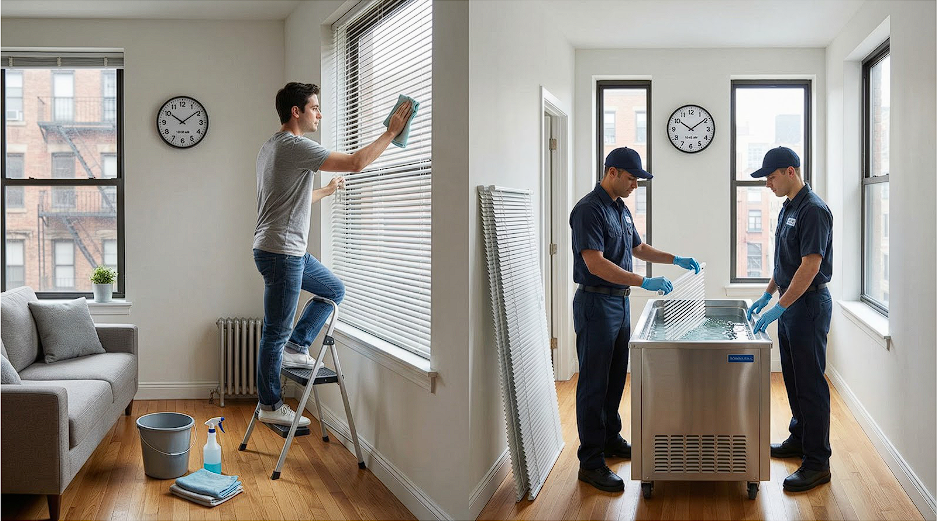
That speed buys back a Saturday morning. If your billable rate or relaxation rate tops fifty dollars an hour, outsourcing starts to look smart. Others enjoy the rhythmic swipe-and-chat of DIY and treat the effort as a free upper-body workout.
Setup and cleanup count, too. DIY means moving chairs to every window, laying towels, filling buckets, and rehanging damp blinds. Professionals handle the heavy lifting, take away dirty water, and leave only sunlight.
So, what is three hours of your New York weekend worth? If the answer is "a lot," hire the pros. If it's "I have time and a playlist," grab those microfiber cloths and keep going.
Quality of cleaning and results
There's "clean," and then there's new-apartment-tour clean. A careful DIY session removes surface dust and light smudges. Blinds look presentable, rooms feel fresher, and allergies ease a bit. For many renters, that counts as a win.
Deep grime is tougher. City pollution leaves an oily film between slats. Kitchen blinds collect grease, and fabric shades trap cooking aromas from cumin to kimchi. Home remedies struggle to reach those pockets. You wipe, rinse, repeat, yet a faint yellow tinge lingers. Restoring the original white often comes down to chemistry: a cold-water bath with two to three cups of bleach can brighten plastic or aluminum slats in about ten minutes, while wood needs nothing harsher than a damp sponge.
A concise guide on how to clean yellowed blinds walks through each material-specific step so a DIY rescue doesn't turn into an unintended replacement.
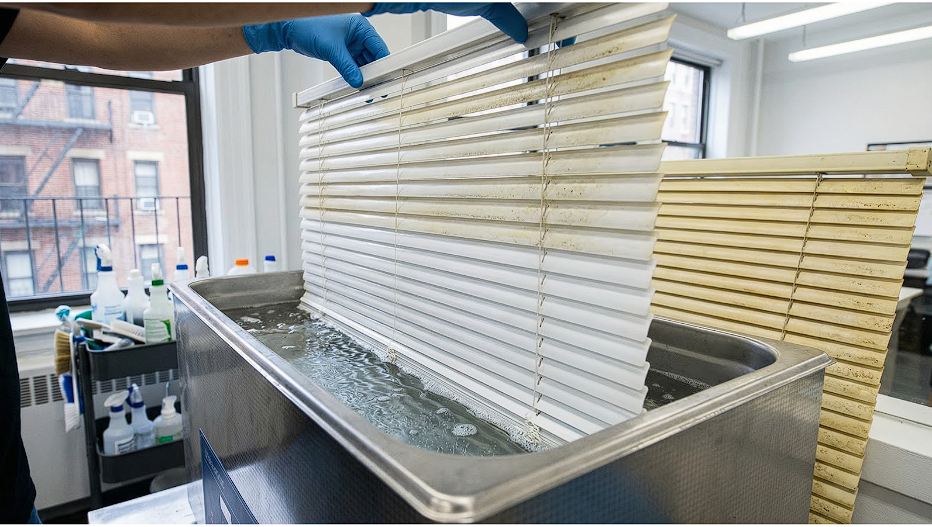
Professionals tackle buildup with gear most apartments lack. Ultrasonic baths send sound waves through water, shaking dirt from cords and crevices in about thirty seconds per blind. The Blinds Source cites its Luminette vertical blinds as an example—the long, uniform slats clean evenly in an ultrasonic tank, no matter how tall the panel. Because the fabric-and-vane construction tolerates a full soak, city grime lifts in one pass instead of multiple hand wipes. Steam units lift grease without soaking wood. Solvent systems dry-clean delicate fabrics so colors stay bright. Angi's cost guide notes that premium methods raise per-blind prices but also "restore like-new brightness most hand cleaning cannot reach" (Angi). The payoff goes beyond looks: stripping embedded dust cuts allergens and extends hardware life. Leave grime too long and even pricey wood shutters can warp or discolor beyond repair.
Quality, then, becomes a value call. If you own custom blinds that cost hundreds per window, professional care is cheap insurance. For standard aluminum minis, a solid DIY once-over delivers plenty of shine. Match the approach to the material—use surgical tools for surgical jobs and elbow grease for everything else.
Risk of damage or injury
Cleaning blinds sounds harmless until you scratch a wood slat, snap a lift cord, or slip off a wobbly chair. DIY risks fall into two buckets: harm to the blinds and harm to your body.
Start with the blinds. Wood hates water. A single soak can warp the surface for good, turning a rich walnut shade into a rippled eyesore. Aluminum bends with the slightest sideways pressure; once a slat kinks, massage will not make it lie flat again. Lift cords and tilt gears are even touchier. Tug too hard and you will search for replacement parts that cost more than the blind.
Professionals sidestep these pitfalls daily. They know which cleaners fade dye, which fabrics shrink, and which strings fray under tension. Reputable NYC companies also carry insurance. If a technician cracks a vane, the firm pays. If you crack it, the debit hits your security deposit.
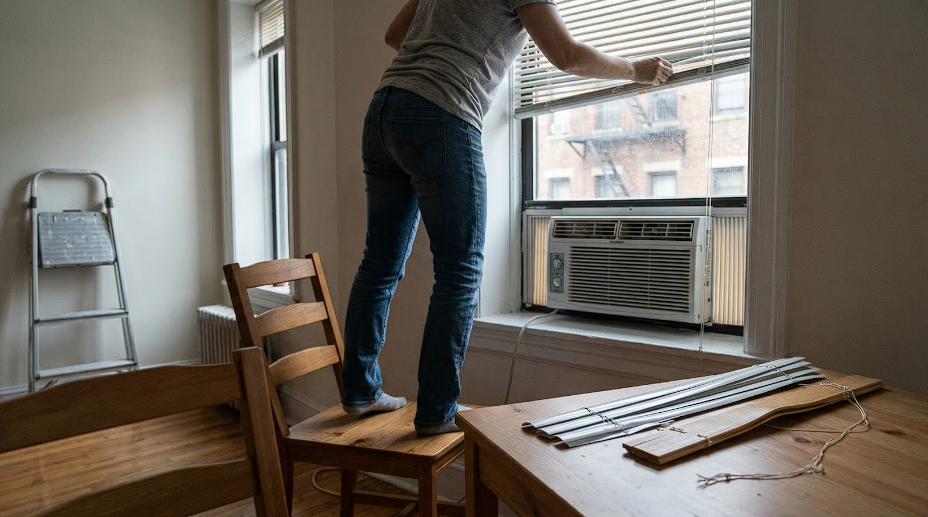
Then there is personal safety. Many New York ceilings reach ten feet. Balancing on a barstool, stretching over an air-conditioner, and wrestling a dusty blind off its brackets invites bruises. Pros arrive with the right ladder, a partner to steady it, and muscle memory that keeps accidents rare.
Material matters: wood, vinyl, and fabric tell different stories
Not all blinds play by the same rules. Vinyl mini-blinds are the street-smart cousins, tough, cheap, and happy to soak in a vinegar bath. Real wood slats behave more like vintage mahogany furniture; too much water and they swell like a sponge. Fabric shades? Picture the cashmere sweater of window treatments. One wrong solvent and the weave puckers for life.
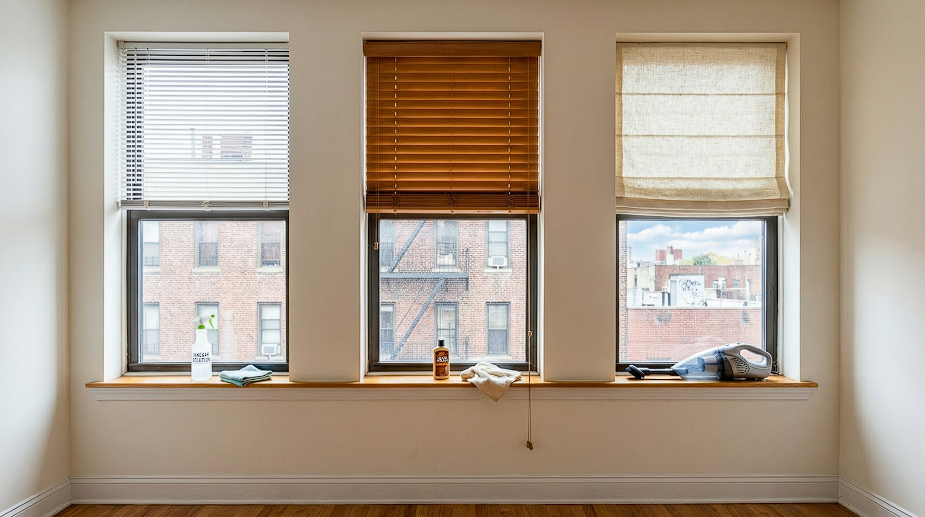
Because material drives both effort and price, professionals tier their quotes. A vinyl or aluminum set often costs ten to thirty dollars to clean, wood hovers around twenty to fifty, and delicate fabric shades sit at the top. These numbers come from Angi's nationwide materials chart, a benchmark many NYC cleaners follow.
DIY sensitivity climbs the same ladder. Soap and water handle vinyl with ease. Wood needs gentle, nearly dry wipes plus a wood-safe polish, or the finish clouds. For fabric, home care stops at vacuuming with a brush attachment; anything deeper risks improvised dry-clean chemistry in a fifth-floor walk-up.
The real issue is replacement risk. Warping a fifty-dollar faux-wood blind hurts, but ruining a custom silk shade can blow a thousand-dollar hole in your décor budget. When the material gets fancy, outsourcing shifts from luxury to asset protection.
Scale and home situations
Numbers change everything. Cleaning one blind in a studio takes about twenty minutes and a splash of vinegar. Swap that scene for a loft with twenty windows and you face an all-day marathon of suds and sore shoulders. Professionals know this, which is why they drop per-blind rates as volume climbs. Hit fifteen blinds and many NYC companies slide from the high thirties into the teens, creating real value on a bigger job.
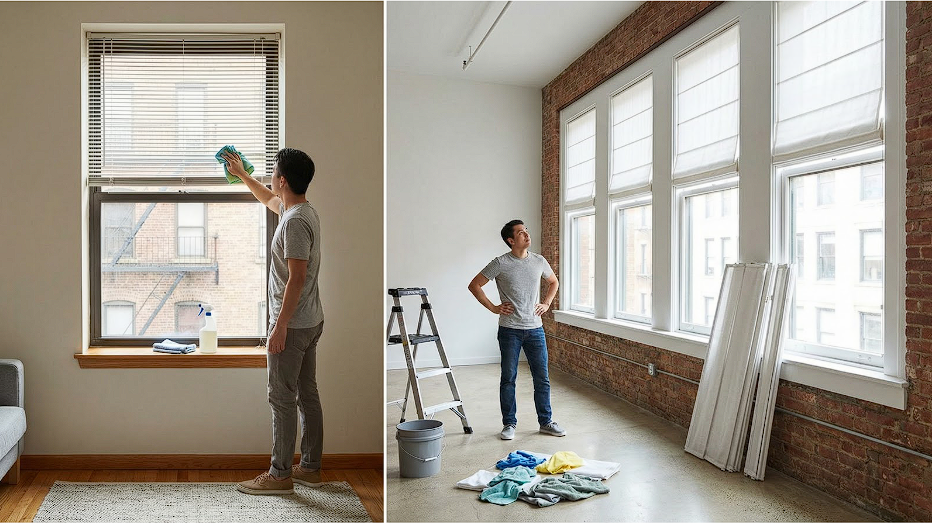
Building quirks add wrinkles. Walk-ups require stair hauls, tiring for you and the crew. Some firms add labor surcharges for fourth-floor climbs; others bill the extra time it takes to carry an ultrasonic tank up narrow steps. In elevator buildings those fees vanish, but now you are juggling insurance certificates and front-desk rules that DIY bypasses.
Location matters, too. Manhattan's parking maze and bridge tolls raise rates by ten to twenty percent over Queens or Jersey City. If you own a car, you can cut the bill by driving removable blinds to a Long Island shop, but the savings make sense only on large bundles.
Renters and owners see scale differently. A tenant with two dusty blinds usually rolls up sleeves rather than paying a $150 minimum. A homeowner planning annual upkeep on a brownstone full of specialty shades books pros, schedules them for the quiet season, and enjoys volume discounts year after year.
Frequency and maintenance
Blind cleaning is not a one-time chore. City dust settles daily, so a plan beats a scramble. Many New Yorkers schedule a professional deep clean once a year, often in spring, then do quick DIY wipe-downs every month. That rhythm keeps grime from baking on and trims the cost of each pro visit because blinds never reach "heavily soiled" status.
Light maintenance costs pennies. A microfiber cloth, a spritz of diluted vinegar, and five minutes per window handle most touch-ups. The payoff is twofold: blinds stay bright and allergy triggers lose ground. Wait too long and you pay twice, first in elbow grease and again when pros add a surcharge for tough buildup.
Some companies reward regularity with subscription pricing. Book semi-annual visits and you may save ten percent; bundle blinds with full-apartment cleaning and the discount grows. If you already pay for housekeeping, adding blinds to that contract removes an extra task.
Seasonal and special circumstances
Timing matters. Spring and pre-holiday fall are peak season for NYC cleaning crews, which means full price and tight schedules. Book during the dog days of July or the deep chill of February and many pros shave 10 to 20 percent off to keep teams busy. Off-peak slots also spare you a two-week wait while you stare through dusty slats.
Seasons affect dirt, too. Summer pollen and window-unit exhaust leave a sticky film. Radiator heat in winter churns out fine dust. A post-season deep clean tackles the worst buildup and helps blinds stay cleaner longer.
Moving in or out adds urgency. If you inherit grimy blinds, negotiating a professional cleaning into your lease beats scrubbing mystery stains during unpacking. A quick DIY wipe before a walk-through can save your security deposit, unless the blinds are so bad they will not pass inspection; in that case a pro visit is cheap insurance.
Accidents happen. Spill red wine on a fabric shade or snap a lift cord and time is money. Many local services handle emergency calls for an upcharge, but that still costs less than living with a blotch or paying for full replacement.
Pick your moment. A well-timed call or quick DIY burst keeps costs and stress low all year.
Decision matrix and final takeaways
| Scenario | Professional Cost | DIY Out-of-Pocket | Time Spent | Risk Profile |
|---|---|---|---|---|
| Five standard vinyl blinds in a rental | ≈ $200 (minimum visit) | $30 in supplies | 2 hours | Low for pros, moderate DIY damage chance |
| Fifteen mixed-material blinds in a loft | ≈ $400 (volume rate) | $40 supplies | 6 hours | Low pro risk, high DIY fatigue |
| Five premium wood or fabric shades | ≈ $250-$300 (delicate handling) | $30 supplies plus high replacement risk | 2 hours | DIY replacement risk exceeds pro fee |
Conclusion
Now weigh the factors that matter most to you.
- Budget. If stretching dollars tops the list and your blinds are basic, a two-hour DIY sprint is hard to beat. Supplies are cheap, and mistakes are easy to absorb.
- Time. When weekends are priceless or your billable rate is high, hiring out buys freedom. Pros finish in under an hour and clean up on the way out.
- Quality. Ultrasonic and steam gear deliver showroom results a sponge cannot match. Allergy sufferers and perfectionists notice the difference daily.
- Blind value. The pricier the blind, the more professional care makes sense. Warping one wood slat can erase any DIY savings.
- Long-term plan. A hybrid strategy—monthly dusting plus an annual pro deep clean—keeps costs predictable, air quality high, and blinds in good shape for years.
You now hold the numbers, the nuance, and the neighborhood quirks. Whether you call a cleaner or pull on gloves, you can decide with confidence.
Published 1/21/26