How 3D Tours Help Boston Students Secure Apartments Before Arriving
Every August and September, Boston turns into controlled chaos. U-Hauls crowd narrow streets. Mattresses appear on sidewalks. Parents double-park while trying to decode parking signs. And thousands of students from across the U.S. and around the world arrive hoping their housing situation works out.
Boston isn't your average college town. Sure, it's packed with schools—Boston University, Northeastern, Harvard, MIT, Emerson, the list goes on. But here's the thing: the rental scene moves at lightning speed. Good apartments disappear in hours. Wait too long, and someone else snags your spot.
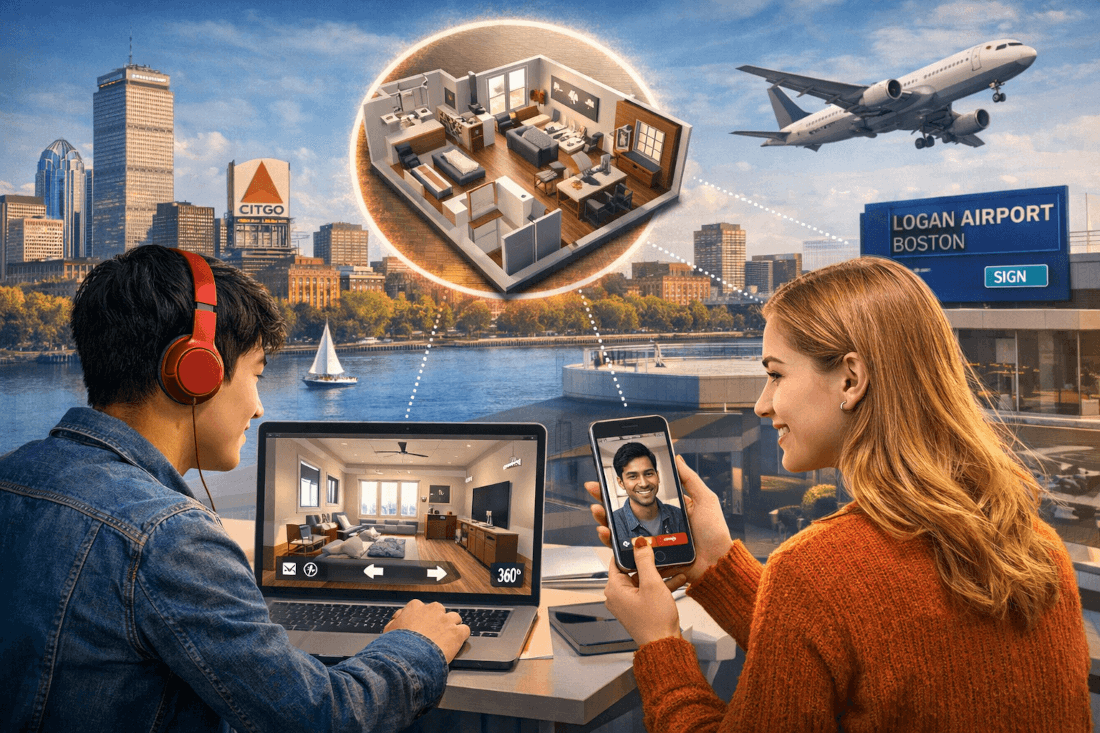
If you're a student still outside the city, that's a real headache. How are you supposed to sign a lease for a place you've never even seen? Lately, more and more students are turning to 3D tours to solve that problem.
Renting From Thousands of Miles Away
International students and out-of-state applicants often need housing secured before they even book a flight. Traditional listings with a few wide-angle photos and a short description don't provide enough clarity. A grainy picture of a bedroom corner doesn't answer the real questions:
- How big does the space actually feel?
- Is there enough natural light?
- Does the layout make sense?
- Will two roommates realistically fit here?
- How modern are the finishes?
Static images leave too much to interpretation. And when you're committing to a 12-month lease in one of the most expensive rental markets in the country, guesswork isn't reassuring.
That's where immersive 3D tours step in.
Seeing the Space Before It Exists — or Before You Do
In many new Boston developments, especially near campuses, units lease up before construction is complete. Students are choosing apartments that are still being built or recently renovated.
Thanks to professional 3D interior visualization services, developers can show off digital versions of these apartments that look and feel real. Students don't have to guess what their future home will look like. They can actually see it and get a sense of the space before they even set foot inside.
They can:
- Virtually "walk" through the living room
- View the kitchen from multiple angles
- Understand the relationship between bedrooms
- Gauge closet sizes
- See how furniture might fit
It's not just about visuals — it's about spatial understanding.
For someone signing remotely from California, Texas, India, or China, that clarity can make the difference between hesitation and commitment.
Reducing the Fear Factor
Let's be honest: signing a Boston lease from another country is stressful.
Students worry about scams. They worry about misleading listings. They worry that the place won't match the photos.
High-quality 3D tours dramatically reduce that anxiety.
Unlike traditional photography, a 3D walkthrough allows viewers to control their perspective. They can pause, rotate, zoom, and revisit rooms. That autonomy builds trust. It feels transparent.
When students can explore a property at their own pace, it signals that there's nothing to hide.
And in a market where competition is intense, trust accelerates decisions.
Leveling the Playing Field for International Students
Boston pulls in students from everywhere. But in the past, local students had a leg up. They could actually visit apartments in person, while international students just had to take a leap of faith.
3D tours change that dynamic.
Picture this: It's 2 a.m. in another country, and an international student is scrolling through apartment listings. It almost feels like being at an open house in person. They check out different places in one night, compare floor plans, and shoot links over to their parents or roommates right away. No need to trust someone else's description because they get to see it for themselves. This kind of access really speeds things up, which matters a lot when you're juggling visa deadlines and trying to figure out move-in dates.
Instead of relying on someone else's opinion, they can see it themselves.
This accessibility speeds up the leasing timeline, especially for students navigating visa deadlines and move-in logistics.
Helping Roommates Make Faster Decisions
Student housing often involves group decisions. Two, three, sometimes four roommates need to agree.
Without 3D tours, that process can drag. One person tours in person and tries to describe the space to the others. Photos get forwarded. Opinions get mixed.
With a virtual walkthrough, everyone can explore the same apartment even if they're in different cities. They can discuss room sizes in real time, debate who gets which bedroom, and measure whether that oversized desk will actually fit.
Shared visualization leads to faster consensus.
And faster consensus means faster lease signing.
Pre-Leasing New Developments Near Campus
In neighborhoods like Fenway, Allston, Mission Hill, and the Seaport, new residential buildings often begin marketing units months before completion.
For these projects, 3D tours aren't just helpful but essential.
Students don't have a finished model unit to visit. There's no staged apartment to walk through. The only way to communicate design quality, layout, and atmosphere is through visualization.
Detailed interior renderings show:
- Contemporary kitchens with quartz countertops
- Study-friendly bedroom layouts
- Modern bathrooms
- Lounge spaces for socializing
- Rooftop amenities
The visual storytelling helps students imagine their Boston experience — not just their square footage.
That emotional connection can tip the scale.
Supporting Virtual Leasing and Remote Signings
Boston's rental cycle is famously fast, especially around September 1st. Units can disappear within days.
3D tours support a fully digital leasing journey:
- Browse listings
- Explore units in 3D
- Schedule virtual Q&A sessions
- Submit applications online
- Sign electronically
For busy students juggling class schedules, internships, and relocation plans, this efficiency matters.
It also benefits property managers. The clearer the visualization, the fewer repetitive questions they receive about layout or finishes.
When information is visually accessible, decisions move faster.
Setting Realistic Expectations
There's another subtle benefit to high-quality 3D visualization: expectation management.
Well-produced renderings that are accurate to scale and finish reduce the risk of disappointment. Students arrive knowing what they signed up for.
In contrast, poorly lit or heavily edited photos can create unrealistic impressions.
When the visual presentation is transparent and true to the final build, satisfaction improves. And satisfied tenants renew leases — a long-term advantage for property owners.
The Competitive Edge in a Crowded Market
Boston's student housing market is crowded. New buildings compete with renovated brownstones, legacy apartment complexes, and converted multifamily homes.
In that landscape, listings with immersive 3D tours simply stand out.
They feel modern. Professional. Trustworthy.
Students browsing dozens of options are naturally drawn to the ones that offer deeper insight. The more confident they feel in a listing, the less likely they are to keep searching.
Visualization becomes a conversion tool.
Frequently Asked Questions
What is a 3D apartment tour?
A 3D apartment tour is an immersive virtual walkthrough that lets prospective renters explore a property by rotating, zooming, and moving through rooms at their own pace. Unlike traditional photos, it provides spatial understanding — how big rooms actually feel, the relationship between spaces, and how furniture might fit.
How do 3D tours help international students rent apartments in Boston?
3D tours let students explore Boston apartments from anywhere in the world, at any time of day. They can compare layouts, share links with parents or roommates, and make informed decisions without traveling. This is critical for students juggling visa deadlines, time zones, and tight move-in schedules around the September 1st rental cycle.
Can students sign a lease in Boston without seeing the apartment in person?
Yes. Boston's rental market increasingly supports a fully remote leasing process — browsing listings, exploring units in 3D, attending virtual Q&A sessions, submitting applications online, and signing electronically. High-quality 3D tours give students enough visual clarity to commit confidently to a 12-month lease sight unseen.
Are 3D tours accurate representations of the real apartment?
Well-produced 3D tours and renderings from professional visualization services are designed to be accurate to scale and finish. This sets realistic expectations and reduces the risk of move-in disappointment, particularly for new developments or units still under construction.
Do 3D tours work for apartments that aren't built yet?
Yes. Many new Boston developments — particularly near Fenway, Allston, Mission Hill, and the Seaport — lease up before construction is complete. 3D interior visualization is often the only way to show off floor plans, finishes, and the overall feel of a unit before a physical model exists.
How do 3D tours help roommates choose an apartment together?
Roommates in different cities can explore the same apartment simultaneously through a virtual walkthrough. This makes it easier to debate room assignments, evaluate layouts, and reach faster consensus — eliminating the back-and-forth of forwarded photos and second-hand descriptions.
Why are 3D tours particularly important in Boston's rental market?
Boston's rental cycle is famously fast, especially around September 1st, with good apartments disappearing within hours. Combined with the city's huge student population — many arriving from across the U.S. or abroad — 3D tours allow students to evaluate and commit to apartments remotely, before competing renters claim them.
A Glimpse Into the Future of Student Housing
As technology continues to evolve, virtual leasing will only become more common. Students are digital natives. They're comfortable making major decisions online.
For Boston's rental market, where timing, competition, and distance all play a role, 3D tours are no longer a novelty. They're becoming standard.
They help students secure housing before landing at Logan Airport. They reduce uncertainty in a high-pressure market. They level the playing field for international applicants.
Most importantly, they turn abstract floor plans into something real.
And in a city where thousands of students are trying to find their place, sometimes from halfway across the world, that clarity makes all the difference.