How 3D Renderings Improve Apartment Listings
Renters often decide whether an apartment deserves a showing before they ever speak with a landlord, leasing agent, or property manager. Weak photos can make a clean unit look dark, cramped, or dated, while missing visuals can leave too much to the imagination. 3D apartment renderings can help by showing layout, finishes, furniture scale, and renovation potential before professional photography is possible.
They are especially useful when a unit is under renovation, unfurnished, not yet built, or difficult to photograph well. A rendering does not guarantee faster leasing, and it should never replace accurate property details. Used honestly, it can make the listing easier to understand and more useful to renters who are comparing several apartments online.
What Are 3D Apartment Renderings?
Apartment renderings are realistic digital images created from project information such as floor plans, reference photos, measurements, finish selections, and style direction. They can show bedrooms, kitchens, bathrooms, living areas, amenity rooms, exterior views, or full apartment layouts. Instead of asking renters to interpret a flat plan or unfinished space, the visual presents a clearer version of how the apartment may look and function.
A flat floor plan can explain dimensions, but it rarely communicates how light moves through a room or how furniture fits at human scale. Renderings can show wall color, flooring tone, cabinet style, appliance placement, and the atmosphere of a furnished room. That makes them useful when the property is real, but the finished marketing image does not exist yet.
Why Apartment Listings Often Need Better Visuals
Many rental listings start with imperfect material because landlords have to market around turnover schedules, renovation timelines, and tenant access. Empty rooms can feel colder than they are, and older phone photos may not reflect a recent improvement. Apartment listing visuals need to answer basic renter questions quickly, especially when the unit has competition nearby.
Boston landlords also deal with a renter audience that may be comparing neighborhoods, commute patterns, school calendars, and move-in dates at the same time. BostonApartments.com's own guidance on keeping rental listings fresh emphasizes current information, updated photos, and quality visuals as part of staying competitive in a fast-moving local market. That advice fits naturally with renderings because a listing is only as strong as the information a renter can trust.
Photography can still be the best option when the unit is clean, finished, and available for a professional shoot. The problem appears when renovation photos do not exist, lighting is poor, or a floor plan is too abstract for a renter scanning listings on a phone. In those cases, 3D renderings for apartment listings can fill a practical gap rather than simply decorate the page.
Where 3D Renderings Help Most
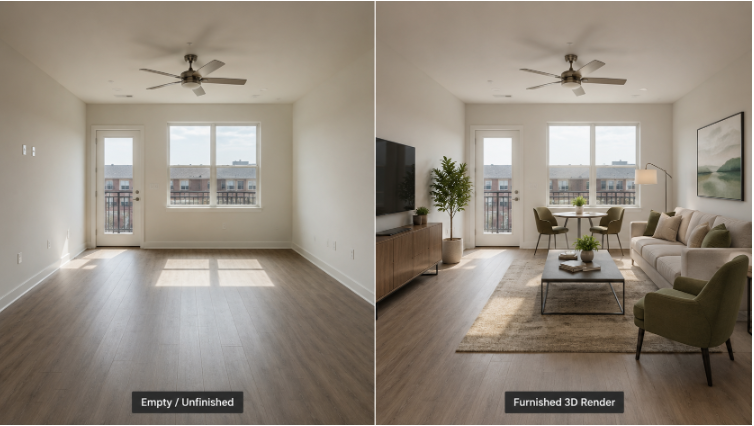
Renderings are most valuable when they clarify something a normal listing cannot show well. That might be a planned renovation, an empty room, a pre-leasing unit, or a layout that looks confusing in standard photography. The best use is not to make an apartment look unrealistically luxurious, but to make its actual potential easier to see.
Renovated Apartments
Renovation timelines rarely match leasing timelines perfectly, especially when cabinets, flooring, lighting, or appliances are still being installed. Visuals for renovated apartment listings can show the intended finish package before work is complete, which helps renters understand what they are actually considering. A landlord can show the new kitchen direction, bathroom tile, paint palette, and flooring tone without waiting for the last contractor to leave.
Accuracy matters most in this category because renters will compare the final apartment with the images that influenced their inquiry. If the rendering shows quartz counters, stainless appliances, or new recessed lighting, those items should match the planned scope. When something is conceptual, the listing should say so plainly.
Unfurnished Units
Empty apartments can be hard to judge because renters may not know whether a sofa, bed, desk, or dining table will fit comfortably. A furnished rendering can make room function clearer without the cost and logistics of physical staging. For landlords wondering how to market an unfurnished apartment, the goal is to show realistic use rather than fill every corner with decor.
The strongest unfurnished-unit visuals respect real dimensions and leave enough negative space to feel believable. A studio can show a sleeping zone and sitting area, while a 1-bedroom can show how the living room works without blocking circulation. That helps renters picture daily life without forcing them to decode the room from bare walls.
Pre-Leasing Units
Pre-leasing creates a different challenge because the apartment may not be finished, accessible, or safe for a photo shoot. Pre-leasing renderings give leasing teams a way to market a unit before photography catches up with construction. They can support early inquiries, waitlist campaigns, and renewal conversations when the final space is still in progress.
This is useful for small landlords planning a major renovation and for multifamily teams launching multiple units at once. A consistent visual package can show renters what the finished interiors are expected to look like across similar floor plans. The leasing team should still explain expected completion dates, finish assumptions, and any details that could change.
Small or Unusual Layouts
Some apartments do not market well through photos alone because the layout needs explanation. A studio with an alcove, a loft with a partial wall, or a long living room with an awkward corner may look confusing in a standard gallery. A rendering can show the intended use of each area without relying on the renter to solve the layout puzzle.
3D floor plans are especially useful for this situation because they combine layout clarity with furniture scale. A renter can see where the bed, sofa, table, and storage might sit in relation to windows and doors. That can reduce uncertainty before a showing and help leasing teams answer fewer repetitive layout questions.
Multifamily Marketing
Multifamily properties often need a consistent visual language across unit types, amenity spaces, and leasing materials. Apartment marketing visuals can help a community show studios, 1-bedroom layouts, shared lounges, fitness rooms, and exterior spaces with a cohesive style. Consistency matters because renters may move between a listing page, an email, and a property website before they contact the leasing office.
For landlords with several similar units, renderings can also reduce the need to photograph every vacant apartment in perfect condition. One accurate visual set can support several listings when finishes and proportions are truly comparable. The key is to label unit types clearly so renters understand which image belongs to which layout.
Types of Visuals That Can Improve a Listing
Interior renderings are the most direct format for showing how an apartment feels from the renter's point of view. They work well for living rooms, bedrooms, kitchens, bathrooms, and small work areas because they show materials and furniture at eye level. For landlords and property marketers preparing listings before photography is possible, Maverick Frame Studio's 3D interior rendering services can turn floor plans, reference photos, finish selections, and furniture direction into realistic apartment visuals for leasing and marketing.
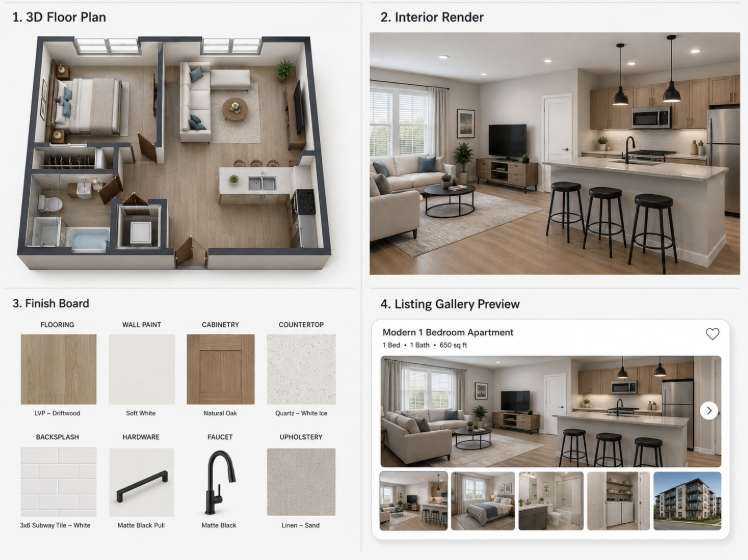
A 3D floor plan gives renters a more readable layout view than a black-and-white drawing. 3D floor plans for apartment marketing can show room relationships, window locations, door swings, and furniture proportions in a single image. This format is useful when renters want to understand flow before they decide whether to schedule a tour.
Virtual staging uses a real photo of an empty room and adds furnishings digitally. Virtual staging for apartments works best when the room already exists, the photo is good, and the landlord simply needs to show function. It is less helpful when the unit is still under construction or the finishes shown in the photo are about to change.
Other formats can support more complex campaigns when a still image is not enough. Real estate renderings may include renovation previews, exterior views, amenity spaces, 360 views, or walkthrough-style visuals depending on the property and listing channel. Zillow describes 3D Home tours and interactive floor plans as tools that help potential buyers and renters virtually move through a layout before visiting in person.
What Landlords Should Prepare Before Ordering Renderings
Good renderings start with accurate project information, not guesswork. A landlord should gather current apartment photos and a floor plan before asking for pricing or a production timeline. If no formal plan exists, rough measurements can still help when they are checked carefully.
Ceiling height, window placement, and door locations should be confirmed because those details affect how the room reads. Finish selections need to be specific enough to avoid vague interpretation. Cabinets, flooring, paint colors, counters, fixtures, and appliances should be supported with product references whenever possible.
Furniture direction also matters because a rendering designed for students may look different from one aimed at young professionals or downsizing renters. The visual should reflect the likely renter profile without stereotyping or over-personalizing the room. A clean, practical style usually works better than a design that feels too taste-specific for a broad rental audience.
Landlords should also think about where the images will appear before production begins. A listing hero image may need a different crop than a property website banner or social media ad. Mobile viewing is especially important because many renters will first see the apartment in a small gallery preview.
How to Use 3D Renderings in Apartment Marketing
Renderings can support a listing hero image when the unit's best selling point is not yet photographable. They can also sit inside the image gallery, where renters compare the proposed finished condition with current photos or floor plans. Pre-leasing apartment visuals work particularly well when they are paired with clear availability dates and honest notes about what is still under construction.
Social media ads and email campaigns can use renderings to introduce a renovated unit before it is ready for open-house traffic. The image should focus on the strongest leasing message, such as a brighter kitchen, better storage, or a more usable living area. Too many decorative details can distract from the practical questions renters care about most.
Property websites and printed leasing packets can use renderings to create a more complete visual package. A renovation proposal might show the current condition next to the planned finish direction, while a leasing packet might use one image to explain a premium unit line. This is where 3D renderings help rental listings become concrete: they make the leasing story easier to understand across several channels.
Honesty is essential because renderings can influence expectations before a renter tours the apartment. Do not show a view, finish, furniture layout, or room dimension that the final unit will not reasonably support. If the visual is conceptual, say so in the listing copy and leasing conversation.
Choosing the Right Visual Format
Photography is best when the apartment is finished, clean, staged, and available for a professional shoot. Real photos show the actual condition, natural light, view, and texture of the unit. They should usually become the primary listing asset once the apartment is ready.
Virtual staging is useful when a good photo already exists, but the room feels empty or hard to understand. It can show furniture placement without moving sofas, tables, or beds into the unit. However, it depends on the quality and accuracy of the original photo.
A full rendering is better when the finished apartment does not yet exist or planned finishes need to be shown accurately. It can show a renovated kitchen before cabinets are installed, or a future living room before flooring is complete. The rendering should be treated as a planning-based marketing visual, not as proof that the unit is already in finished condition.
Floor plan visuals are best when layout clarity is the main issue. Renters often want to know how rooms connect, where closets are located, and whether furniture will fit without blocking movement. The National Association of REALTORS® 2024 Profile of Home Buyers and Sellers found that photos, detailed property information, and floor plans were among the digital features buyers considered very useful, which reinforces the broader value of clear listing information.
Common Mistakes to Avoid
The most common mistake is making the apartment look larger than it really is. Wide camera angles, undersized furniture, and unrealistic sightlines can create disappointment during showings. The better approach is to show the unit at a fair scale and let the real strengths carry the listing.
Another mistake is showing finishes that will not be installed. A renter who expects a certain cabinet color, appliance style, or bathroom fixture may lose trust if the finished unit looks different. Renderings should follow the actual renovation scope as closely as possible.
Lighting can also create problems when it ignores the apartment's real conditions. A north-facing unit should not be presented as if it receives strong direct sun all afternoon. Thoughtful lighting can make the room pleasant without pretending it has windows, exposure, or views it does not have.
Mobile cropping is easy to overlook, even though many renters browse listings on phones. A beautiful image may fail as a thumbnail if the main room feature is pushed to the edge. Leasing teams should review renderings in the same formats renters will actually see.
Making Apartment Listings Easier to Understand
The real value of renderings is not that they make an apartment look polished. Their value is that they can make space, layout, finishes, furniture scale, and renovation potential easier to understand before a renter visits. That can help landlords and property managers present a more complete listing when photography is unavailable, incomplete, or not strong enough.
For a renovated unit, the rendering can explain the finished direction before construction wraps. For an unfurnished apartment, it can show how the room works without physical staging. For a pre-leasing campaign, it can give renters enough visual context to decide whether the apartment deserves a closer look.
The best results come from accurate inputs, the right visual format, and transparent listing language. Landlords should start with reliable measurements, confirm finish details, and choose images that answer real renter questions. Used carefully, 3D renderings can become a practical leasing tool rather than just another attractive image in the gallery.