What to Check on Move-In Day: A First-Week Apartment Upgrade Checklist
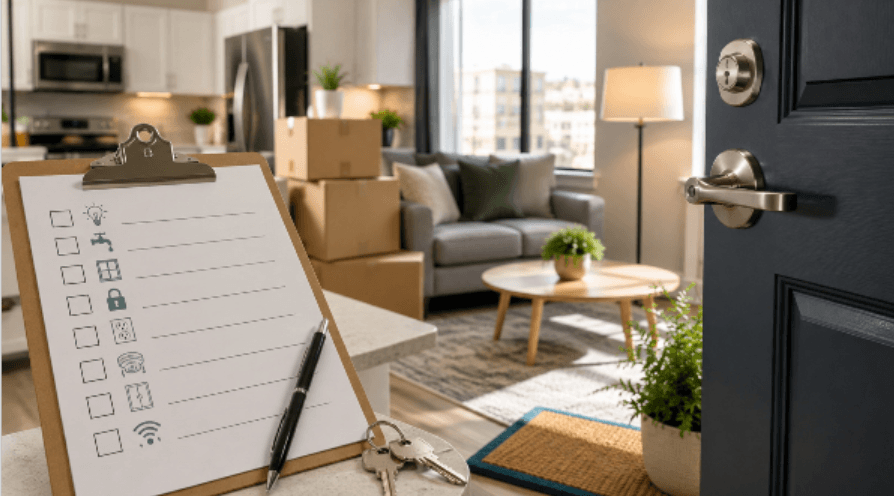
Getting the keys is the easy part. The first week in a new apartment is where the real work happens: confirming utilities, documenting the unit's condition, and figuring out which small changes will make the space feel livable without putting your security deposit at risk. Here is what to check, in order, before the boxes take over.
Start With the Walkthrough, Not the Boxes
Before you carry in a single box, walk every room slowly. Open closets, run the faucets, flip every switch, and test the heat or AC. Check that the stove burners ignite, the oven heats, and the dishwasher and washer or dryer, if included, actually run a full cycle. Take dated photos or a short video of anything already scuffed, cracked, or worn, and send it to your landlord or property manager in writing the same day. This single step is what protects your deposit later, since it draws a clear line between damage you caused and damage that was already there.
While you are in each room, note anything that needs a maintenance request: a sticky window, a loose cabinet hinge, a flickering light. Submitting these early, before your furniture is in the way, tends to get faster attention than a request filed weeks in.
Small, Reversible Upgrades That Make a Rental Feel Like Home
Most rental units are finished with whatever hardware and switch plates were cheapest at the time, and it shows: mismatched finishes, scratched plastic covers, dated toggle switches. The fix does not require permission from your landlord or a renovation budget, as long as you stick to swaps that are fully reversible. Plastic switch and outlet covers are held on by a single screw and take seconds to remove, and cabinet or drawer pulls generally thread onto the same pre-drilled holes as whatever came installed.
Keep every original piece in a labeled bag so the unit can go back to its stock look before you move out. For switch plates and cabinet hardware specifically, a US supplier of brass hardware is a useful source if you want a consistent finish across a kitchen or bathroom rather than piecing it together from whatever a hardware store happens to stock.
A few other reversible changes worth considering in the first week:
- Peel-and-stick or tension-mounted shelving for closets and pantries
- Removable wallpaper or contact paper on shelves and drawer liners
- Adhesive hooks and rails in place of drilled-in fixtures
- Smart plugs or bulbs that swap out lighting behavior without rewiring anything
None of these require a maintenance request, and all of them come out cleanly at the end of the lease.
Utilities, Locks, and Safety Checks Before You Unpack
A few tasks are worth finishing before you touch a single box:
- Confirm electricity, gas, and water are active and in your name
- Test every smoke detector and carbon monoxide detector, and check the battery date
- Ask your landlord about the building's policy on rekeying or changing locks
- Locate the water shutoff valve and the breaker panel
- Check that windows and doors lock properly
Skipping these in favor of unpacking the kitchen first is a common mistake. If the internet or water is not actually on when you thought it was, you want to find out on day one, not day three.
Two more items belong on this same first-day list, even though they are easy to push off: renters insurance and your change of address. Most leases require proof of renters insurance before or shortly after move-in, and a basic policy is inexpensive compared to what it would cost to replace your belongings after a fire, theft, or burst pipe. Filing a change of address with the post office and updating it with your bank, employer, and any subscriptions takes fifteen minutes and avoids weeks of mail heading to your old place.
Building Your First-Week Timeline
Spread the work over a few days rather than trying to finish everything at once. A rough order that works for most renters:
- Day 1: Walkthrough, photos, utility confirmation, smoke detector test
- Day 2 to 3: Unpack the bedroom, bathroom, and kitchen first, since those get used daily
- Day 4 to 5: File any maintenance requests you noted during the walkthrough
- Weekend: Handle small cosmetic upgrades like switch plates, hooks, or shelving
- End of week one: Walk through again with your original walkthrough notes to confirm every maintenance item and utility issue has actually been resolved
Renters who take unpacking in phases tend to settle in faster and with less stress than those who try to empty every box on night one. The goal for week one is not a finished apartment, it is a functional and documented one, with the cosmetic details layered in once the essentials are handled. By the time the second week starts, the boring but critical tasks are done, the space is starting to feel like yours, and any remaining boxes are simply a matter of time rather than urgency.
FAQs
How long should I wait to unpack everything after moving in?
There is no fixed deadline, and most renters take longer than they expect. Prioritize the rooms you use daily first, then work through the rest over the following weeks rather than trying to finish in one weekend.
What should I photograph during the move-in walkthrough?
Photograph or record every room, focusing on walls, flooring, appliances, and fixtures, along with anything already damaged or worn. Send these to your landlord in writing on move-in day so there is a timestamped record before your belongings arrive.
Can my landlord charge me for cosmetic changes I make and then reverse?
Generally not, as long as the change is fully reversible and you restore the original fixtures before move-out. Keep any original hardware or switch plates you remove so they can go back on, and check your lease for any specific restrictions before making changes.
Do I need to change the locks when I move into a new apartment?
Some landlords rekey locks between tenants as standard practice, while others leave it up to the renter to request. Ask directly during your walkthrough, and if rekeying is not offered, ask whether you are permitted to do it yourself at your own cost.
What is the most commonly forgotten task in the first week?
Confirming that utilities are actually transferred into your name, rather than assuming the previous tenant's service carried over. It is worth calling to verify rather than waiting for a bill to find out.